£500,000 funding is to be shared amongst four charities to support projects affected by the extreme drought in South Sudan, Kenya and Ethiopia.
Christian Aid, Mercy Corps, SCIAF and Tearfund will each receive £125,000 from the Scottish Government’s Humanitarian Emergency Fund. The support is targeted at projects that will alleviate the most urgent concerns relating to the food crisis including:
distributing food packages
enhancing access to water supplies
training hygiene promoters
providing cash transfers to households
East Africa is facing one of its most severe episodes of drought in decades, with the driest conditions seen in 40 years. The fifth consecutive rainy season is lower than expected and the forecast for the March-May 2023 season indicates below-average precipitation, further exacerbating the situation.
International Development Minister Neil Gray said: “The drought affecting countries in East Africa is one of the worst in decades and the situation is becoming ever more desperate.
“This funding will support four essential projects in South Sudan, Ethiopia and Kenya, ensuring people suffering from the drought receive necessary food supplies and enhanced access to clean water – a vital measure in preventing water borne diseases.
“The Scottish Government is committed to fulfilling its role as a responsible and compassionate global citizen and this aid from our Humanitarian Emergency Fund will provide essential help to those in desperate need.”
Christian Aid will target funding at communities in South Sudan to provide emergency food access and sanitation to over 4,000 people in Kodok, Upper Nile State. 681 households will receive cash transfers to meet their immediate food needs, in addition to sanitation facilities and hygiene promotion.
Mercy Corps will support vulnerable communities in north-eastern Kenya. 420 households will be supported with cash transfers for three months as part of a longer-term focused intervention.
The SCIAF project in Ethiopia will provide food supplies and access to safe water in Dasenech Woreda, South Omo Zone. 315 households will receive cash transfers for four months while the rehabilitation of shallow wells and water points, and the provision of water purification materials, will improve access to safe water for 7,000 households.
Tearfund’s proposed project in Ethiopia will deliver emergency food assistance in Moyale District, Oromia Region. Three packages of food supplies will be provided to 334 households over a three-month period. In addition, supplementary blended food will be distributed to 70 individuals.
The Humanitarian Emergency Fund Panel is made up of eight leading humanitarian aid organisations in Scotland who advise and access the fund: Mercy Corps; Oxfam; British Red Cross; Islamic Relief; SCIAF; Christian Aid; Tearfund; and Save the Children.
Signs and road markings are set to be installed in some streets in Leith ahead of the introduction of parking controls to help alleviate parking pressures.
From tomorrow (Monday 6 March), work will begin on a street by street basis to implement the changes around Leith Walk, Pilrig and Leith/North Leith, where the first phase of new Controlled Parking Zones (CPZs) is being established.
The city council has written to residents to let them know about the planned work and how it will affect them, and to advise that parking permits are not yet required. They will provide another update once installation is complete, expected in two-three months, about applying for a permit and when it will be needed.
Later this year, signs and road markings will be introduced in Abbeyhill, Shandon and Gorgie, which are also part of the first phase of new CPZs, and we’ll be writing to update residents in these areas nearer the time.
This is the first of up to four phases of implementation of parking controls around the city, developed as part of the Strategic Parking Review. This responded to concerns from communities across Edinburgh, who asked us to tackle parking problems. The review led to the identification of areas where parking controls may be required to resolve challenges facing residents, in particular from non-residential parking.
Councillor Scott Arthur, Transport and Environment Convener, said: “These new parking controls are designed to help residents park more easily near their homes, and aim to address issues like commuter parking, which people across the city have told us is a problem in their neighbourhoods.
“In developing these plans officers have spent a great deal of time speaking to residents and gathering information on each area. Once in place, they’ll also be monitoring the impact of the changes to make sure they work for everyone.
“Of course, the restrictions haven’t come into force yet and we’ll be keeping communities up to date with progress and advice on applying for permits.”
The council began the Strategic Parking Review in 2018 in response to comments from residents, community councils and ward councillors. The in-depth review identified parking pressures by street and helped inform a series of new parking controls approved in 2019, to be implemented in four phases.
The process to introduce parking controls for phase three (including Fettes and Prestonfield) and phase four (including Newhaven, Trinity and Portobello) is expected to begin soon, while phase two (including Easter Road, West Leith, Bonnington, Willowbrae and the A8 Corridor) remains on hold pending further monitoring and engagement.
Monitoring is being carried out before, during and after the implementation of parking controls to help us to understand the impact on surrounding areas.
Despite modern locking systems on vehicles some criminals do manage to overcome them by using devices bought legally and relatively cheaply on the internet. All of which work by affecting the radio frequency imitated by the key fob / device, enabling vehicles to be stolen despite owners having possession of the key(s).
Please see below advice on how to try to prevent these:
Consider using steering locks as a visible deterrent to thieves – someone who is so obviously conscious of security is less likely to leave valuables in a vehicle.
Keep your key device in a Faraday pouch, which has a lining that prevents the items inside from receiving or transmitting radio frequency signals.
Avoid parking in dark, secluded areas, choose locations that are well lit and over looked by houses, passers-by and covered by CCTV if possible.
Over the last year, the Scottish Parliament has been carrying out an audit looking at barriers to equal representation and participation at Holyrood.
A cross-party board established in early 2022 to look at the representation and influence of women at Holyrood published its recommendations yesterday.
They include:
Rule changes to guarantee women’s representation on key bodies and groups such as committees, the Parliamentary Bureau and the Scottish Parliamentary Corporate Body.
A rule change to ensure there are no single sex parliamentary committees.
The establishment of a forum for women MSPs to discuss issues of mutual interest.
A review of the Parliament’s sitting time data to determine what changes need to be made to limit unpredictability of sitting times and maximise inclusion and wellbeing.
The permanent introduction of a proxy voting scheme covering parental leave, illness and caring/bereavement leave.
The establishment of an Advisory Group to oversee the implementation of the recommendations and make sure progress continues.
The report acknowledges that the Parliament has made good progress since 1999 in a number of areas. But the audit showed that there have been fluctuations over time in the number of women in leadership and decision-making roles. This suggests that equal representation of women is not yet embedded within the Parliament, nor is it guaranteed going forward.
The audit found that women are less likely than men to intervene in debates and to participate in First Minister’s Question Time. Other findings suggest that women tend to be under-represented in some committees such as Finance, Audit and Standards and Procedures.
Launching the report, Presiding Officer, Alison Johnstone MSP, said: “We currently have the highest percentage of women elected to the Parliament since 1999, and women are well represented in some of our key positions. However, history shows us that progress cannot be taken for granted.
“The package of measures published today is designed to strengthen equal representation and participation at Holyrood.
“Having women in key roles and ensuring they are properly represented across the Parliament helps bring different voices and perspectives to decisions.
“This report is only the first step towards substantive reform. I believe that the recommendations will help drive institutional change over the short, medium and longer-term.
“I am very grateful to Dr Fiona McKay and the Board for all their work on the audit and report over this past year. I look forward to working closely with colleagues to make sure that these recommendations are implemented.”
Commenting on the report, Dr Meryl Kenny, a member of the board and the University of Edinburgh said; “The recommendations together promise an inclusive Scottish Parliament for the twenty first century; one that in its work, procedures, and institutional culture is representative and effective.”
Her colleague, Professor Sarah Childs, another board member added: “This report marks an important moment, with Scotland building on its record and joining a growing number of countries around the world committed to reforms that will gender sensitise its parliament.”
The report states that short, medium and long-term measures are needed to secure the lasting impact of cultural change and that further research, data collection, monitoring and adjustment of new rules and reforms, will be essential.
It also calls for an advisory body, made up of cross-party MSPs, to be appointed to oversee the effective delivery of the recommendations, drive forward the Parliament’s overall progress and ensure alignment with internationally recognised standards.
You can read the report with the full set of recommendations:
The war in Ukraine started over a year ago in February 2022, causing 17.4 million individuals to seek refuge in neighbouring countries. Twinkl Educational Publishing continues to help Ukrainian children and has now teamed up with the Ukraine-based charity fund Voices of Children to provide FREE mental health and art therapy resources for families affected by the war and for anyone in need.
As highlighted in an article published in the European Child & Adolescent Psychiatry journal in March 2022: The effects of war on refugee children are vast, encompassing everything from immediate stress responses to a higher likelihood of developing mental health issues like PTSD, depression, and anxiety. Additionally, being separated from parents and losing a sense of safety during war can have long-term negative impacts on a child’s development. These experiences stand in stark contrast to children’s fundamental needs and rights to grow up in a safe, secure, and predictable environment.
Psychologists from the Voices of Children Foundation explained how the preservation of mental health can be influenced by the people who surround us, showing that resilience is important, and it is resilience which enables an individual to maintain faith in their own strength to overcome difficulties.
Psychologists from the Voices of Children Foundation said: “One of the difficulties in the work of a psychologist or psychotherapist, which we now encounter quite often, is the misuse of the term “trauma”. The psyche of a person, in particular a small child, has a number of protective mechanisms that are activated in conditions of increased stress. The preservation of mental health is also influenced by the people who surround us, who support and care for us and help us cope with the most severe stress.”
To conclude they mentioned that studies linked to mass disasters showed that post-traumatic stress disorder is one of the most severe forms of stress reaction, and it develops in 25-30% of people who have been in emergency situations.
Twinkl’s partnership with Voices of Children wants to contribute to the delivery of trauma-informed care by providing a selection ofmental health and art therapy resources that have been reviewed and recommended by the Foundation’s psychologists.
These mental health materials are now easily accessible for FREE and grouped in bundles to help parents, carers and mental health professionals support Toddlers and young learners, children aged 7-11, and Teenagersexpress and manage their emotions, develop coping strategies, and reduce anxiety.
Besides storytelling, art therapy activities such as the ones included in this pack are part of the methodology used by the Foundation’s psychologists in their Art Therapy Programme which focuses on understanding children’s emotions and supporting their wellbeing while also helping parents deal with child anxiety.
All resources are available from 24th February 2023 onwards in both Ukrainian and English, to aid speakers of both languages in accessing them. Some materials curated in partnership with Voices of Children are also published in German, French and Polish, and all resource packs created from this collaboration can be found in the Voices of Children page at Twinkl’s platform.
Apart from the Dual Language materials, these resources are also available in Ukrainian only and can be accessed for FREE by Ukrainian families and educators anywhere in the world!
Find out more about the resources created in collaboration with Voices of Children by visiting Twinkl’s Blog.
National Galleries of Scotland announces Decades: The Art of Change 1900-1980, an exploration of 80 years of art at the newly reopened Modern Two
Decades: The Art of Change 1900-1980
29 April 2023
Free
Scottish National Gallery of Modern Art (Modern Two)
The Scottish National Gallery of Modern Art (Modern Two) in Edinburgh will reopen on 29 April 2023 with a spectacular new exhibition, Decades: The Art of Change 1900-1980.
This fascinating, free exhibitionwill take a journey through 80 years of art, from 1900 to the 1970s. Spanning a period of dramatic change, moving from the birth of the motorcar to the dawn of the space race, each work on display will be drawn from the Gallery’s world-class collection of modern art.
Decades: The Art of Change 1900-1980 will take visitors through a series of six chapters across six rooms at Modern Two. Each chapter speaks of a particular moment from across the twentieth century, when artists rebelled against the previous generation, creating works which came to characterise a period.
Beginning with French artists who painted with electrifying colour, the first room includes work by Henri Matisse and André Derain. Their brightly coloured landscape paintings were so radically different that the artists were given the derogatory label ‘Fauves’ – meaning ‘wild beasts’. The term stuck and Fauvism had a major impact on British and particularly Scottish art.
Two fabulous new acquisitions, by Scottish Colourists FCB Cadell and JD Fergusson, feature in this room. Leith-born JD Fergusson, who lived in Paris before the First World War, was one of the key Scottish artists of the twentieth century.
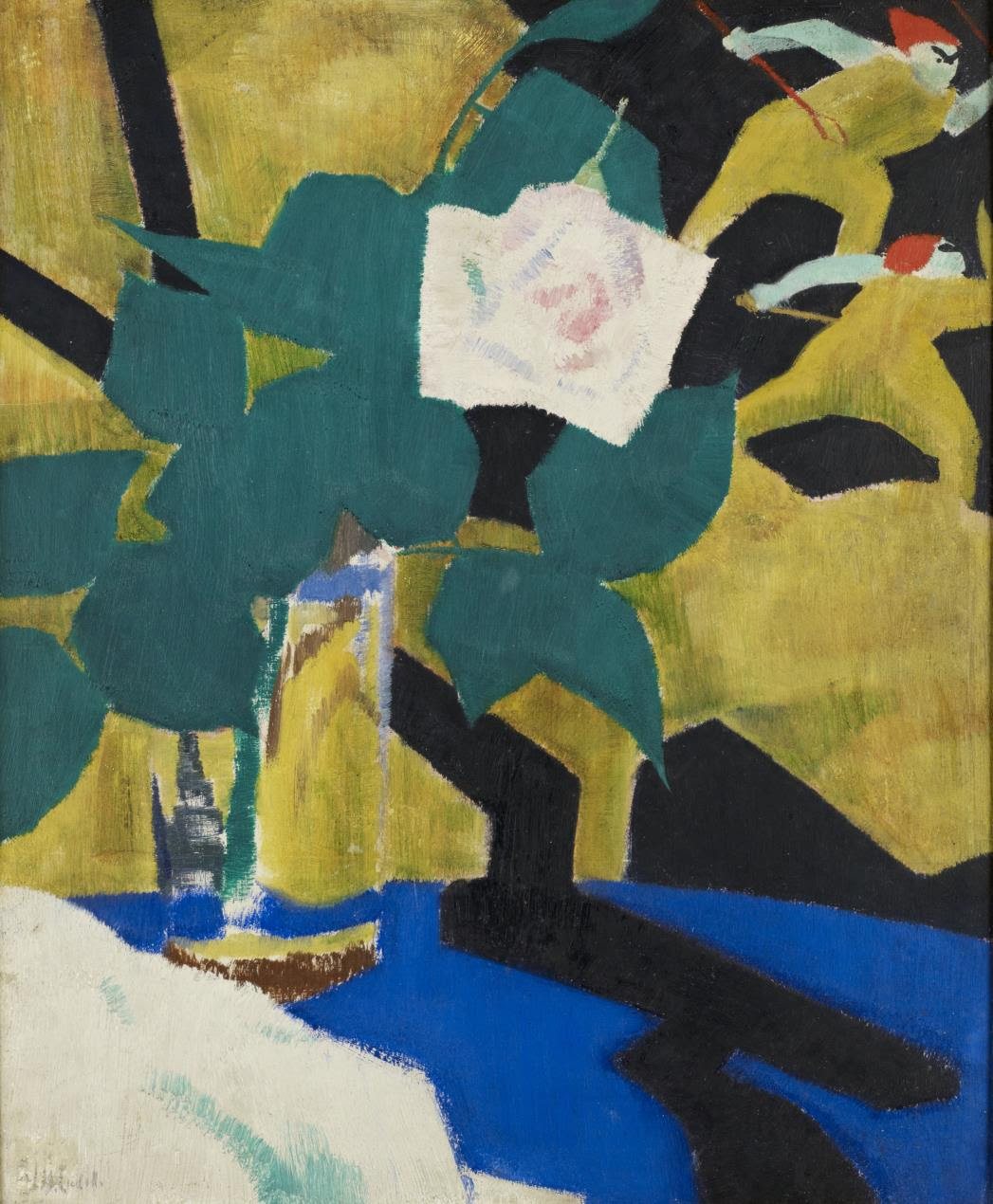
Painted in 1911, Flowers and Pink Box, is vigorous and confident in its brushwork, bright and clashing in colour. The Rose and the Lacquer Screen, by FCB Cadell, combines several of his favourite still-life props: a rose in a transparent vase, a black fan and its trailing ribbon and a detail of the lacquered screen that dominated the drawing room of his house in Edinburgh’s New Town. These new acquisitions have been generously donated by private owners.
Moving into the 1930s, artists such as Piet Mondrian believed that art could change society. This room will feature work by Alexander Calder, Paule Vézelay and Ben Nicholson.
Entering the 1940s, abstraction and idealism were replaced by grim realism. Featuring work by Francis Bacon, Joan Eardley and Bet Low, these paintings and sculptures, created both during and immediately after the Second World War, speak of a new reality.
The 1950s saw a battle between Abstraction and Realism. This is illustrated in Decades: The Art of Change 1900-1980 by two mural projects created for the great Festival of Britain exhibition of 1951, which will be shown together here for the first time. Josef Hermann’s project shows a row of miners – builders of a new socialist order; Victor Pasmore’s mural project is instead a daring essay glimpse of spiralling abstract forms. Exceptional creations by Alan Davie, Louise Nevelson, Fernand Léger, Eduardo Paolozzi and Elisabeth Frink will also be on display, making up the 1950s presentation.
Art became celebratory, playful and experimental in the 1960s. Sculptors abandoned traditional materials such as bronze and marble for ‘soft sculpture’, exemplified in the work of Jann Haworth, Yayoi Kusama and Duane Hanson’s iconic Tourists.
Throughout the 1970s, artists took Abstraction and Minimalism to extremes. Fred Sandback’s Untitled,1971 – two coloured cords which cut across the corner of the room – questions the very notion of art as something with three-dimensional form or narrative meaning.
The Keiller Library will focus on the motif of the hand in Surrealist art and writing. Drawing on works by artists like Man Ray, Edith Rimmington and Salvador Dali, from the national collection’s world-class holding of Surrealist books and archive material.
Radical, questioning and experimental, this selection of one hundred works from the national collection shows ways in which artists have continually pushed the boundaries and created art which defines its time. These pieces still have the power to shock and make us think about our world today.
Director-General of the National Galleries of Scotland, Sir John Leighton, said: ‘National Galleries of Scotland is delighted to reopen Modern Two with an exhibition that celebrates the strength of the national collection.
“Featuring a fascinating range of works by many of Scotland and the world’s greatest artists, Decades: The Art of Change 1900-1980 encourages visitors to think about how art can both reflect and change the way we see the world around us.
“We welcome you to join us on a voyage of discovery through 80 years of bold artistic achievement.’
A new report published by Holyrood’s Cross Party Group on Poverty says that bias against people in poverty affects their mental health and wellbeing, makes it harder to access the support they are entitled to, lessens their educational chances and makes policies designed to tackle poverty less effective.
Group convener Pam Duncan-Glancy MSP said: “Scotland is a place that believes in compassion and justice, but people in poverty and on low incomes are having to face almost daily prejudice. That’s just not right, and it must stop.
“Poverty is caused by an unjust economy, and a social security system that doesn’t meet people’s needs. Our inquiry has found that the way people talk about poverty matters, and can have a clear impact on people on low incomes. That’s especially true when the people talking are politicians, in the media, or those delivering the public services that we all rely on.
“It’s time for everyone in Scotland to turn our back on these unjust attitudes and behaviours, and to call it out when they come across it. We’ll be a better, fairer, more just society as a result.”
Since January last year, the Group has been carrying out an inquiry into the stigma associated with poverty in Scotland today, hearing evidence from people with lived experience of living in poverty and on low incomes.
One disabled participant speaking to the Glasgow Disability Alliance said: “It can be difficult if you have a hidden impairment – people think there is nothing wrong with you or you are ‘at it’. My adviser at the Department for Work & Pensions actually said ‘This is not a disability’.”
One 15-year-old school pupil told the Child Poverty Action Group: “Well, I think if all of your friends or people you know go to the after-school clubs, school trips, that kind of isolates you from them. You’re singled out, you’re not with them, just a spare person.”
Another 12-year-old pupil said: “They talk behind your back [about what you wear] and stand staring at you.”
The Group heard evidence about the difficulties faced by parents on low incomes. The Child Poverty Action Group spoke to parents and caregivers heard about the ‘guilt, embarrassment and shame’ they are often made to feel about their financial situation.
Poverty Alliance director Peter Kelly said: “We all have a right to social support, and no-one should be made to feel ashamed for using it. We are recommending that more investment is made into making sure every household is able to get all the help they’re entitled to.”
The inquiry report highlights how involving people with experience of poverty can make public services better. The new Social Security Scotland agency was praised for its work to make sure staff know how important it is to treat people with dignity and respect.
The Group is calling for people who work with the public in Scotland to be trained about the reality of poverty, and for a strong stand against language and behaviour that stigmatises people on low incomes.
And the report also recommends making education about poverty part of Scotland’s national curriculum for schools, helping to project young people from its effects and giving them the tools and confidence to call it out and stand up against it.
Pam Duncan-Glancy said: “The submissions to this inquiry have highlighted that poverty-related stigma is extensive and deep-rooted in Scotland.
“It is impacting people’s mental health and wellbeing, erecting barriers to accessing support, restricting educational attainment, and influencing the design and resourcing of policies that can tackle poverty.
Almost £600,000 funding to help prevent childhood obesity
Children up to the age of five and their families are being given the tools to develop healthy habits through six projects aimed at preventing childhood obesity and reducing health inequalities.
Almost £600,000 is going to programmes such as JumpStart Tots – run by NHS Ayrshire & Arran – which has already seen a number of young children and families in the area benefit from this healthy weight programme.
The funding is part of the Scottish Government’s commitment to ensure all children have the best start in life and the projects support the ambition to halve childhood obesity in Scotland by 2030.
This builds on the range of actions being taken as a result of the 2018 Diet and Healthy Weight Delivery Plan to ensure everyone eats well and has a healthy weight.
Public Health Minister Maree Todd said: “On World Obesity Day we reiterate the importance of improving health and reducing health inequalities across Scotland.
“We want Scotland to be the best place in the world for a child to grow up and we know good nutrition and physical activity is crucial for children’s health and development.
“These projects are crucial to our bold ambition to halve childhood obesity in Scotland by 2030. They tackle inequalities working with families and communities to encourage healthy eating and offering support for those experiencing food insecurity.
“We will continue to support local partners to develop these ambitious and effective plans to help prevent and reduce childhood obesity, alongside policies such as our Diet and Healthy Weight Delivery Plan and Best Start Foods payment, which are central to our commitment to ensure everyone in Scotland has access to healthy, nutritious food.”
Consultant Dietitian in Public Health Nutrition for NHS Ayrshire& Arran, Dr Ruth Campbell said: “The continued early years funding from Scottish Government has enabled NHS Ayrshire & Arran to extend the Jumpstart Tots programme to more families across Ayrshire.
“Jumpstart Tots is an interactive healthy lifestyle programme which offers families with children aged between two and five, a minimum of eight one hour sessions that are planned to suit each individual family’s needs.
“Local parents feedback has been that the Jumpstart Tots programme has helped them make changes that their whole family has been able to benefit from as a result of finding out more about the food they eat.”
Projects receiving funding are:
NHS Ayrshire & Arran: JumpStart Tots – £53,769
NHS Lanarkshire: ‘Little n Lively’ programme in partnership with Healthy Valleys – £150,000
I’m a pet expert and here is how to keep the extra inches off of your dog
For World Obesity Day, 4 March 2023, PDSA are shedding the light for how to know if your dog is overweight, and how energetic your dog breed truly is.
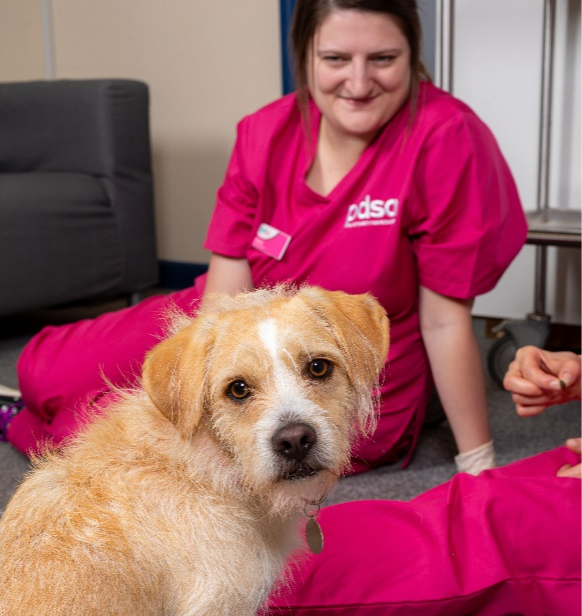
PDSA Vet Nurse, Shauna Walsh, shares expert insight into some of the UK’s popular dog breeds and how to know if your four-legged friend is carrying extra weight around the edges:
“It sounds obvious, but dogs who eat too much and don’t exercise enough, get fat! If you feed your dog a lot of treats as well as their normal food, most of the extra calories will turn into excess inches.
“It can be easy to dismiss any extra weight on your dog, especially if their fluffy coat hides the excess pounds! With images of plump pooches – tubby terriers or rotund retrievers being increasingly showcased and viewed as ‘normal’, it can be difficult to know what a healthy shape is for your dog.”
Dogs come in all different builds and sizes depending on their breed-type, but a healthy shape is the same for every dog. Your dog’s body shape will help to give you an idea of whether they’re carrying too much weight.
The veterinary term for this is ‘Body Condition Scoring’ (BCS), and it is simple and easy to do at home with your canine companion:
Run your hands along your dog’s sides. The skin should move freely over the ribs, which you should be able to feel with a light touch.
Run your hands along your dog’s back. You should be able to feel the spine and hipbones under the skin without being able to see them – they shouldn’t be sticking out.
Gently feel the base of your dog’s tail, there shouldn’t be a build-up of fat where the tail joins the spine.
Feel under your dog’s tummy, it should go in, not bulge out.
Look at your dog from the side and from above. You should be able to see a waist. If not, your dog may be overweight.
Knowing your pet’s body condition score helps you to know if they need to lose some pounds, but it’s also important to know your pet’s current weight – use both together to work out what their ideal weight should be.
Weighing them regularly means you can quickly spot any changes, and then tweak their diet and exercise to correct it. You can visit your vet to weigh larger dogs, and small dogs can also be weighed at home quite easily using bathroom scales.
Maintaining a healthy weight is down to feeding the right amounts of a balanced diet, as well as appropriate levels of exercise.
Shauna advises: “All dogs need daily exercise, but how much they need depends on lots of factors, including their age, breed, fitness level and any health conditions they may have.
“Every dog is an individual, so it is very important to consider your dog’s specific needs when exercising them – young dogs won’t need as much exercise as they grow, and that may be the same for some senior dogs, who could benefit from resting their aging paws! For dogs with health concerns, the levels of exercise they need will be best discussed with your vet and adjusted appropriately.
“Unless your vet advises otherwise, all dogs need at least one walk a day for their physical and mental health – some dogs prefer a long leisurely walk, and others prefer multiple shorter walks split up throughout the day. You can also incorporate games and playtime into your dog’s daily routine to keep things fun in-between walks.”
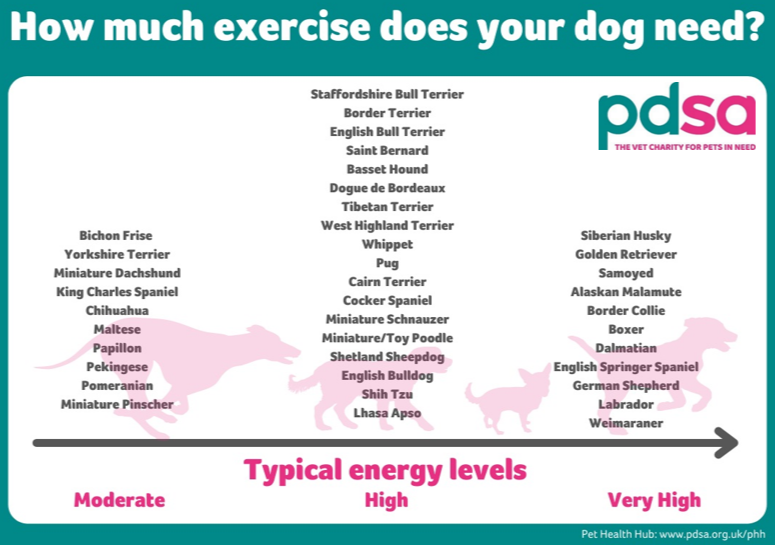
Your dog’s breed plays a large part in their natural energy levels, which affects how much exercise they need. Some high-energy breeds need significantly more exercise than others, as well as mental stimulation throughout the day. Flat-faced breeds such as Pugs, Bulldogs, and Shih Tzu’s still need exercise, but often struggle to breathe due to the shape of their face so they need extra consideration to not over-exert them during walks and playtime.
Very high-energy breeds
These breeds are ideal for active owners who will take them out on adventures and make sure they have plenty to do all the time. They need plenty of varied exercise opportunities every day and we recommend spreading these across the day in several walks to have a good sniff around, with off-lead time on top. As well as keeping their paws active, you want to keep their brains busy, too! Make sure you have plenty of time to play with your dog, have training sessions and create some games that will really challenge their minds to prevent them from getting bored. Popular very high energy breeds include: Labradors, Siberian Huskies, Border Collies, German Shepherds, Dalmatians and Golden Retrievers.
High-energy breeds
Whilst these breeds still require plenty of exercise opportunities, they may want a little more downtime than the very high-energy breeds. They will still want daily varied exercise, on top of some brain games to provide mental stimulation, however will also appreciate some time to relax and rest their paws, more than breeds with more energy to burn! Popular high energy breeds include: Whippets, Poodles, French Bulldogs and Cocker Spaniels.
Moderate-energy breeds
Although these breeds aren’t known for bouncing off of the walls with energy, they will still require a good amount of exercise in order to keep them fit, active and healthy. All dogs, regardless of energy levels still require exercise, as well as mental stimulation to avoid becoming a couch potato! If your dog prefers a gentle plod over a run around, be sure to offer plenty of brain games for them to participate in. Popular moderate-energy breeds include: Miniature Dachshunds, Chihuahuas, Yorkshire Terriers and King Charles Spaniels.
Being a healthy weight and shape will improve your pet’s quality of life, as they can enjoy walks and activity, which in turn improves their mental health, and can delay the onset of long-term diseases, helping them to live longer.
Shauna added: “it can feel like a big challenge to get a pet to lose weight or keep off the pounds, but trust us, it’s worth it for the long term – we all want our dogs to be in our lives for as long as possible! When your dog is their ideal size and shape, they will be healthier, happier and more active. They will also have the best chance of living a long, healthy life. If you are struggling with your pet’s weight, contact your vet for help and advice.”
PDSA Big Weigh In launched in partnership with Royal Canin – the aim is to help pets live a better and hopefully longer life, by maintaining a healthy weight. With just one month to go, pet owners across the UK are invited to join in and visit a participating practice for a free weight check throughout March.
PDSA has also launched the PDSA #WeighUp Pet Weight Loss Support Group, for fellow pet owners to join, share their progress and access exclusive tips and content, including weekly Q&As with PDSA vets and vet nurses, all to help each pet owner with their pet’s weight loss journey.
To find out more before visiting your local participating practice, please visit PDSA’s website.


 Keep your key device in a Faraday pouch, which has a lining that prevents the items inside from receiving or transmitting radio frequency signals.
 Avoid parking in dark, secluded areas, choose locations that are well lit and over looked by houses, passers-by and covered by CCTV if possible.
 Do not store keys near windows or doors.