Tory plans to Power up Scotland

Scottish Conservative leader Douglas Ross today launches his first major policy paper, an ambitious jobs and economic recovery plan to “Power up Scotland” and rebuild the economy stronger.

As the Scottish Government prepares to announce its Programme for Government tomorrow, Douglas Ross has put forward a series of proposals to support and create jobs, promote business recovery in the short-term, and build a thriving, stronger Scottish economy long-term.

The Power up Scotland jobs plan, which Douglas promised to deliver within a month of his election as Scottish Conservative leader, will be published today at a manufacturing plant in Inverness and includes the following policies:

  • Sector-specific Job Security Councils to help laid-off workers transition and find skilled work, based on Sweden’s hugely successful retraining programmes.
  • A Town Centre Rescue Plan to help small local shops adapt and free up planning restrictions.
  • A ‘Scotland First’ procurement strategy to have the government spend more money locally.
  • A Scottish education guarantee to age 18 and expanded adult learning programmes.
  • Community Right to Buy schemes for local pubs and other employers in fragile areas.
  • Scottish Enterprise reformed on regional lines and new Rural Growth deals to spread high-quality jobs and business growth across the country.
  • A yellow/red card system for businesses who make late payments and bid for public work.
  • A new research and development target with better incentives for innovation.
  • A Hardship Fund for businesses facing localised lockdowns.

The new Scottish Tory leader also called yesterday for accelerated infrastructure investment with proposals for a three-lane M8, a Scottish Smart Travel Card for contactless travel, faster rail links from Edinburgh to Aberdeen and Inverness, and a joint UK-Scottish Government infrastructure vehicle.

Scottish Conservative leader Douglas Ross said: “In the biggest economic downturn of our lifetime, the UK Government stepped up and protected nearly a million Scottish jobs. Now the Scottish Government must match that ambition.

“My proposals won’t just protect jobs over the next few months, they will power up the Scottish economy and start creating the jobs of tomorrow, today. This detailed blueprint for the next phase of recovery will help workers retrain and find new skilled work, give town centres the tools they need to rebuild, and take every part of Scotland forward together. 

“I will work with the Scottish Government on these proposals wherever possible but there is a clear contrast between what we see as Scotland’s priorities.

“I don’t believe Scottish people want a government that drags us back to the division of the past and wastes time on constitutional wrangling.

“I believe people want both of Scotland’s governments to co-operate, not compete. They want us to hand power back to communities, not hoard it in Edinburgh. They want long-term strategies that build for the future, not sticking plaster proposals that prove to be second-rate.

“Most of all, I believe Scottish people want action on jobs, now. They don’t want delays and excuses.

“This is a time of crisis for Scotland – but a moment of opportunity too. If we focus on the urgent priorities of Scottish people, we can restore and rebuild our economy stronger than ever.”

It’s hardly surprising that the Scottish Conservative economic plan has the enthusiastic support of Lothian Tory MSP Miles Briggs, who said: “Edinburgh and the Lothians have huge economic potential that we need to see optimised as Scotland enters a recession.

“This is a comprehensive economic plan from Douglas Ross that has measures to improve connectivity across Scotland and pass powers back to local regions and communities.

“SNP Ministers have been ineffective in developing Scotland’s economy and maximising the potential of businesses and growing industries.

“This plan is a clear commitment from the Scottish Conservatives that the economy and people’s livelihoods will be our number one priority going into the Scottish elections next year.”

Councillors to discuss Halymre Street ‘vision’

A proposed housing-led ‘vision’ for the Leith Walk/Halmyre Street area has been published by the Council to help shape future development of the site. This follows consultation with the local community and other groups and organisations in Leith including community councils and other landowners.

The ‘Place Brief’, which includes a mix of other uses in addition to housing, lays out the basic principles for development for open and green space and movement around and into the site.

A potential cycling connection linking Stead’s Place and Thorntree Street has been included. The Brief will guide future planning applications for three pieces of land all with different owners including the former tram depot on Leith Walk and a former mill building currently being used as a bingo hall.

Councillors will be asked to approve the ‘Place Brief’ at the Planning Committee on Wednesday (2 September).

Over the last few years there has been extensive community led consultation to identify community priorities for the area going forward. This was followed up in January 2020 with a number of drop-in events in local venues and an online consultation to provide people with the opportunity to have their say on the future of the area.

Cllr Neil Gardiner, Planning Convener, said: “We’ve carried out extensive consultation on this site locally for several years now and I really appreciate all of the feedback we’ve been given to help us to make sure this area complements its surroundings and is somewhere people want to be.

“What’s important here is that the Place Brief can be used to help coordinate development on the site to achieve the best outcome going forward for the local community.

“People have told us that there is already a strong feeling of community in the area and we want to build on that as well as respect the architectural heritage and character that people have also said is so important.”

The Place Brief creates a framework for co-ordinated development by the different land owners and is flexible enough to accommodate change. It is likely that different parts of the site will be developed at different times and some areas such as the bingo hall may not change their use.

There will be further opportunities for the public and interested groups to give their views throughout the planning process.

Funding to help mothers and infants at risk

STEPPING Stones North Edinburgh is among the charities providing counselling and peer and parental support to share funding to help improve the life chances and wellbeing of pregnant women, new mums and their families.

The Perinatal and Infant Mental Health fund will provide annual funding of up to £1 million to help third sector organisations deliver vital services.

Mental Health Minister Clare Haughey attended a virtual meeting with Amma Birth Companions to announce the successful organisations to receive a share of the funding.

The charity supports vulnerable women who would otherwise experience birth without a partner, including a number of women who are refugees, asylum seekers or living in poverty.

Ms Haughey said: “We want all mothers and their families to have access to good mental health care throughout pregnancy and during the postnatal period.

“The third sector provides an invaluable source of support and with the impacts of COVID-19, their work is more important now than ever. The fund will allow one-to-one support for organisations to help provide the care that women and their families need across Scotland.

“In our 2019-20 Programme for Government, we committed to support the third sector to deliver counselling and befriending services for women who might benefit from additional support in their community.

“Our delivery plan will help us continue to improve perinatal and infant mental health services, backed by £50 million and guided by the voices of women with lived experience.”

Sarah Zadik, Manager and Co-Founder at Amma Birth Companions said: “This funding will enable us to build on our existing work, address emerging needs, and reach even more women who would otherwise face pregnancy, birth, and early motherhood alone.

“We are delighted to receive this grant and grateful to the Scottish Government for recognising Amma’s role in providing vital support to vulnerable mothers who are at increased risk of experiencing perinatal mental health issues.”

Celia Tennant, Chief Executive at Inspiring Scotland said: “Inspiring Scotland is delighted to be supporting the Perinatal and Infant Mental Health Fund and today’s announcement.

“The commitment from Scottish Government to this vital area has been matched by the high number and calibre of proposals we received for funding . We are looking forward to working alongside these essential services over the next three years to support more families during the crucial perinatal period.”

The annual Perinatal and Infant Mental Health fund is designed to deliver key services and address gaps in provision.

The full list of organisations to receive funding can be found below:

Aberlour

Amma Birth Companions

Barnardo’s

Home Start Glasgow North and NL

Midlothian Sure Start

Stepping Stones North Ed

Home-Start East Highland / Caithness

PND Borders

Home-Start Dunfermline

Quarriers

CrossReach

Human Development Scotland

Action for Children

Healthy Valleys

Maternal Mental Health Scotland

More information can be found on Inspiring Scotland’s website, who will be administering the fund on behalf of the Scottish Government.

Gyms reopen in Scotland

Gyms, swimming pools and indoor sports courts can reopen from today in Scotland, two weeks earlier than originally planned.

A spokesperson for PureGym said: We are delighted to be opening our 25 gyms in Scotland today and welcoming back hundreds and thousands of members who want to get back to working out.

“Better health and fitness is an important contributor in the fight against Covid-19. The safety of our members is our number one priority and so we have significantly enhanced our cleaning and safety standards in our gyms, in close consultation with medical experts, to ensure that they are safe places to work and safe places to workout.

“All gyms have sanitisation stations, contact-free entry and rigorous overnight deep cleaning and we’ve received highly positive feedback on cleanliness from our members in England, Wales and Northern Ireland who have already returned for millions of gyms visits without incident.”

You can find information about PureGym’s safety measures for re-opening here, and pictures of what the gyms will look like here.

Health experts have encouraged the public to take more exercise during the Coronavirus pandemic. Excess weight puts people at greater risk of serious illness or deth from COVID-19.

Lucie Bennett, Chief Nutritionist at Fitnazz, said: “We’ve just published the Biggest List on the Internet for the Benefits of Exercise, which includes a free implementable Guide”.

Check out the Benefits of Exercise list below:

60+ Benefits of Exercise – The Ultimate List (updated)

Edinburgh Declaration agreed

Calls for global biodiversity action at all levels

The Scottish Government is leading a global push to ensure action is taken at all levels to protect biodiversity.

A statement of intent, known as The Edinburgh Declaration, has been agreed between subnational, regional and local governments across the world and calls on the Convention on Biodiversity to take bold action to halt biodiversity loss. 

It also calls for greater prominence be given to the role subnational governments, cities and local authorities play in delivering a new global framework of targets, set to be agreed next year.

The Programme for Government 2019/20 committed to take account of the new post-2020 international biodiversity framework as part of work to address biodiversity loss.

The Edinburgh Declaration is the result of a year-long collaboration across international governments and organisations. In response to the Covid-19 pandemic, Scotland’s commitment to host and lead an international workshop to drive these discussions moved to a ground-breaking online format over the summer.

Environment Secretary Roseanna Cunningham said: “The coronavirus (COVID-19) pandemic has been an unprecedented global crisis which has fundamentally changed every aspect of our lives. But the twin challenges of biodiversity loss and climate change have not gone away – far from it – and must be central to our green recovery.

“Whilst Scotland’s progress on the current internationally-agreed biodiversity targets compares favourably with the global picture, it is concerning that, at an international level, none of these targets have been fully met.

“It is my firm belief – one shared by all signatories of the Edinburgh Declaration – that State-led action alone is not sufficient to put us on a path to recovery, achieving what is required to protect biodiversity across the globe.

“The Edinburgh Declaration makes it clear that the Scottish Government, together with subnational governments, cities and local authorities across the world, stand ready to meet the challenge of delivering the post-2020 global biodiversity framework and play a stronger role in its implementation.”

Chief Executive of NatureScot Francesca Osowska said: “The Edinburgh Declaration puts Scotland on the international stage, a clear sign of our intent to tackle biodiversity loss and protect nature.  

“This isn’t just about conservation, enriching our nature is also part of the solution to the climate emergency and is a vital part of a green recovery from Covid-19.

“Global targets for nature and climate change aren’t just set by nation states – it also needs the world’s subnational governments, agencies – and all of us – to push for transformational change.”

The Edinburgh Declaration is available to view on the Scottish Government website.

The Conference of the Parties (COP 15) to the Convention on Biological Diversity (CBD) is provisionally due to take place in China from 17-30 May 2021.

It is anticipated that a final agreement on a post-2020 global biodiversity framework will be agreed at COP 15 to support the CBD’s 2050 vision of “living in harmony with nature”.

Director of Science at Royal Botanic Garden Edinburgh Professor Pete Hollingsworth said: “Addressing the biodiversity crisis requires transformative change in how people co-exist with nature.

“The Edinburgh Declaration, focusing on the role of subnational governments, cities and regions is important, as it is at these levels where there is vital expertise and understanding of the practicalities of on-the-ground action, and how best to align the conservation of biodiversity with day-to-day life and the needs of local communities.”

Remember these retro racing games? This is what they could be worth now

Motoring experts from LeaseCar.uk have researched nine retro racing games from the 80s and 90s and revealed how much they could be worth now.

Many of the games are worth just shy of £100 – with one classic fetching as much as £1,700!

Can you remember these retro racing games?

This is what they could be worth now

Racing fans and gamers have been told to check their attics for retro driving game favourites that could be worth as much as £1700 now.

Motoring experts from LeaseCar.uk   have researched and revealed nine classic racing games from the 80s and 90s that could fetch a pretty penny on the resale market.

Collectors and enthusiasts are willing to pay serious money for copies of their favourite racing games of yesteryear.

From Mario Kart and Stunt Racer to Spy Hunter and Top Gear, nostalgia seekers will shell out hundreds – and sometimes thousands – of pounds to experience a blast from the past.

A spokesperson for  LeaseCar.uk  said: “If you’re around 25 or older, chances are you’ll remember at least a few of these pioneering games of yesteryear.

“And if you’re lucky enough to have a copy tucked away somewhere, you could be sitting on a significant cash cow.

“The prices we’ve listed below relate to pristine, sealed copies, but even used copies can fetch a fair sum.”

Here are nine retro racing games and what they’re worth now:

1. F-Zero on Super Nintendo

(Image credit: https://medium.com/j-king-s-labratory-project/nintendo-should-make-another-f-zero-game-47383d6dba15)

Factory sealed copies of futuristic racing game F-Zero can fetch around £50-£60 on average, which is a good deal more than it would have cost to buy when it was released in 1991.

2. Rock ‘n’ Roll Racing on Gameboy Advance

(Image credit: https://lutris.net/games/rock-n-roll-racing/)

If you happen to have a sealed copy of Rock ‘n’ Roll Racing for Gameboy Advance, you could resell it for about £90-£100.

3. Ivan ‘Ironman’ Stewart’s Super Off Road on Nintendo NES

(Image credit: https://thegamesdb.net/game.php?id=2794)

In this game, up to three players compete against each other or the computer in racing around several top-view indoor off-road truck tracks of varying difficulty. The resell value can be as much as £60-£70 now.

4. Top Gear on Super Nintendo

(Image credit: https://en.wikipedia.org/wiki/Top_Gear_(video_game)#/media/File:SNES_Top_Gear_cover_art.jpg)

In this Super Nintendo classic, players could choose between four cars to face 32 challenging courses in locations around the world. If you’re lucky enough to have a copy stored away, it could be worth as much as £85-£90.

5. Rad Racer on Nintendo NES

(Image credit: https://en.wikipedia.org/wiki/Rad_Racer#/media/File:Rad_racer_box_front.jpg)

In this game, originally released in Japan as ‘Highway Star’, players drive a Ferrari 328 or a generic Formula One racing machine through a racecourse. It’s one of the most profitable games on the list, worth up to £210-£220 for pristine, sealed copies.

6. Spy Hunter on Nintendo NES

(Image credit: https://www.mobygames.com/game/nes/spy-hunter/cover-art/gameCoverId,120902/)

Drawing inspiration from the James Bond films, the object of Spy Hunter is to drive down roads in the technologically advanced “interceptor” car and destroy various enemy vehicles with a variety of onboard weapons. The potential resale value for this one is massive – up to £370-£380!

7. Stunt Racer 64 on Nintendo 64

(Image credit: https://en.wikipedia.org/wiki/Stunt_Racer_64#/media/File:Stuntracer64.jpg)

New and sealed copies of this Nintendo classic fetch a whopping £1650-£1750, but even used copies are worth around £600!

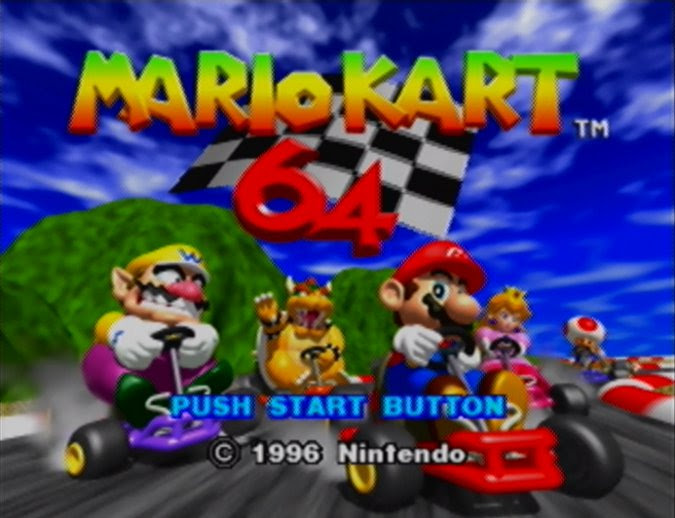
8. Mario Kart 64 on Nintendo 64

(Image credit: https://n64today.com/2017/11/26/mario-kart-64-review/)

Another Nintendo 64 family favourite, the original Mario Kart game is now worth as much as £310-£320!

9. Outrun on Sega Genesis

(Image credit: http://segascrutiny.blogspot.com/2011/01/genesis-game-reviews-outrun.html)

Known for its pioneering hardware and graphics, nonlinear gameplay, and selectable soundtrack, sealed copies of Outrun are now worth around £95-£100.

Counting down to Programme for Government

First Minister Nicola Sturgeon will publish a Programme for Government next week focused on dealing with the economic, health, and social crisis caused by coronavirus (COVID-19).

Protecting public health will remain the priority, and the Scottish Government will also set out plans to help people, businesses and communities recover from the pandemic by creating new jobs, promoting lifelong health and wellbeing and tackling inequalities.

The Programme for Government, which will be published on Tuesday, will take steps to ensure that in responding to the pandemic Scotland also delivers on its commitments to tackle child poverty and to reach net-zero by 2045.

Speaking ahead of the launch of the Programme for Government 2020-21, the First Minister said: “COVID-19 – the single greatest public health crisis of our lifetimes – has had a profound impact on our health, economy and society, indeed our whole way of life. These are not normal times, and this will not be a normal Programme for Government.

“Businesses and individuals have made extraordinary sacrifices to tackle this pandemic together. In every community in Scotland people have shown incredible resilience, compassion and skill to provide everything from the most advanced intensive care, to simple acts of kindness. 

“That is why it’s so important for us to continue to keep the virus under control. 

“At the same time we must also look to the future – to think about how we can help people, businesses and communities recover from this pandemic. We cannot, and should not, let this virus define our futures.

“Next week, I will set out radical and wide-ranging policies not only to help Scotland through this crisis but to drive a strong recovery with a renewed focus on what matters to people across the country.

“We have an opportunity, not simply to go back to how things were, but to address many of the deep seated challenges our country faces. The Programme for Government 2020-21 will be based on our determination to recover from this virus and deliver a fairer, greener and more prosperous Scotland for everyone.”

To be Published on Tuesday 1 September, the Programme for Government 2020-21 will set out the Scottish Government’s priorities through to the end of this Parliament in May 2021.

Retirement around the world

With the Tories seemingly considering changes to the retirement age, how does the UK compare to other countries aroud the world?

Men and women in the Netherlands and South Korea work longer than adults in any other country according to new research.

The team at personal finance experts TheMoneyPig.com have looked at 41 countries around the globe to find the age for retirement.

People in the Netherlands work until they’re 68 with South Koreans working until they’re 68 and 67 for men and women respectively.

Norway, Italy, Israel, Iceland and Greece are close behind with the age of retirement set at 67 years old.

Many countries in Europe retire at around 65 – 66 years old, including the UK, although that age looks set to rise over the coming years.

Others with 65 years as the retirement age include New Zealand, Mexico, Jamaica, Hong Kong, Canada and Brazil. In Asia countries including China, Japan and Thailand retire at 60 years old.

The country with the lowest retirement age is the United Arab Emirates with Emiratis able to retire at just 49 years old. Expats aren’t quite so fortunate, retiring at 65 years.

There is still some discrepancy between the ages men and women can retire. In most countries the retirement age is the same although women are able to retire at a younger age in China, Qatar, Turkey, Russia, the Czech republic, Austria, Brazil, Gibraltar, Jamaica, Poland, Switzerland, Israel and South Korea.

A spokesperson for TheMoneyPig.com said: “Retirement ages differ slightly around the world but not massively. Looking at the data it would be fair to say that mid 60s is around the average age for retirement.

“What is important wherever you live, is to plan for your retirement so you can enjoy it without the financial concerns it can bring.

“It’s important to think about this early and to be realistic on just how much money you need, how much you can afford to pay in now and if there are ways you can boost your pension pot.

Here are TheMoneyPig.com’s tips for planning for retirement:

1. Your retirement income

It’s important to work out your potential retirement income. Factor in your state pension and any private pensions you pay in to and you should come up with an accurate figure. Also factor any savings or investments you have available to use when you retire.

2. Boost your pension pot

Think about paying in more to your pension if you can. This will give you a greater sum when you retire. To boost it further you could set you retirement date later.

3. Day to day spending

Think about what you’ll spend when you retire. Work related costs like commuting, lunch and work clothes will all stop. Do factor in increases elsewhere like leisure and healthcare.

4. Clear your debts

Aim to clear any debts before you retire. If you can get the mortgage paid off, then do. Look at credit cards and any other debts too and pay off those with the highest interest first.

5. Retirement age

Consider what age you want to retire at and be realistic about if you can afford to.

6. Get advice

If you’re not sure, it’s always worth getting some financial advice. A good adviser will be able to talk you through the options to help you work out what’s right for you.

Table in full:

CountryRetirement age – MENRetirement age – WOMEN
UAE49 for emiratis, 60  – 65 for expats49, 65 expats
China6050 – 55
Japan6060
Qatar6055
South Africa6060
Thailand6060
Turkey6058
India60 – 6560 – 65
Russia60.555.5
Singapore62 – 6562 – 65
France62 – 6762 – 67
USA62 – 6762 – 67
Czech Republic62.858 – 62
Hungary6363
Austria6560
Belgium6565
Brazil6562
Canada6565
Cyprus6565
Denmark6565
Gibraltar6560
Hong Kong6565
Jamaica6560
Mexico6565
New Zealand6565
Poland6560
Sweden6565
Switzerland6564
Spain65.2565.25
Germany65.565.5
United Kingdom65.565.5
Australia6666
Ireland6666
Portugal66.366.3
Greece6767
Iceland6767
Israel6762
Italy6767
Norway6767
Netherlands6868
S.Korea6867

Time for change as new figures show drink-drive related deaths have plateaued for eighth consecutive year

IAM RoadSmart urges: Follow Scotland’s lead

The UK’s largest independent road safety charity, IAM RoadSmart, is calling for new initiatives from the Government to drive down the number of drink-drive related deaths on UK roads.

This follows figures released from the Department for Transport earlier today showing yet another year of stagnation in annual drink-drive statistics, highlighting eight years of zero progress.

Final estimates for 2018 in: Reported road casualties in Great Britain: final estimates involving illegal alcohol levels: 2018, revealed 240 people died in crashes where at least one driver was over the drink-drive limit.

An estimated 8,680 people were killed or injured when at least one driver was over the drink-drive limit, an increase of one per cent from 8,600 in 2017. That means on average more than 23 people a day were killed or injured as a result of drinking and driving, in 2018.

Most worryingly, the total number of crashes where at least one driver was over the alcohol limit rose by three per cent to 5,890 in 2018, an average of around 16 crashes a day.

IAM RoadSmart is calling for a smarter package of measures from Government to reduce the number of drink-drive related incidents, including a further lowering of the drink-drive limit in England and Wales to match Scotland; wider use of drink-drive rehabilitation courses; longer running high-profile education and enforcement campaigns and also, following the example of Scotland, by seizing the vehicles of repeat offenders.

Neil Greig, Director of Policy and Research at IAM RoadSmart, said: “Once again progress on reducing the toll of death and injuries from drink-driving has stalled.

“There is no one simple answer to reducing these figures, but at IAM RoadSmart we believe a much smarter package of measures is needed from the Government including a lower drink-drive limit to reinforce good behaviour, fast-track of evidential roadside testing machines to release police resources and tailored approaches to help drivers with alcohol problems.

“Rehabilitation courses work and we believe all those convicted of drink-driving should be sent on one automatically rather than having to opt in. More use of alcohol interlocks – which require the driver to blow into a mouthpiece on the device before starting or continuing to operate the vehicle – and extra penalties such as vehicle forfeiture, as used in Scotland, could all be part of a more joined-up approach to the problem.”

Overall drink-driving accounted for five per cent of collisions in Great Britain. The highest number of casualties, nearly seven per cent, due to drink-driving occurred in Wales, followed by England and Scotland at around five per cent each. Regionally, in England, casualty rates varied from nearly eight per cent in the East Midlands to nearly four per cent in Greater London.

In 2018, 80 per cent of drink-drive related casualties involved male drivers or riders. Almost two thirds of drink-drive casualties (63 per cent) are aged 25 to 59 but around a quarter (24 per cent) involve people aged 16-24. In both age categories, the casualty rate is higher in drink-drive related collisions than other collisions types.

Neil concluded: “Hard-core drink drivers are simply not getting the message, and these figures will not improve until policy changes.”

The full report from DfT can be found here.

Top dog Kuno to receive Dickin Medal

Retired military dog Kuno is to receive the prestigious PDSA Dickin Medal for valour – the animal Victoria Cross – after he was wounded in action while heroically saving the lives of British Forces fighting Al Qaeda.


During a dangerous operation in 2019, three-year-old Belgian Shepherd Malinois Kuno and his handler were deployed in support of specialist UK and host nation forces on a compound raid against a well-armed and aggressive enemy when they came under attack.

Pinned down by grenade and machine-gun fire from an insurgent, the assault force was unable to move without taking casualties.

Without hesitation, Kuno charged through a hail of gunfire to tackle the gunman, breaking the deadlock and changing the course of the attack, allowing the mission to be completed successfully.

During the assault Kuno was wounded by bullets in both back legs. He was given life-saving treatment by his handler and by medics in the back of a helicopter.

His injuries were so severe he required several operations before he was stable enough to fly back to the UK. Sadly, part of one of Kuno’s rear paws had to be amputated to prevent life-threatening infection.

But now he is thriving after becoming the first UK military working dog to be fitted with custom made prosthetic limbs.

Defence Secretary Ben Wallace said: “Without Kuno, the course of this operation could have been very different, and it’s clear he saved the lives of British personnel that day. This particular raid was one of the most significant achievements against Al Qaeda in several years.

“Kuno’s story reminds us not only of the dedicated service of our soldiers and military dogs, but also the great care that the UK Armed Forces provide to the animals that serve alongside them.”

Kuno underwent extensive rehabilitation under the watchful eye of Army vets and is fitted with prosthetics that allow his to run and play
Kuno underwent extensive rehabilitation under the watchful eye of Army vets and is fitted with prosthetics that allow him to run and play

Kuno returned home aboard an RAF plane, receiving in-flight care from a Royal Army Veterinary Corps (RAVC) team. Back in the UK he was transferred to the Defence Animal Training Regiment in Melton Mowbray where he underwent extensive reconstructive surgery, overseen by Professor Dick White, one of the world’s leading specialists in canine surgery.

Under the painstaking care of Army vets, veterinary nurses and canine physiotherapists, assisted by staff from the University of Nottingham, Kuno then embarked upon an innovative and lengthy programme of rehabilitation to restore function to his nerves and muscles, just like injured service personnel.

Kuno was a friendly and enthusiastic patient throughout, he loves human interaction and especially enjoyed his sessions on the hydrotherapy treadmill.

Within months, he was strong enough to be fitted with a pioneering custom-made prosthesis to replace his missing paw, alongside an orthotic brace to support his injured limb.

Kuno, who was on his second deployment when he was injured, is the first UK military dog to be fitted with such devices. Lightweight and fully bespoke, they enable him to run and jump as he wishes, securing a great quality of life for many years to come.

Colonel Neil Smith QHVS, the Chief Veterinary and Remount Officer, said: “It is important that Military Working Dogs receive a high level of care if they are unfortunately injured, and Defence has military vets and vet nurses to ensure animals receive the care and rehabilitation they deserve.

“Kuno is an amazing dog in many ways, and we are delighted that the PDSA have decided to award him their Dickin Medal.”

Now retired and rehomed, Kuno will receive the PDSA Dickin Medal, the highest animal honour in existence for military animal valour, which will be formally presented by PDSA, the UK’s leading veterinary charity who run the world’s most prestigious animal awards programme, in a virtual ceremony in November.

PDSA Director General, Jan McLoughlin, said: Kuno’s heroic actions undoubtedly changed the course of the mission and saved lives. He took on the enemy without fear or hesitation, never faltering from his duty despite being seriously injured.

“For his bravery and devotion to duty, he is a thoroughly deserving recipient of the PDSA Dickin Medal and we look forward to formally presenting his award later this year.”

The world-renowned PDSA Dickin Medal was introduced by PDSA’s founder, Maria Dickin CBE, in 1943. It is the highest award any animal can achieve while serving in military conflict. Kuno will become the 72nd recipient of the PDSA Dickin Medal; previous recipients include 34 dogs, 32 World War II messenger pigeons, four horses and one cat.

Kuno has now been rehomed and is living happily with a new family