Two joiners from Harbour Multi-Trades went above and beyond to help create a safer outdoor environment at a local nursery after stepping in to collect fencing materials themselves when the supplier vehicle broke down.
Harbour Multi-Trades worked together with Little Larch Nursery in Craigentinny to secure the boundary next to a neighbouring bowling green, with the nursery supplying the materials. Aaron Fletcher and Bradley Anderson installed a new fence free of charge at the Little Larch Nursery’s premises on Loaning Crescent, making it easier for staff to supervise children safely while they play and learn outdoors.
Formerly Leith St Andrew’s Playgroup, Little Larch is a long-standing charitable outdoor nursery that has supported local children and families for around 50 years. After relocating from Leith St Andrew’s Parish Church on Easter Road to a new site on Loaning Crescent last year, the nursery has continued to develop the premises to make the outdoor space fully usable and secure.
The new fence was installed after the nursery identified a need for additional security along the site boundary. When the supplier vehicle carrying the fencing materials broke down, Aaron and Bradley stepped in to collect the materials themselves to ensure the work could go ahead without delay.
Their efforts have helped create a safer and more secure environment for children to play, learn and explore outdoors with confidence.
Louise Kelly, Nursery Manager at Little Larch Nursery, said:“On behalf of everyone at Little Larch Nursery, I would like to sincerely thank you for the fantastic work you carried out in building our new fence.
“Your generosity, craftsmanship and support have made a huge difference to our outdoor charity nursery. The new fencing has created a safer and more secure environment for the children to play, learn and explore outdoors with confidence.
“We truly appreciate the time, effort and care your team put into the project. It is wonderful to see local businesses supporting community spaces that benefit children and families.
“Thank you once again for your kindness and professionalism. Your contribution will have a lasting positive impact on our nursery and the children who attend it.”
Chris Thomson, Managing Director of Harbour Multi-Trades, said:“I’m incredibly proud of Aaron and Bradley for the way they stepped up to help Little Larch Nursery. Their willingness to go the extra mile and make sure the job was completed shows the community spirit that runs right through Harbour Multi-Trades.
“We are committed to making a positive difference in the communities we serve. Supporting local organisations like Little Larch Nursery is an important part of that, especially when it helps create safer spaces for children and families.
“This work will have a lasting benefit for the nursery and the wider community.”
£600m supporting Scotland’s communities and business growth
More than 100,000 faster broadband connections have now been delivered to homes and businesses across Scotland through the £600m R100 programme.
The milestone marks significant progress in bringing faster, more reliable broadband to communities across Scotland, particularly in rural and hard-to-reach areas.
Independent evaluation shows the positive impact improved connectivity through the R100 programme is having. Around three-quarters of businesses report increased productivity and stronger performance, while nearly two-thirds of households feel more connected to friends, family and the wider world. Almost half say their wellbeing has improved.
Business Minister Tom Arthur visited Falkirk Distillery to hear how access to faster broadband is helping to transform and support the growth of the business.
Mr Arthur said: “Fast, reliable internet is essential for modern life – it supports businesses, enables remote working and helps people access services and stay connected with friends and family. Across Scotland, this investment is already delivering real benefits and transforming lives and livelihoods.
“Reaching 100,000 connections is a significant milestone for the R100 programme and our wider investment in Scotland’s digital infrastructure.
“We will continue to work with our delivery partners, including Openreach, to maximise the impact of this investment and extend the benefits to more homes and businesses across the country.”
Fiona Stewart, owner of Falkirk Distillery, said: “Our faster broadband has been hugely beneficial for the business.
“It has enhanced our online booking for tours and improved our visitor experience due to better WiFi for our customers, supported our digital marketing and social media, and helped to make online payments in our retail shop more resilient.
“It will also support a higher volume of digital payments as part of our expansion plans including the launch of a new restaurant and additional retail space.”
Robert Thorburn, Openreach Partnership Director for Scotland, said: “This is a fantastic milestone for Scotland. Delivering almost all of these connections, our engineers have worked in some of the most challenging locations to bring full fibre to communities that need it most.
“It’s about more than infrastructure – it’s about opening up opportunities and helping rural areas thrive for the long term.”
People can check the latest information on connectivity for their home or business using the Scottish Government’s online address checker at gov.scot/broadband
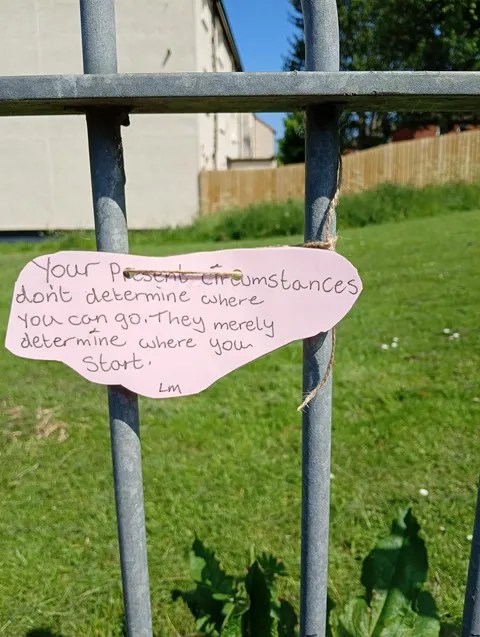
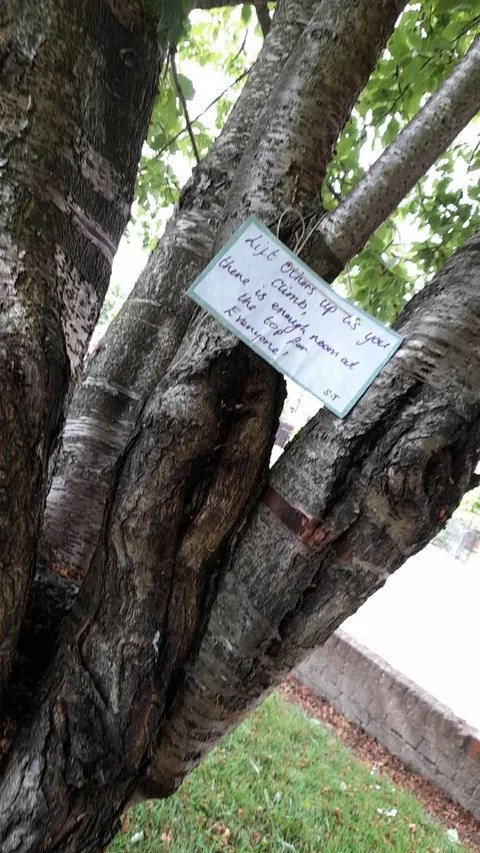
SASS4US (Support And Survival Skills for Unleashing self love) is a trauma support group facilitated through LIFT, bringing together women aged 20 to 50 from the Muirhouse and West Pilton communities.
The group provides a safe and supportive space where women can talk openly about life experiences, mental health, personal challenges, and goals for the future. Around eighteen women attend every week.
Through mutual support, encouragement, and understanding, members work together to build confidence, develop resilience, embrace positive change, and support one another in their personal journeys.
Recently, many group members shared their concerns about the negative atmosphere they feel has developed within the local community. Some residents have expressed feeling anxious or even afraid to visit local shops, and there is a growing sense that negative stories are overshadowing the many positive aspects of the area.
Wanting to make a difference, the women of SASS4US decided to take positive action. They created inspirational stones and uplifting quotations, which have been placed throughout the Muirhouse and West Pilton communities.
Their writings aim is to spread kindness, hope, and encouragement, while reminding people that even small acts of positivity can have a meaningful impact.
This project reflects the group’s commitment not only to supporting each other’s wellbeing but also to helping create a stronger, more connected, and more hopeful community for everyone.
The girls would like to be anonymous as they want to start making these each month and placing them around the community continuously.
Defence plan delays undermine UK credibility with allies and industry
The Westminster government’s delay in publishing the Defence Investment Plan (DIP) has undermined the UK government’s credibility with its allies, and its ability to provide a stronger deterrent to its adversaries.
In a report into the Ministry of Defence’s 2024-25 accounts, the Public Accounts Committee (PAC) warns that the long delay to the DIP risks squandering the opportunities provided by advances in technology, hindering the government’s attempts to modernise the Armed Forces.
It has been three years since the Ministry of Defence (MoD) published its Equipment Plan for 2023-2033, in which the PAC then found no credible plan to deliver the military capabilities government wanted.
Since then, the PAC expressed extreme disappointment last year at the continued lack of a plan setting out how the government would invest the funding increases set out by the high-level ambitions in the Strategic Defence Review.
The delay to the DIP, the PAC’s report finds, has been due to the lack of a decision from the MoD as to which capabilities, infrastructure and people it requires to transform the Armed Forces to be warfighting-ready within the available budget. It is also due to its failure to secure the cross-government agreement the DIP needs.
The PAC’s report lays out the impacts of the delay to the DIP, which include:
An inability to provide a stronger deterrent to the UK’s adversaries
A need now for the UK to recover credibility with its allies
An inability to equip the UK’s Armed Forces for the modern battlefield
Undermined credibility for the MoD with the defence sector
Additional cost pressures on the defence budget
An adverse impact on industry, particularly for smaller companies.
Time is money in procurement, and the PAC notes suppliers are now increasing their prices to take account of the international situation’s continued deterioration. The MoD must demonstrate the flexible use of the DIP to take account of the changing international context in decision-making on expenditure and capabilities.
With the delay also risking having weakened the UK’s defence industrial base, the PAC is seeking action from the MoD to mitigate impacts of this delay on suppliers.
The PAC’s report further finds that the MoD is placing unrealistic expectations on how soldiers can safely operate the Ajax armoured vehicle. Ajax has unresolved noise and vibration issues, with 33 soldiers reporting symptoms after operating them.
Five soldiers were still under medical review when the MoD appeared before the PAC in March 2026, at which time the MoD claimed Ajax is safe when operated and maintained correctly within its design parameters.
The MoD now expects soldiers to do maintenance checks every time they stop the Ajax vehicle. This seems unreasonable, given soldiers may need to use vehicles for long periods in combat, and the PAC is calling on the MoD to explain how the current required operating parameters and restrictions for Ajax are realistic and appropriate.
With an Ajax 2 package of upgrades now in development at an unknown cost, the PAC awaits to see, more in hope than expectation, whether these endeavours will succeed. The MoD must now set out precisely how much it will pay for Ajax, and why it still expects that it can be made fit for purpose.
Turning to the MoD’s ever-increasing nuclear expenditure, which made up 18% (£10.9bn) of the defence budget in 2024-25 (expected to rise to up to 25% in coming years), the PAC understands that a proper mechanism will now be set up to address a state of affairs under which public information about nuclear programmes is too sensitive for Parliament to properly scrutinise them.
This enhanced Parliamentary scrutiny, long called for by the PAC, must not be delayed by current political uncertainty, and the MoD must now set out how and when it will routinely provide Parliament with more detailed cost and performance information for the nuclear enterprise.
The MoD’s accounts further show a completely unacceptable failure to maintain accounting records to support £6bn+ of assets. The accounts do not provide a true and fair representation of the MoD’s financial position, due to a misclassification of historic expenditure by the Atomic Weapons Establishment as spending that had resulted in it developing infrastructure.
The report recommends MoD set out how it will prevent this happening again.
The PAC has long scrutinised the issue of recruitment and retention in the Armed Forces, and the latest public statistics for the year to October 2025 point to a corner being turned, with the number of people now joining up exceeding those leaving.
The MoD does not, however, know whether these improvements are as a result of its own efforts or if it can sustain them, and the PAC’s report makes recommendations targeted at helping it do so.
Sir Geoffrey Clifton-Brown MP, Chair of the Public Accounts Committee, said: “Much commentary has been expended recently on the months-long delay to the DIP. However, from this Committee’s point of view, the nation has now in fact gone years without a credible plan for UK military capability.
“Those responsible may argue there are good reasons for the DIP’s continuing absence, but our report makes clear that excuses to the effect of ‘taking the time to get the details right’ simply do not cut it.
“Whatever the content of the DIP when it eventually does appear, the damage from its absence has been done – to the nation’s credibility, to its safety, to its Armed Forces, and to certainty within its entire defence industrial base.
“Any government minister attempting to explain away this delay to the DIP should instead ask themselves what message the bureaucratic drift of the past months has given to the public, as well as the UK’s allies and its adversaries, and simply apologise.
“Whatever else the government hopes to achieve with the DIP, it has certainly gained the unwelcome honour of being the most anticipated document in my entire political career. As we still await its publication at time of writing, I know I speak for the defence interests of the whole UK when I say – this had better be good.
“Our Committee sadly must also add a chapter to the troubled history of the Ajax programme with this report. Our thoughts are with all those soldiers who reported symptoms from noise and vibration after operating these vehicles, and we were frankly astounded to hear officials explain that proper use of Ajax requires maintenance checks every time it is stopped.
“This is frankly an insult to intelligence, and much good may this advice do our fighting men and women if called upon to operate Ajax in combat. The MoD must now explain how it will make Ajax fit for purpose, and how much this will cost.
“Finally, given the ratchet effect of ever-increasing while opaque nuclear spending, about which both my and predecessor Committees have long warned, and in the context of a completely unacceptable £6bn accounting muddle around the Atomic Weapons Establishment, a new sensitive scrutiny mechanism is to be welcomed.
“Political uncertainty must not derail these arrangements, in order that the public may gain greater confidence that their money is being spent wisely.”
Workplace expert, Acas, has published some top tips today to help employers prepare for potential issues that could arise over the World Cup period.
The World Cup is a big sporting event for many workers who may want to follow their favourite football team and enjoy the event. Some staff may want to book time off to go to the World Cup or attend special group events in the UK. Others will want to use the internet or their phones to stay updated on the match results.
Acas advises employers to plan ahead and have agreements in place that cover requests for time off, sickness absence and flexible working hours during this period.
Acas Head of Workplace Advice, Susan McGuigan, said: “The World Cup is an exciting event for many football fans but staff should avoid getting a red card for unreasonable demands or behaviour in the workplace during this period.
“Many organisations need to maintain a certain staffing level to operate effectively. Bosses should have a set of simple workplace agreements in place before kick-off to help ensure their businesses remain productive whilst keeping staff on side too.
“Our top tips can help managers get the best from their team players, arrange appropriate substitutions if necessary and avoid unnecessary penalties or unplanned sendings-off.”
The 2026 World Cup will take place in Canada, Mexico and the USA between Thursday 11 June and Sunday 19 July. Due to the time difference, football match start times in the UK will vary between 5pm and 5am. There are also likely to be pre-match build ups that staff may be keen to watch or listen to.
Acas offers some top tips for employers to consider for the World Cup:
Time off – employers may wish to look at being a little more flexible when allowing workers time off during this period and staff should remember that it may not always be possible to book a holiday. The key is for both parties to try and come to an agreement. All requests for leave should be considered fairly. A consistent approach should be applied for holiday requests for other major events too as not everyone likes football!
Drinking or being under the influence at work – some people may like to participate in a drink or two while watching the match or go to the pub and watch it live. Match times this year could start late at night into the early hours of the morning, which means fans could drink later than usual.
It may be helpful to remind staff they must not come to work under the influence of alcohol and that anyone caught drinking at work or under the influence of alcohol in the workplace could be subject to disciplinary procedures.
There may be a clear no alcohol policy at work but workers may need a reminder.
Sickness absence – employers may want to remind staff thattheir sickness and attendance policies will still apply during the World Cup. Any unauthorised absence, patterns of absence or late attendance are likely be investigated and could result in formal proceedings.
Flexibility – one possible option is to have a more flexible working day. Workers could come in a little later or finish sooner and then agree when this time can be made up. This is particularly important given the time differences between the UK and the host countries.
Allowing staff to listen to the radio or watch the TV may be another possible option. Employers could also allow staff to take a break during match times. Another option is to look at allowing staff to swap shifts with their manager’s permission.
It is important to be fair and consistent with all staff if you allow additional benefits during the World Cup. Any change in hours or flexibility in working hours should be approved before the event.
Use of social media andwebsites – there may be an increase in the use of social media or websites covering the 2026 World Cup.
Employers may wish to remind staff of any policies regarding the use of social media and websites during working hours. The policies should be clear on what is and isn’t acceptable web use.
Bank holidays and being fair to staff – there is a World Cup bank holiday on 15 June 2026 in Scotland but it does not apply to England.
Employers should keep in mind that UK workers support a diverse range of national teams. Any plans and arrangements that are made at work should apply fairly to supporters of any team.
Supporters can be passionate about a national team and managers may want to remind staff to be respectful to each other.
We’re incredibly grateful to have received £192,288 through the Future Ready programme, supported by Battersea.
This funding will help strengthen the future of Edinburgh Dog and Cat Home, allowing us to grow our impact, improve how we work, and ensure we can continue to be there for dogs, cats and the people who love them across Edinburgh and beyond.
With Battersea’s support, we’ll be able to invest in both our people and infrastructure to help meet growing demand for our services.
We’re hugely thankful to Battersea for their belief in our work, their trust and shared commitment to improving animal welfare. Thanks to their support, we can continue to provide safety, care and second chances for dogs and cats who need us most across Edinburgh and beyond for the next 140 years.
Scotland’s relationship with the United States of America will be celebrated through a new tartan to celebrate 250years of American independence.
A new design by Kaci McEwan, a student from Heriot-Watt University’s School of Textiles and Design, has been selected as a symbol of the historic and cultural ties between Scotland and the United States.
The tartan, which was commissioned by the Scottish Government and was selected by a panel including the US Ambassador to the UK Warren Stephens, focuses on the United States’ journey towards independence, with carefully numbered threads and colour sections symbolising key moments in early American history.
External Affairs Minister Stephen Gethins said: “Scots were at the heart of the United States’ emergence as an independent country. Ever since, those deep bonds of family and friendship have endured, with a diaspora of millions across the US. Celebrating 250 years of American independence strengthens the enduring connection between America and Scotland – bonds which act as a bridge between our past, and our future, as two proud nations.
“The winning tartan commemorates significant moments in US history, whilst highlighting Scotland’s creative drive to offer a modern symbol of the strong and evolving cultural ties between both countries.
“I warmly congratulate Kaci McEwan on this outstanding achievement, and commend all those shortlisted for their exceptional work in bringing this shared history to life. Each of the shortlisted designs reflected a deep appreciation of the historic ties between Scotland and the United States.
“As Scotland takes its place at the men’s World Cup, the Scottish Government will showcase the skills and expertise we can offer the US and wider world.”
Heriot-Watt University’s School of Textiles and Design student Kaci McEwan said: “I still can’t quite believe it. When I first read the email, I genuinely thought it must have been sent to everyone and I’d misunderstood it.
“I had to read it a few times before it really sank in that I’d actually won. It feels incredibly surreal, but also really rewarding, because I put so much time and care into researching and developing the design.
“For me, the tartan was about telling a story. Every thread and colour represents a moment in the journey towards the Declaration of Independence — from the 13 colonies to key dates and even subtle references like the 4th of July. Being able to bring that narrative to life through weaving has been such an exciting creative challenge.
“Looking back, this opportunity really reflects the kind of experience I’ve had at Heriot-Watt. I’ve been encouraged to think creatively, push my ideas further and take on opportunities I might not have otherwise considered. This competition was something I was encouraged to apply for, and that support has made a huge difference.
“To now have my work recognised on such an international scale is incredibly exciting, and I’m so grateful for the guidance and encouragement I’ve had throughout my studies. It’s been an amazing journey, and this really feels like a special way to mark the end of it.”
Jennifer Condon, Executive Vice President of America250 said: “America’s 250th anniversary is an opportunity to celebrate the people, traditions, and cultural connections that have shaped our nation’s story.
“This commemorative tartan is a meaningful tribute to the enduring friendship between Scotland and the United States, and Kaci McEwan’s thoughtful design beautifully reflects the shared history and values that continue to connect our two countries.”
Professor Fiona Grant, Executive Dean for the School of Textiles and Design at Heriot-Watt University said: “This is a fantastic achievement for Kaci, and I would like to offer my warmest congratulations on creating such a thoughtful and compelling design.
“The creativity, research and storytelling behind her work is truly impressive and it will be wonderful to see it play a part in such a significant international celebration.
“I would also like to recognise the outstanding contribution of all the students who took part. The quality of submissions was exceptionally high, reflecting the talent, dedication and innovation that define our School.
“Opportunities like this, working on a live international brief of genuine cultural significance, are incredibly rare, and they speak to the distinctive, real-world experiences available to Heriot-Watt students. We are immensely proud to see our students representing Scotland’s creativity and heritage on a global stage.”
The expert panel consisted of:
Mark Boyce, Head of Scottish Government USA
Leonie Bell, CEO of V&A Dundee
Marnie Collins, Programme Director at Heriot-Watt University
Alan Cumming, Design Director at Lovat Mill
US Ambassador to the UK Warren Stephens
Jennifer Condon, Executive Director of America250.org
Rep. Robert Aderholt, Co-Chair of the Friends of Scotland Caucus and Commissioner Co-Chair of the Congressional America250 Caucus
Stewart McLaurin, President of the White House Historical Association
Camilla Hellman, Executive Director of the American Scottish Foundation
Students from Heriot-Watt University’s School of Textiles and Design were commissioned and funded by the Scottish Government to create a tartan symbolising the historic and cultural ties between Scotland and the United States.
Kaci McEwan’s tartan was selected from five shortlisted designs. Kaci will travel to Washington D.C. to formally present the tartan from Scotland to the America250 organisation on Independence Day, July 4.
The tartan will be officially registered with the Scottish Register of Tartans as the official commemorative tartan for the America-250th organisation.
An initial commemorative run of tartan scarves will be produced at Lovat Mill in the Scottish Borders.







 Exciting summer camp with a difference is now open for booking


