Armed Forces charity Poppyscotland is calling on businesses, landmarks and venues across the country to ‘Light Up Red’ to raise awareness for the 2026 Scottish Poppy Appeal.
From castles and council buildings to schools and statues, the charity is urging Scotland’s most iconic structures to show their support in the lead-up to Remembrance Sunday on 8th November.
Last year, almost 200 locations took part across the country including The Kelpies, The City Chambers in Edinburgh, Hamilton Town Hall, Ness Bridge, Rosslyn Chapel and the University of Glasgow. The charity hopes to surpass this total in 2026.
Any building with external lighting can participate simply by adding red gel filters to its lights, joining a striking visual display of remembrance.
The Scottish Poppy Appeal is Scotland’s biggest fundraising campaign, raising more than £2 million annually for the charity’s vital welfare work with veterans, serving personnel, and their families.
Leanne Bonner, Head of Scotland at Poppyscotland, said: “Each year our Light Up Red campaign raises awareness of the Scottish Poppy Appeal up and down the country, and we know from our Armed Forces community that it means a lot to them to see such a visible show of support and togetherness.
“In 2025, we had had great success across the length and breadth of Scotland, and we hope to build on that again this year. That’s where your community, your business or your organisation can join in.”
For more information about how to get involved, visit:
Holyrood Minister convenes industry to help unlock potential £23 billion boost to economy
Businesses across Scotland are being urged to harness the power of artificial intelligence (AI) as the Scottish Government brings together industry leaders to discuss how to turn its potential into growth.
Estimates suggest AI could generate more than an additional £23 billion in annual GDP for Scotland by 2035, with the right investment and leadership from government and businesses across the economy.
Innovation Minister Alyn Smith met techUK Chief Executive Julian David and a roundtable of industry representatives at CodeBase in Edinburgh yesterday (Tuesday 3 November).
The Scottish Government convened the discussion to hear directly from businesses about what is helping and what is holding back AI adoption.
Mr Smith said: “AI is one of the biggest opportunities for Scotland’s economy in a generation. The potential is there, with an additional £23 billion a year within reach by 2035. But it will only be realised if businesses take action.
“Whether you are an established firm or a growing start-up, and whether you are curious, cautious or sceptical about AI, now is the time to explore what it can do for you. We want Scottish businesses to harness AI to meet that ambition, and to exceed it.
“Scotland has a real advantage in the world-class talent our universities and colleges produce, and in the research and computing power behind them. That strength, working hand in hand with business, is what will turn this potential into jobs, investment and growth.
“Government can set the direction and help clear the way, but we need industry to tell us what works, what doesn’t and what would make the difference. That is why we have brought this group together today.”
Julian David, Chief Executive Officer of techUK, said: “The opportunity AI offers Scotland is significant, but it will only be realised if businesses and government pull in the same direction.
“Today’s roundtable is a chance for industry to share what is working on the ground and for government to listen and act. By collaborating, we can help more businesses of every size make the most of AI.”
Scotland’s AI Strategy is the Scottish Government’s five-year plan to harness AI to drive responsible and inclusive growth. Support is already available for smaller businesses. The National AI Adoption Programme for SMEs, backed by £1.8 million and launched in August, helps small and medium-sized businesses get started with AI and build confidence in using it safely and effectively. Its predecessor reached more than 1,000 businesses.
The roundtable will also discuss the role of Scotland’s universities and colleges in developing the AI and data skills the economy needs.
Mohamad Nour Alhoulani and his family came to Scotland a decade ago
A decade after arriving in the city without a penny, an Edinburgh Napier University student who escaped civil war in Syria has celebrated his graduation as an engineer.
Mohamad Nour Alhoulani and his family were forced to flee the sudden outbreak of armed conflict in 2011 – travelling over mountainous routes to neighbouring Lebanon as their homeland was destroyed.
Following years in a refugee camp, they were offered the chance to move to Scotland through a UN programme in 2016. They made their home in Edinburgh, where Mohamad began taking English classes – which led to college and later university.
Now, the 31-year-old has graduated from Edinburgh Napier with a BEngElectrical & Electronic Engineeringdegree, which he celebrated alongside is parents, wife and three children at the Usher Hall.
Mohamad said: “The revolution began when I was 16 years old. Like many other people, my family and I were forced to leave our home. It was destroyed piece by piece, and we had to keep moving to avoid the bombing.
“We went to Lebanon, where we lived in a refugee camp. Life there was extremely difficult, and I had to work in very hard jobs to earn money and support my family.
“When I was 21 years old, I was given the opportunity to come to Scotland through the United Nations resettlement programme. It was a new beginning for me, but it was also a huge challenge.
“I arrived with zero money. I had three dollars in Lebanese lira, which I used to buy a bottle of water in a Turkish airport on the way.
“When we got here I didn’t understand people when they spoke, or the culture. But I wanted to learn quickly.A local organisation called The Welcoming helped me to take language classes at the local community centre. I started volunteering with them soon afterwards.
“I would never have imagined I would go from that situation to be graduating today.”
Once Mohamed got used to life in Scotland, he decided on a new career path – engineering.
He completed several courses at Edinburgh College, while also working and raising his young children, before being accepted to study at Edinburgh Napier University.
Mohamad added: “I decided to study electrical engineering because I wanted to develop a professional career, find stable employment and create better opportunities for my children.
“We had the opportunity to come to Scotland, so I also want to be able to do something to make a positive difference for people here.
“I took to it pretty quickly. I remember one project where we made a little robot car – and I was so happy when it worked! I found I enjoyed solving problems.
“Today, I look back at it all with satisfaction and gratitude. I am thankful for the opportunities I have received in Scotland, for the people who supported me, and most importantly, for the chance to continue learning.”
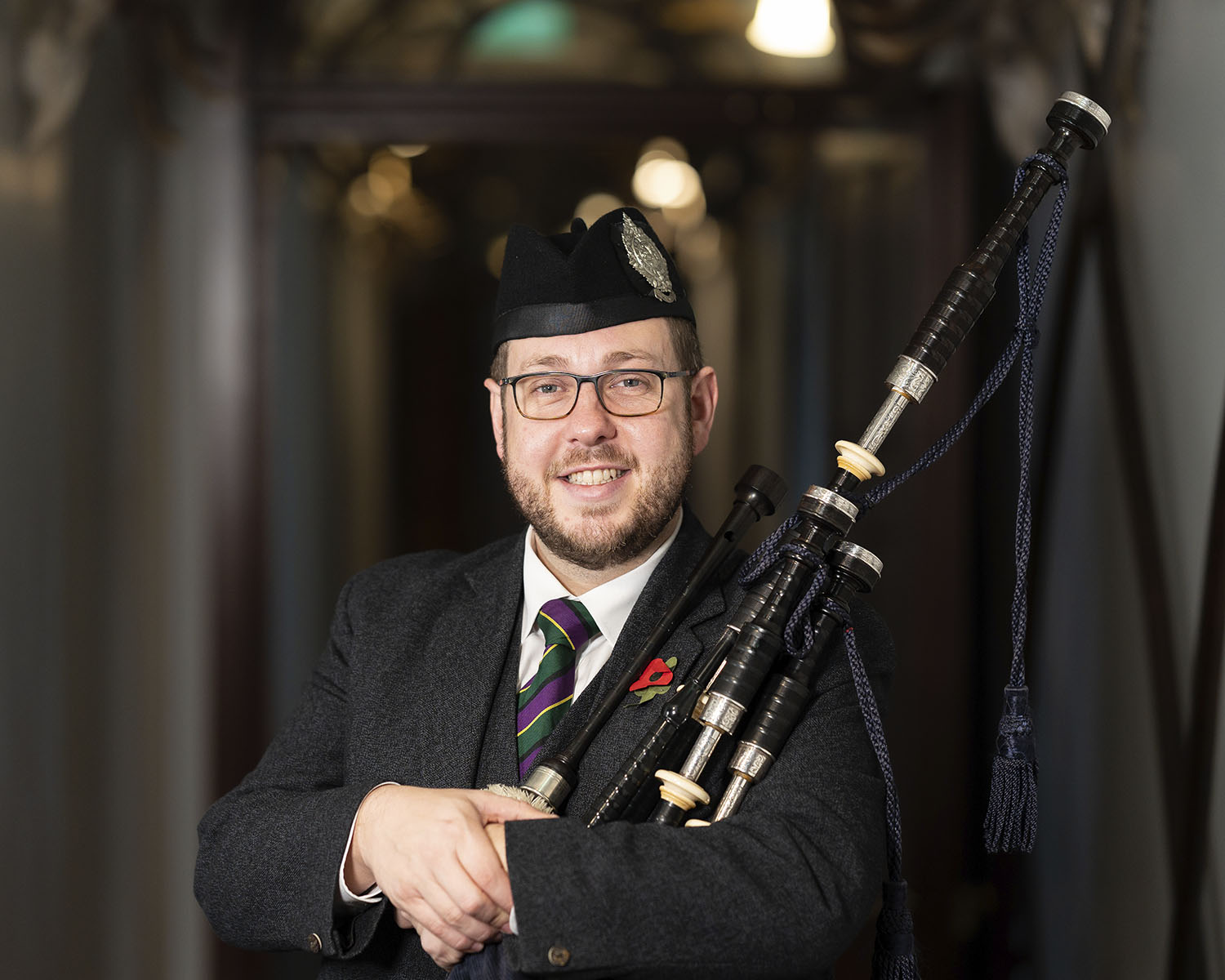
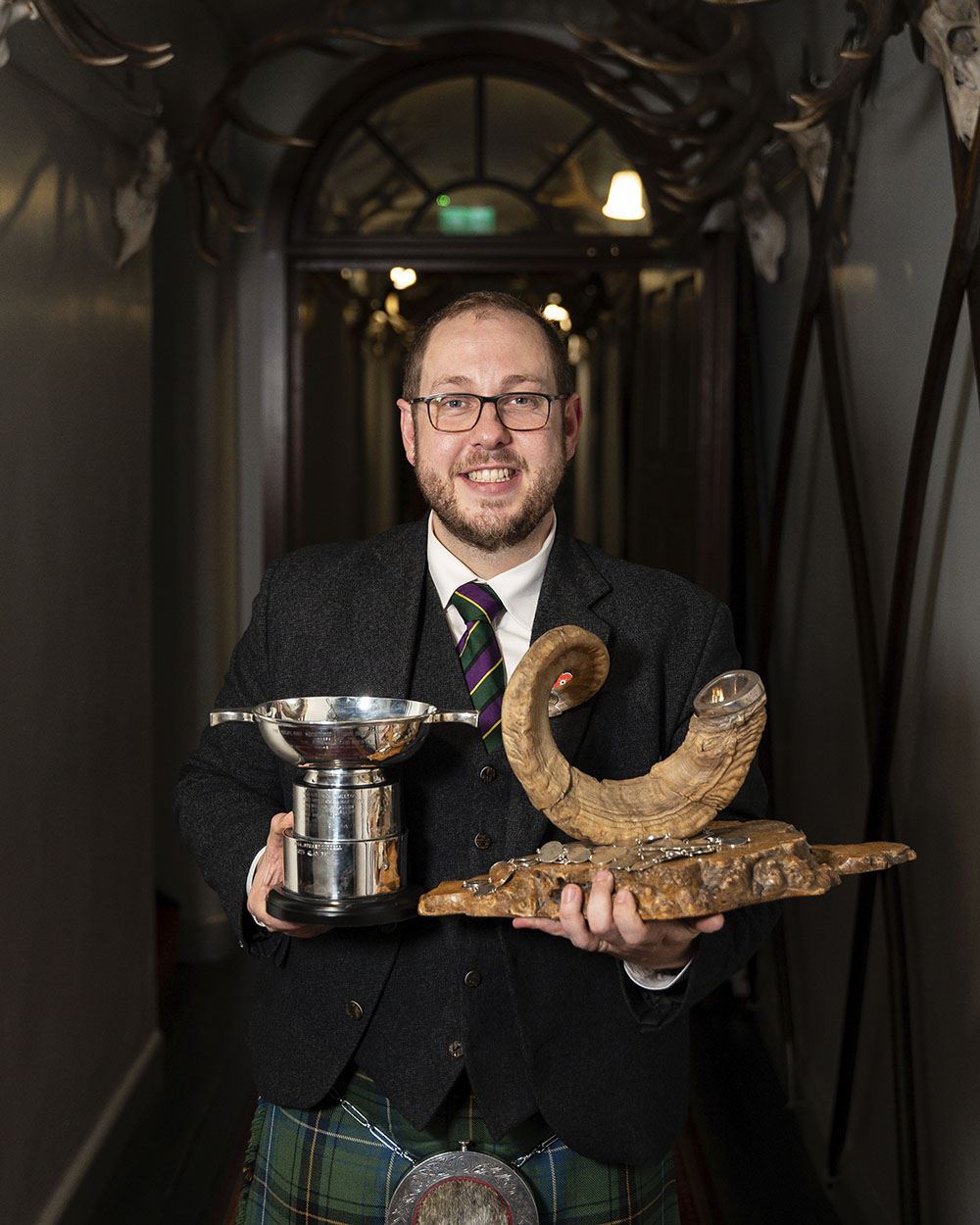
Edinburgh piper and Fettes College piping instructor Alasdair Henderson has been crowned Overall Champion at the 2026 Glenfiddich Piping Championship, held at Blair Castle in Blair Atholl on Saturday 31 October.
Alasdair, who lives in Edinburgh, teaches piping at Fettes College and previously taught at George Heriot’s School. He is also Pipe Sergeant of Inveraray & District Pipe Band, which he joined in 2010, taking up his current role in 2014.
The Glenfiddich is widely regarded as the most prestigious competition in solo piping and known as the world solo piping championships. Only ten of the world’s finest pipers receive an invitation, having qualified through major competition successes during the year. Alasdair secured his place by winning the Piping Live! Masters Solo Competition in August.
Alasdair won the Piobaireachd and placed third in the March, Strathspey and Reel to take the overall title for the first time. Stuart Liddell was second overall and fellow Edinburgh piper Iain Speirs third.
Alasdair said: “Receiving the award on Saturday was the best day of my piping life! I’ve worked an entire lifetime towards this and it feels fairly surreal at the moment.
“I was very happy with the way I played on Saturday and thought I put two really good runs together. I feel honoured to receive this prestigious title and trophy.”
Originally from Dunoon, Alasdair learnt the pipes from his uncle, P/M Jim Henderson. His family’s piping connections include P/M John McLellan DCM of Dunoon, the composer of Lochanside and The Road to the Isles, who also taught Jim as a boy.
At 88 years old, Edinburgh veteran Chris Armstrong is preparing for a moment he has waited a lifetime to experience.
This November, Chris will travel to London with Sight Scotland Veterans to take part in the Remembrance Parade at the Cenotaph, fulfilling a life-long ambition he never thought would become reality.
Chris completed his National Service between 1957 and 1959 and has always felt a deep connection to Remembrance. After developing cataracts and losing confidence in later life, he says Sight Scotland Veterans helped him regain his independence, make new friends and enjoy opportunities he never thought possible.
Now, thanks to the charity’s support, he will proudly march past the Cenotaph and salute His Majesty The King for the very first time.
He said: “Remembrance means a great deal to me. It’s such an important occasion to honour those who lost their lives. I remember the end of the war in our street when I was young. Two local heroes came home, one had lost an arm and the other had lost his sight. Those memories have stayed with me all my life.
“I lost two uncles and an aunt as a result of the World Wars, so Remembrance has always been very personal for my family. My brothers also served, and we have always taken time to remember the loved ones, friends and comrades who never came home.
“Every year we attend the Edinburgh Remembrance parade to pay our respects. It’s an opportunity for all of us to reflect on the true cost of war. So many people gave everything, and we owe them so much for the freedoms we enjoy today.”
Chris says he will be very proud and emotional to march in the Cenotaph Parade and owes so much to Sight Scotland Veterans for making it happen.
“I’ve always wanted to be part of the Cenotaph Parade, so I’m really excited and incredibly proud to be going. To march past the Cenotaph and salute the King is something I’ve dreamed about for many years, but I honestly didn’t think it would ever be possible.
“To be there with my friends from Sight Scotland Veterans means a huge amount. It will be an emotional day. Marching alongside veterans from across the country, remembering those we’ve lost and representing the veteran community is a real honour.
“After having problems with my sight, I never imagined I would have an opportunity like this. To be 88 years old and finally fulfil a lifelong ambition is something very special, and I can’t thank Sight Scotland Veterans enough for making it possible.”
Chris adds: “Sight Scotland Veterans has been a tremendous help to me. I’ve been part of the charity for around nine months and it has genuinely changed my life. I live in sheltered housing in Edinburgh and always look forward to my days at the Linburn Centre.
“When you have problems with your sight, it’s easy to lose confidence and start to think there are things you can’t do anymore. What Sight Scotland Veterans has shown me is that this is simply not true and there is still so much life to be lived.”
A life-changing partnership between Age UK, Age Cymru, Age Scotland and Britain’s gas network companies is being extended to help more older people. The £1.7m partnership builds on the success of a previous nationwide initiative and has been co-designed by the organisations using insight and learning gathered from older people and frontline advisers. Its aim is to provide meaningful, practical and trusted support to older people across England, Scotland and Wales.
Led by SGN and funded by the organisation as well as Cadent, Northern Gas Networks and Wales & West Utilities, the programme extends their existing partnerships for a further two years and will run until March 2028 to help even more older people stay safe, warm and independent at home.
Almost 118,000 older households across Britain have already received personalised energy support thanks to the partnership. Thousands more benefitted from online information, benefits checks and practical guidance to help them manage energy costs and stay safe at home.
The programme has also strengthened the skills and expertise of advice teams across the Age UK, Age Cymru and Age Scotland networks. The partnership has enabled the charities to support thousands of vulnerable households through immediate practical assistance, including providing heat packs, longer-term energy advice, safety information and support to manage energy bills.
The enhanced knowledge developed through the programme continues to help advisers identify vulnerable customers and connect them with available support.
In one case, a 90-year-old man living alone had received a free carbon monoxide alarm through an Age Scotland partnership programme. When the alarm began flashing and beeping, he was unsure what the warning meant or what he should do.
While speaking with the man, an adviser recognised he was struggling to understand the vital safety advice and may not have been able to take the necessary action independently.
Concerned for his safety, the adviser contacted SGN directly, and an engineer was at the man’s home within an hour. While the carbon monoxide detector itself was found to be faulty, the engineer also discovered a gas leak in the property, allowing the issue to be identified and resolved before it could cause serious harm.
Pippa Lock, Head of Corporate Partnerships and Philanthropy at Age UK, said: “Older people are particularly vulnerable to the impacts of fuel poverty, often spending more time at home and needing to use more energy to maintain their health and wellbeing.
“Through the renewed partnership, they will be able to access specialist support designed around their specific needs.”
Through the next phase of the partnership, older people will continue to receive support with energy-related concerns and be connected to specialist services where needed by the national Age UK, Age Scotland and Age Cymru advice lines.
It will also provide trusted, accessible information tailored specifically for older people, alongside a learning-led and nation-responsive approach that reflects local needs and challenges.
Margaret Hamilton, Community Partnership Manager at SGN, said: “The Gas Distribution Networks and Age UK, Age Cymru and Age Scotland charities are extending our commitment to working together to ensure older people can access trusted advice, practical support and potentially life-saving interventions, helping them live safely, confidently and independently in their own homes for longer.”
Action is being taken to ensure domestic abuse survivors are not unfairly burdened by council tax debt.
The Scottish Government will create a statutory exception to joint and several liability rules to protect those who have faced domestic abuse, with a consultation launching as the first step in the process of reform.
This will mean that, where relevant criteria are met, survivors would only be liable for 50% of their liability for both council tax and water & sewerage charges. They would also be able to seek support from the local authority in reducing that remaining liability or removing it entirely.
From 1 April 2027, survivors and all council taxpayers will also benefit from a 63-day period after missing a council tax payment before any enforcement action can be taken.
The consultation will consider other reforms planned for all council taxpayers including:
Improving processes around council tax administration and enforcement
Easing rules around the backdating of council tax reduction
Exploring changes to the rules around the twenty-year debt expiration (prescription) period
Deputy First Minister Jenny Gilruth said: “This government is taking action to tackle the epidemic of violence against women and girls.
We know that financial issues can too often be a barrier to leave an abusive relationship and so we must act where we have the power. We will ensure that our council tax system protects and supports those who have experienced domestic abuse.
“Controlling a person’s finances, building up debt in their name without their knowledge, or forcing them to take on debt through threats or coercion are all forms of abuse.
“This package of reforms will ensure women are not unfairly burdened by council tax debt, and prevent women being tied to men who abuse them by a debt to the state.”
Dr Marsha Scott, CEO of Scottish Women’s Aid, said: “We welcome the Scottish Government’s commitment to introducing a statutory exception from joint and several liability for council tax.
“Women experiencing domestic abuse can be left facing debts they knew nothing about because of an abusive partner’s financial control.
“This financial abuse can leave women facing significant debt and hardship, making it harder to leave the abusive partner and rebuild their lives. This change is a step towards reducing women’s liability for debt that is not their own.”
Derek Mitchell, CEO of Citizens Advice Scotland, said: “Council tax debt is the most common type of debt people seek advice about from our network of local Citizens Advice Bureaus (CAB).
“We very much welcome the extension to the period before debt recovery begins. This will be crucial for helping people who are struggling to pay their council tax, giving them much-needed time to get advice and support from their CAB.
“The wider review of council tax administration can play a vital role in rewiring the system to prevent unnecessary debt and support people to make payments.”
The Scottish Government’s Statement of Action following the statutory review of joint and several liability for council tax arrears and how they impact victim-survivors of domestic abuse can be found here –
Thousands of patients left waiting 12 hours EVERY SINGLE MONTH
The Royal College of Emergency Medicine is raising the alarm ahead of winter, as new stats show that Emergency Departments (EDs) are struggling more than they were this time last year.
The latest data, from Public Health Scotland, showed that in September 2026 8,441 patients (6.7% of total attendances) at major EDs waited more than 12 hours before being admitted, discharged or transferred.
That’s almost 2,000 more than in September 2025.
RCEM is calling on the Scottish Government to tackle the bed capacity issue which is largely driving many of these long waits and for a reduction in corridor care by 50%.
When patients at the ‘back door’ of the hospital can be discharged in good time, it allows A&E to admit new patients into beds, freeing up Emergency Care space.
Meanwhile, just 60.6% of patients waited fewer than four hours – well below the 95% target set by the NHS.
Dr Fiona Hunter, RCEM Scotland Vice President, said: “Throughout 2026, EDs have been in a state of crisis with absolutely no room to stretch when extra pressure comes our way.
“Thousands of patients each month have been waiting for more than half a day in our EDs. That’s thousands of our own parents, children, brothers and sisters experiencing agonising waits because of a total breakdown in patient flow.
“As these latest figures show, our Emergency Departments (EDs) are far from ready for the surge in demand which we know will come when winter hits, as it does every year.
“Last winter was incredibly tough – both for patients and for the staff trying their best to look after them. We are entering the cold months now in a worse state than this time last year, despite promise after promise that things would be different.
“We once again call on the government to urgently send support our way in the form of improvements to the ‘back door’ of our hospitals. Lives are at stake, and without immediate intervention, EDs are at risk of collapse.”
Today’s data also showed that:
An average of 1,973 inpatient beds were occupied by patients medically fit to be discharged
12-hour waits in September 2026 were 28 times higher than September 2019
19,589 patients waited more than eight hours – the highest number on record
British Sign Language (BSL) users can now get immediate help communicating with pharmacists anywhere in Scotland through a new UK-first video interpreting service.
The pilot lets BSL users connect with an interpreter via their own smartphone. They can then speak face-to-face with pharmacy staff about minor illnesses such as a sore throat or cough, with no need to book in advance.
Deaf people who rely on BSL have previously faced communication barriers when engaging with community pharmacies and this represents a new way of independently obtaining support. The Contact Scotland BSL Video Remote Interpreting (VRI) pilot was introduced by the Scottish Government following engagement with Scotland’s deaf community and will run for six months.
Public Health Minister Maree Todd said: “Pharmacy First is a vital service that gives quick and easy access to advice and treatment for everyday health concerns, often without needing an appointment.
“Now deaf BSL users can also walk into any pharmacy and receive the same fast, independent healthcare advice as everyone else.
“This is removing barriers and ensuring BSL users are not left waiting or without support when they need it. I want to help people access more services at their fingertips, in their communities and closer to home.
“Scotland is the first part of the UK to have a fully funded free-to-use service which has been shaped by the views of BSL users themselves and this pilot is the next step in expanding access. I thank everyone who helped the Scottish Government bring this forward.”
A spokesperson for Community Pharmacy Scotland said: “We are pleased to see that this initiative seeks to enhance the experience of people who use British Sign Language.
“We expect that pharmacy teams will have even greater confidence that they are understanding and meeting the needs of the people in their surrounding areas.”
Contact Scotland BSL interpreters are supplied by Sign Solutions and Managing Director Clare Vale said: ‘We are delighted to see the VRI pilot now live, marking a significant milestone for the Contact Scotland BSL service.
“This is an important step towards improving access to pharmacy services for deaf and deafblind BSL users across Scotland. We look forward to seeing the positive impact this will have on accessibility.”