A Nigerian woman has been sentenced to 22 years in prison for attempting to traffic Nigerian girls through Heathrow Airport to work as sex workers in brothels across Europe. Continue reading Gang leader jailed over trafficked girls
A Nigerian woman has been sentenced to 22 years in prison for attempting to traffic Nigerian girls through Heathrow Airport to work as sex workers in brothels across Europe. Continue reading Gang leader jailed over trafficked girls

Our political leaders have been quick off the blocks to support British athletes taking part in the Olympic Games.
Continue reading Political leaders in race to support Team GB in Rio

Charities and campaigners at the forefront of efforts to end modern slavery in the UK and overseas took part in a roundtable hosted by the Home Secretary, Amber Rudd, and the UK’s Independent Anti-Slavery Commissioner Kevin Hyland on Monday.
The meeting, also attended by Minister for Vulnerability, Safeguarding and Countering Extremism, Sarah Newton, highlighted the UK’s commitment to ending slavery and to set out new measures and support announced by the Prime Minister including:
The new support comes one year on from the introduction of the Modern Slavery Act which increased penalties for offenders, protected victims from criminalisation, and created the role of the Independent Anti-Slavery Commissioner.
As well as the new measures announced, an independent report by barrister Caroline Haughey highlights good progress in the first year of the act – 289 modern slavery offences were prosecuted in 2015 and there was a 40% rise in the number of victims referred for support – and identifies opportunities to do more.
Following the roundtable, the Home Secretary had the opportunity to meet a survivor of modern slavery: ‘J’ who was trafficked from Asia to the UK and held for 2 years by her captors.
Home Secretary Amber Rudd said: “While we can never truly understand the suffering experienced by victims of modern slavery, we will continue to take action to end this abhorrent crime.
I will work with the Prime Minister and all those campaigners and charities at the roundtable to ensure this government delivers for every victim both here and overseas. The harrowing experiences of victims like J will only intensify the government’s actions to end modern slavery.”
Those charities that attended the roundtable included Barnados, the Salvation Army, Medaille Trust, Human Trafficking Foundation, Anti-Slavery International, Hestia and End Child Prostitution, Child Pornography and Trafficking of Children for Sexual Purposes (ECPAT UK).
J decided to come to the UK to study and to have a better future and was exploited by a woman from her own community.
Once in London, J wanted to improve her language skills and decided to do so by volunteering in a store-café owned by a woman from her own community within London. J had met this woman at the temple, and she trusted her dearly. For 2 years she was forced to work for 14 hours a day with only 2 toilet breaks and no lunch or dinner time. She was not paid and was forced to miss days at college in order to staff the store.
The owner of the store used to mistreat her and the other ‘employees’, threatening them and their families to ensure that they did not report it to the police. Furthermore, the lady withheld the use of heating during the winter and did not allow the ‘employees’ to eat or drink during ‘working’ hours.
In August 2014, a police officer from the British Transport Police managed to befriend J. The police referred the case to the Salvation Army, who then referred the case to Hestia. J was then welcomed into Hestia’s safe-house accommodation and feels she has finally found some peace.
The Prime Minister has written an article explaining how her government will lead the way in defeating modern slavery.

A year ago the Modern Slavery Act that I brought forward as Home Secretary came into force. Continue reading PM Theresa May: Defeating modern slavery

First Minister Nicola Sturgeon held ‘constructive talks’ with the Prime Minister Theresa May at Bute House on Friday. The First Minister welcomed the Prime Minister to Edinburgh on what was her first official visit since coming into office.
Following the meeting, the First Minister said: “It was a constructive and very good discussion.
“The Prime Minister and I have big political disagreements but we are both women who approach business in a similar way, so I think we can have a good working relationship not withstanding those political differences.
“I was very pleased that Theresa May said that she was absolutely willing to consider any options that the Scottish Government now brings forward to secure Scotland’s relationship with the European Union. The process that is now taken forward by the UK Government will be open and flexible and the Scottish Government will be fully involved in that.
“These negotiations have yet to take shape and the UK Government don’t yet know exactly how they will proceed from here, but there is an agreement that Scottish Government officials will be very closely involved in discussions to give shape to this process and will be involved in that process. Crucially, and this is the most important point from my point of view, is that that process will be open to considering options that the Scottish Government brings forward.”
The First Minister reiterated to the Prime Minister that she will make sure Scotland’s interests are protected and she will continue to examine every option possible, including a second independence referendum. She added:
“I’ve said previously that if we want to protect our relationship with the European Union then Scotland may have to consider becoming an independent member. If it proves not to be possible to fully protect Scotland’s interests through the UK process then the Prime Minister knows that a second independence referendum is of course on the table.
“However, I’ve also been consistently clear that I want to examine all options for protecting Scotland’s position, protecting our interests, protecting our relationship with the EU. That’s why I’ve assembled a team of experts that will advise me on the options that might exist, and it was very important today to get a commitment from the Prime Minister to listen to options that the Scottish Government will bring forward.”
The Prime Ministers’s visit, coming less than 48 hours after being invited by Her Majesty The Queen to form a government, emphasised Mrs May’s ‘strong personal support’ for the Union in talks with the First Minister at Bute House.
The Prime Minister also affirmed the government’s commitment to fully engaging with the Scottish Government in the forthcoming negotiations about the UK’s exit from the European Union.
Speaking ahead of the visit, the Prime Minister said: “I believe with all my heart in the United Kingdom – the precious bond between England, Scotland, Wales and Northern Ireland. This visit to Scotland is my first as Prime Minister and I’m coming here to show my commitment to preserving this special union that has endured for centuries.
“And I want to say something else to the people of Scotland too: the government I lead will always be on your side. Every decision we take, every policy we take forward, we will stand up for you and your family – not the rich, the mighty or the powerful.
“That’s because I believe in a union, not just between the nations of the United Kingdom, but between all of our citizens. Whether it’s reforming the economy or strengthening our society, we are going to build a better Britain and a nation that works for everyone – not just the privileged few.”
Theresa May delivered her first statement as Prime Minister in Downing Street last night:

I have just been to Buckingham Palace, where Her Majesty The Queen has asked me to form a new government, and I accepted.
In David Cameron, I follow in the footsteps of a great, modern Prime Minister. Under David’s leadership, the government stabilised the economy, reduced the budget deficit, and helped more people into work than ever before.
But David’s true legacy is not about the economy but about social justice. From the introduction of same-sex marriage, to taking people on low wages out of income tax altogether; David Cameron has led a one-nation government, and it is in that spirit that I also plan to lead.
Because not everybody knows this, but the full title of my party is the Conservative and Unionist Party, and that word ‘unionist’ is very important to me.
It means we believe in the Union: the precious, precious bond between England, Scotland, Wales and Northern Ireland. But it means something else that is just as important; it means we believe in a union not just between the nations of the United Kingdom but between all of our citizens, every one of us, whoever we are and wherever we’re from.
That means fighting against the burning injustice that, if you’re born poor, you will die on average 9 years earlier than others.
If you’re black, you’re treated more harshly by the criminal justice system than if you’re white.
If you’re a white, working-class boy, you’re less likely than anybody else in Britain to go to university.
If you’re at a state school, you’re less likely to reach the top professions than if you’re educated privately.
If you’re a woman, you will earn less than a man. If you suffer from mental health problems, there’s not enough help to hand.
If you’re young, you’ll find it harder than ever before to own your own home.
But the mission to make Britain a country that works for everyone means more than fighting these injustices. If you’re from an ordinary working class family, life is much harder than many people in Westminster realise. You have a job but you don’t always have job security. You have your own home, but you worry about paying a mortgage. You can just about manage but you worry about the cost of living and getting your kids into a good school.
If you’re one of those families, if you’re just managing, I want to address you directly.
I know you’re working around the clock, I know you’re doing your best, and I know that sometimes life can be a struggle. The government I lead will be driven not by the interests of the privileged few, but by yours.
We will do everything we can to give you more control over your lives. When we take the big calls, we’ll think not of the powerful, but you. When we pass new laws, we’ll listen not to the mighty but to you. When it comes to taxes, we’ll prioritise not the wealthy, but you. When it comes to opportunity, we won’t entrench the advantages of the fortunate few. We will do everything we can to help anybody, whatever your background, to go as far as your talents will take you.
We are living through an important moment in our country’s history. Following the referendum, we face a time of great national change.
And I know because we’re Great Britain, that we will rise to the challenge. As we leave the European Union, we will forge a bold new positive role for ourselves in the world, and we will make Britain a country that works not for a privileged few, but for every one of us.
That will be the mission of the government I lead, and together we will build a better Britain.
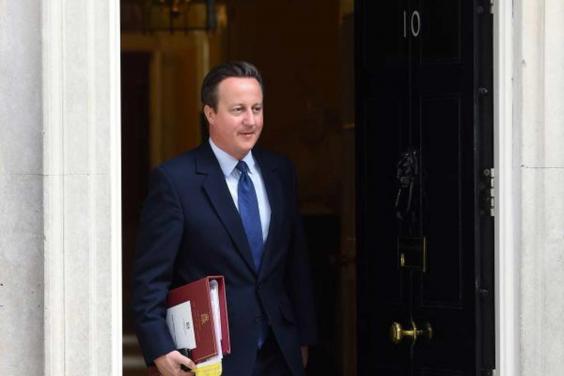
David Cameron made a statement in Downing Street on his departure as Prime Minister:

When I first stood here in Downing Street on that evening in May 2010, I said we would confront our problems as a country and lead people through difficult decisions, so that together we could reach better times.
It has not been an easy journey, and of course we have not got every decision right, but I do believe that today our country is much stronger.
Above all it was about turning around the economy. And with the deficit cut by two-thirds, two and a half million more people in work and one million more businesses, there can be no doubt that our economy is immeasurably stronger.
Politicians like to talk about policies, but in the end it is about people’s lives.
I think of the people doing jobs who were previously unemployed.
I think of the businesses that were just ideas in someone’s head and that today are making a go of it and providing people with livelihoods.
I think of the hard-working families paying lower taxes and getting higher wages because of the first ever National Living Wage.
I think of the children who were languishing in the care system and who have now been adopted by loving families.
I think of the parents now able to send their children to good and outstanding schools, including free schools that simply didn’t exist before.
I think of over 200,000 young people who have taken part in National Citizen Service, the fastest growing youth programme of its kind in the world, something that, again, wasn’t there 6 years ago.
I think of the couples who have been able to get married, who weren’t allowed to in the past.
And I think of the people on the other side of the world who would not have clean drinking water, the chance to go to school, or even be alive, were it not for our decision to keep our aid promises to the poorest people and the poorest countries in our world.
And we have used our stronger economy to invest in our health service. When I walked in there, there were 18,000 people waiting over a year for their operation. Today it’s just 800. Too many. Still too long.
But our NHS is a national treasure, and one whose staff perform miracles as I’ve seen every day.
And we’ve strengthened our nation’s defences, with submarines, destroyers, frigates and, soon, aircraft carriers, rolling out of our shipyards to keep our country safe in a dangerous world.
These are the choices and the changes that we have made.
And I want to thank everyone who has given so much to support me personally over these years.
The incredible team in No10, the civil servants, whose professionalism and impartiality is one of our country’s greatest strengths.
And my political advisers, some of whom have been with me since the day I stood for my party’s leadership 11 years ago.
I want to thank my children, Nancy, Elwen and Florence, for whom Downing Street has been a lovely home over these last 6 years. They sometimes kick the red boxes full of work. Florence, you once climbed into one, before a foreign trip, and said take me with you. No more boxes.
And above all, I want to thank Samantha, the love of my life. You have kept me vaguely sane and, as well as being an amazing wife, mother and businesswoman, you have done something every week in that building behind me to celebrate the best spirit of voluntary service in our country.

We will shortly be heading to Buckingham Palace to see Her Majesty the Queen, where I will tender my resignation as Prime Minister and I will advise Her Majesty to invite Theresa May to form a new administration.
I am delighted that for the second time in British history the new Prime Minister will be a woman, and once again, a Conservative. I believe Theresa will provide strong and stable leadership in fulfilling the Conservative Manifesto on which we were elected, and I wish her well in negotiating the best possible terms for Britain’s exit from the European Union.
Let me finish by saying this. The spirit of service is one of this country’s most remarkable qualities.
I have seen that service day in and day out in the incredible work of our armed forces, our intelligence agencies and our police. It is something I always knew. But as Prime Minister you see it so directly that it blows you away.
And of course writing those heart-breaking letters to the families who have lost loved ones is a poignant reminder of the profound scale of what these men and women give for us in the defence of our freedoms and our way of life. We must never forget that.
In a different way, I have seen that same spirit of service in the amazing contributions of countless volunteers in communities up and down our country who are making our society bigger and stronger.
And I am proud that every day for the past 2 years I have used the office of Prime Minister in a non-political way to recognise and thank almost 600 of them as Points of Light whose service can be an inspiration to us all.
For me politics has always been about public service in the national interest. It is simple to say but often hard to do.
But one of the things that sustains you in this job is the sense that, yes, our politics is full of argument and debate, and it can get quite heated, but no matter how difficult the decisions are, there is a great sense of British fair play, a quiet but prevailing sense that most people wish their Prime Minister well and want them to stick at it and get on with the job.
So I want to take this moment to say thank you to all those who have written letters and emails offering me that support, people who I will never get to meet and never get to thank personally.
It has been the greatest honour of my life to serve our country as Prime Minister over these last six years, and to serve as leader of my party for almost eleven years. And as we leave for the last time, my only wish is continued success for this great country that I love so very much.
“I want to send my very best wishes to Muslims at home and around the world celebrating Eid. Eid Mubarak.” – Prime Minister David Cameron.
Communities Secretary Greg Clark also wishes Muslims across the country a happy Eid.
Mr Clark said: “As the holy month of Ramadan comes to an end I would like to wish Muslims across the country a happy Eid.
“In the last month, mosques have opened their doors and invited people of the Muslim faith, of other faiths and of none to attend iftars, to enjoy a fast-breaking meal and learn more about what Ramadan means.
“This is particularly important at a time when we must all look to come together to combat the prejudices that can blight our communities.
“So I want to take this opportunity to wish Eid Mubarak to everyone marking this special occasion.”
“It is imperative that the UK Government respects those who have exercised their treaty rights and chosen to make a life in Scotland.” – First Minister Nicola Sturgeon Continue reading Reassurance sought for EU residents

Deidre Brock MP met with women from across the UK – including Edinburgh – who attended a mass rally outside Westminster for the WASPI (women against state pension inequality) campaign yesterday. Continue reading Brock calls for fair deal for women pensioners