Growing Scotland’s languages

Provisions to grow languages come into force

The Gaelic and Scots languages have gained official status as people across Scotland celebrate St Andrew’s Day.

The designation forms part of a range of measures coming into effect today through the Scottish Languages Act 2025.

These include powers for ministers to commission research into the use of Gaelic and Scots and establish teaching standards for the languages.   

Other measures of the Act include:

  • empowering parents to ask for a Gaelic school to be established in their area
  • supporting the creation of areas of linguistic significance in Gaelic communities so that ministers can better target policies to support the language’s growth
  • enabling parents in every part of Scotland to apply for Gaelic nursery and early years places for their children
  • ensuring that more qualifications are available in Gaelic
  • introducing targets on the number of people speaking and learning Gaelic

Deputy First Minister Kate Forbes said: “St Andrew’s Day is a fitting time to celebrate Scotland’s identity by recognising Gaelic and Scots as official languages. This is a historic milestone which acknowledges the vital place these languages hold in Scotland’s culture and heritage.

“This has been made possible through the Scottish Languages Bill which received unanimous support from MSPs.

“To support the continued growth of both languages the Scottish Government has already allocated £35.7 million for Gaelic and Scots initiatives this year, ensuring that this milestone translates into meaningful change for communities across the country.”

The Scottish Languages Bill was introduced on St Andrew’s Day in 2023. The Bill was passed in June and received Royal Assent on 1 August 2025.
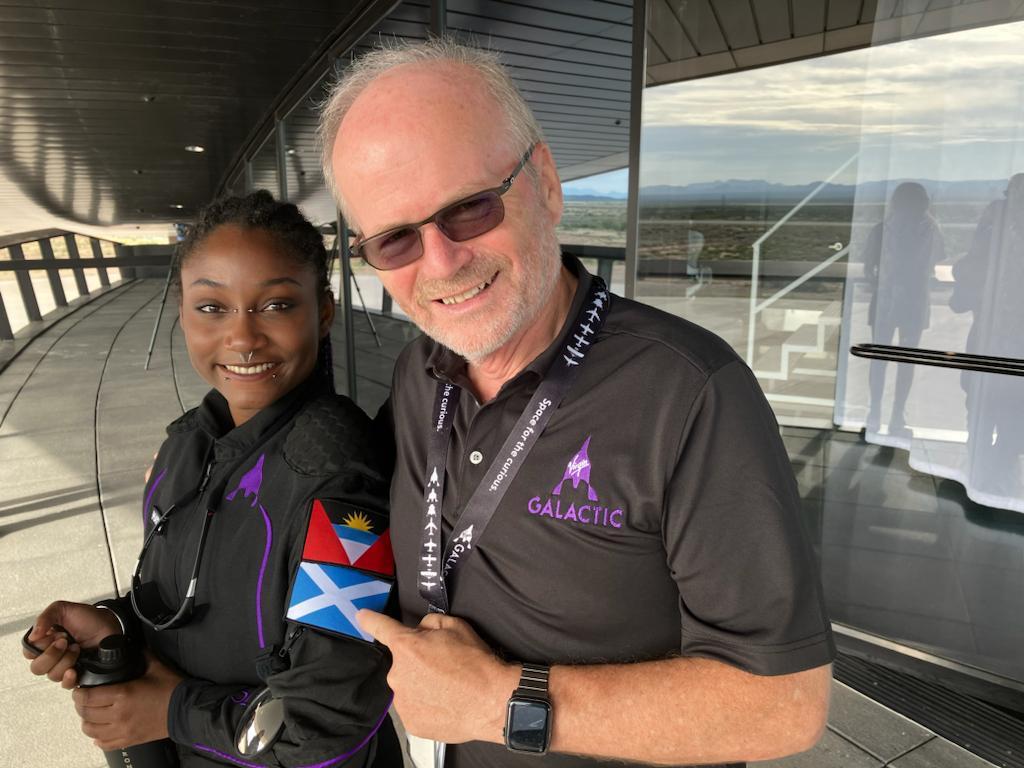
First Private Astronaut Mission Virgin Galactic: Scottish passengers and crew

  • Historic Mission Will Fly First Olympian and First Caribbean Astronauts to Space
  • Flight Window opens today – August 10, 2023
  • Spaceflight to be Livestreamed on VirginGalactic.com

Virgin Galactic will launch its seventh spaceflight and second commercial spaceflight, ‘Galactic 02,’ today (Thursday 10th August), which will fly three private passengers to space, achieving several historical milestones and furthering the Company’s mission of broadening access to space.

Ahead of today’s flight window, one of the private passengers, Anastatia Mayers, met with Dave Mackay, Chief Pilot, at Spaceport America. Both instantly connected with their Scottish links, with Ana currently studying at the University of Aberdeen, and Dave being the first native-born Scot to visit space.

Dave Mackay joined Virgin Galactic in 2009 and is the company’s Chief Pilot. Dave became the first Scottish astronaut during Virgin Galactic’s VSS Unity flight on February 22, 2019 and became a two-time astronaut as a pilot on VSS Unity’s first flight from new Mexico on May 22.

Anastatia Mayers is an 18-year-old philosophy and physics student at Aberdeen University. Driven by a passion for the sciences, Anastatia was drawn to the mix her degree offers. It was on this basis that her mother, Keisha Schahaff, elected Anastatia to accompany her on her spaceflight.

Both Antiguan-born and raised, Keisha and Anastatia are set to become the first astronauts from the Caribbean and the first mother and daughter-duo to fly to space. In a quirk of fate, Anastatia will become the second astronaut to hail from the University of Aberdeen. 

Anastatia said: “Philosophy and physics make an interesting combination, but it expresses both my love for science and my curiosity about how the world works.”

The dynamic and multinational crew highlights the role the commercial space industry can play in removing barriers that once existed to becoming an astronaut. To date, fewer than 700 people have travelled to space, with little diversity among that group. Virgin Galactic’s mission is to change that – beginning with an 800 strong Future Astronaut community that represents more than 60 different nations. 

The ‘Galactic 02’ mission will achieve several historical milestones, showcasing the power of each Virgin Galactic spaceflight to help redefine who gets to be an astronaut. VSS Unity will fly: 

  • The first astronauts from the Caribbean 
  • The first mother-daughter duo to go to space 
  • The first Olympian to go to space 
  • The second youngest person to go to space 
  • The second person with Parkinson’s to go to space 

Audiences are invited to participate virtually in spaceflight and see first-hand the extraordinary experience Virgin Galactic is creating for private astronauts.

The livestream will be available to watch on VirginGalactic.com.

Creating a robust future for Gaelic and Scots? Consultation launched

A commitment to ensure the long-term growth of Gaelic and Scots is at the heart of a new public consultation launched today.

The consultation seeks views on how to raise the profile of Scots, a new strategic approach to Gaelic medium education (GME) and the creation of a Gàidhealtachd, areas with a higher percentage of Gaelic speakers. It also covers the structure and function of Bòrd Na Gàidhlig – the principal public body promoting Gaelic in Scotland.

This feedback will help develop the forthcoming Scottish Languages Bill.

The 2011 census indicated that 57,375 people spoke Gaelic and 87,100 said they had some Gaelic skills and over 1.5 million people identified themselves as Scots speakers.

Launching the consultation during a visit to the GME unit at Goodlyburn Primary in Perth, Education Secretary Shirley-Anne Somerville said: “Gaelic and Scots are a significant part of Scotland’s culture and we want to ensure they thrive and grow.

“The situation for Gaelic speakers is an improvement on ten years ago as there are increased numbers in Gaelic medium education and more initiatives in place to support Gaelic in Scotland.

“We now need to build on what is in place and this consultation will show how we can make our measures more effective, ensuring Gaelic medium education continues to grow and provides a high quality education, that Bòrd na Gàidhlig operates effectively in the promotion of Gaelic, and consideration is given to the creation of a Gàidhealtachd.

“Scots is spoken throughout Scotland, but has never benefited from formal support through legislation and it may be time to consider this to help promote, strengthen and raise the profile of the language.”

The consultation will run until 17 November.