Chief Constable Jo Farrell gave a wide ranging update on how Police Scotland is delivering for the public during a meeting of the Scottish Police Authority Board yesterday (Thursday 22 February).
The Chief outlined the implications of policing’s budget allocation and discussed necessary criminal justice reform and the need to reset the parameters around Police Scotland’s role in responding to mental health incidents.
CC Farrell also shone a light on policing’s response to serious offences and securing important court outcomes; seizing illegal drugs; road traffic enforcement or picking out the unsung proactive community policing and prevention we know the public values.
The Chief also discussed joint work with the Authority to progress a programme of change across policing in Scotland.
CC Farrell said: “Change can be unsettling but we are building Police Scotland from a position of strength and we must clearly explain the changes to the public – and our officers and staff – so they can be confident in their police service.
“I have asked Deputy Chief Constable Jane Connors to lead our programme of change, focused on delivering service transformation at pace, prioritising the frontline, removing back-office duplication, and creating capacity to deal with new and increasing threats.
“The change programme will inform how we shape, train, enable, equip and deploy our greatest asset – that is our workforce, our officers and staff – to best meet the evolving needs and complexities of our diverse communities at best value.
“Our primary investment will always be in police officers. As Chief Constable, entrusted with significant public funding, I have a duty to ensure I maximise the number of experienced officers available to the frontline through the right investment in non-warranted support.
“So we will carefully examine which roles can and should be done by police staff, enabling a wider range of people access to a policing career and allowing even more of our officers to return to frontline and operational policing roles.
“Our aim is – must be – to bring the frontline of Scottish policing to the strongest position possible within the resources available.
“I think that’s my duty as Chief Constable, I think it is what the Authority would expect and demand. Providing the highest possible level of safety and security with the funding available is what the people and communities of Scotland deserve and would expect.”
Following a potential influx of toys and gadgets into people’s homes after Christmas, the Royal Society for the Prevention of Accidents (RoSPA) is reminding people of the dangers of button batteries.
While toys are required to have a secure compartment for button batteries, other items like electronic car keys, novelties and light up accessories are not. And after the UK has seen some tragic deaths and injuries in recent years, there has never been a more important time to learn about the dangers.
What are the dangers of button batteries?
When mixed with saliva, live or dead batteries release caustic soda which can easily burn through flesh.
This can burn through organs, such as from the oesophagus to the heart.
It can cause catastrophic internal bleeding, and a child might not always be able to articulate how they are feeling or that they have ingested one.
Children are particularly at risk due to having a smaller digestive tract which makes it more likely button batteries can get lodged.
If a parent or carer suspects their child has swallowed a button battery, get immediate medical attention.
What are some of the signs to look out for?
-Suddenly developing a cough, gagging or drooling a lot
– Being sick and having an upset stomach
– Pointing to their throat or stomach
– Having tummy, chest or throat pain
-Being quiet or more clingy than usual
– Having a reduced appetite and not wanting to eat.
Phillip LeShirley, Product Safety Advisor at RoSPA, said:“The dangers posed by button batteries should not be underestimated, and RoSPA welcomes the news that Standards for Toys have been strengthened recently to reduce further the risks that button batteries pose.
“We are advising parents to be mindful that it is not just toys that contain button batteries, and to be extra vigilant.”
A Holyrood Committee visited a building with potentially dangerous cladding in the Leith area on Tuesday this week to meet with residents and hold talks with a fire safety expert.
The visit followed the launch of a call for views on legislation which would give Scottish Ministers new powers to assess and remediate buildings in Scotland with unsafe cladding, following the 2017 Grenfell Tower fire.
The Scottish Parliament’s Local Government, Housing and Planning Committee, which is leading scrutiny of the plans, is now encouraging other people in Edinburgh, who live in or own properties with potentially dangerous cladding, to respond to the public consultation on the Scottish Government’s Housing (Cladding Remediation) (Scotland) Bill.
The legislation seeks to give Scottish Ministers powers to assess and remediate buildings with unsafe cladding, including where consent of the owners cannot be provided.
Under proposals in the Bill, the Scottish Government would also create and maintain a Cladding Assurance Register to give residents confidence about the assessment and works undertaken once those buildings are remediated.
The Bill would also give Ministers the power to establish a Responsible Developers Scheme, to support engagement by developers and encourage them to pay for or carry out remediation work.
Such a scheme would likely include agreement to pay for remediation costs by developers, with potential sanctions for developers that are eligible but do not join or fail to comply with the terms of membership.
As the Scottish Government has not carried out public consultation on the Bill, the Committee’s call for views will be critical in providing stakeholders including owners and residents of properties in buildings with potentially unsafe cladding, developers, insurers, surveyors, and fire safety experts an opportunity to comment on the proposals.
The call for views is now open and runs until Friday 8th December 2023.
Following the visit, Committee Convener, Ariane Burgess MSP, said: “Cladding was a major contributing factor to the fire which destroyed Grenfell Tower in June 2017, one of the UK’s worst modern disasters, and we want people in Edinburgh to have their say on this new Bill.
“Visiting a property affected by cladding alongside one of Scotland’s leading fire safety experts gave us a real insight into the risks that residents are currently forced to live with and the substantial challenges behind the remediation work needed in buildings like the one we visited, right across the country.
“Meeting with Edinburgh residents living in a property with potentially unsafe cladding allowed us to discuss the impact this is having on them financially through increased insurance rates and the increased levels of anxiety and fear that comes along with living with the heightened fire risks.
“As our consultation is the only opportunity for the public to comment on the proposals in the new Bill, we are encouraging people in Edinburgh who live in or own properties with potentially dangerous cladding to respond before the 8th December.
“The Committee understands the urgency in addressing the issue of unsafe cladding, and this Bill represents a critical step towards achieving safer conditions for all those affected in the Lothian area.”
Chartered Building Surveyor and fire safety expert, Phil Diamond, who accompanied the Committee on the visit said: “It was good to see Brooker Diamond’s involvement in North Edinburgh recognised by the committee’s visit.
“We carried out the Single Building Assessment which is a very complex process and the development posed many varied challenges which will require a comprehensive scheme of remediation.
“We look forward to contributing to the assessment programme and remediation of more blocks across Scotland and help to make homes safer as part of the future work flowing from the Cladding Remediation Bill.”
HOLYROOD COMMITTEE HEARS OF CONCERNS FIRST HAND FROM HOME OWNERS AFFECTED IN EDINBURGH
The site visit by the entire committee charged with leading scrutiny of this Bill, gave credence to the seriousness of their intent to ensure that the proposals are properly understood and reviewed by the MSPs.
The urgent and important need to address the issues in domestic residential accommodation, of risk to life and property, is recognised by the introduction of this bill in an expedited process.
If approved by the Scottish Parliament, then the Royal Assent could be on or before 24 July 2024. It could then have a commencement date at the beginning of September 2024.
Chris Ashurst – the Group Coordinator of High Rise Scotland Action Group said: “ I wholeheartedly welcome the committee’s pro-active efforts to understand the concerns, experiences and perspectives of those living in ‘high-rise’ homes.
“It is their safety physical and mental, and the safety of their homes and property which is and must be the supreme concern of the legislator, and must shape the new law.
“Owners have been able to express: –
their dismay at suggestions that the very builders who caused the problems, might instruct their own appointed surveyors and professional advisors to decide what defects need to be remedied and, or, decide on and implement their own remediation or mitigation measures.
The conflict of interest and the financial liability could, (and would be) seen by owners as reason to mistrust and doubt the integrity of any such assessment or plan. It remains to be seen what confidence lenders and insurers would place in such a process
The feeling that the revised criteria introduced in December 2021 are too rigid, and that no building would be able to satisfy them. The frustration on the part of some that the widened brief had exceeded the original one to an unacceptable degree and that there should be some element of grading of risk, based on an assessor’s professional assessment of any risk.
“I wholeheartedly endorse the request from the Convenor of the Committee that owners should make submit their views in the consultation to them by Friday 8 December using the links provided.”
Experts at MyJobQuote.co.uk have created this guide on how to stay safe on bonfire night. Here, you will find all of the key steps needed to ensure you and your loved ones remain safe.
The following advice is helpful for those hosting a bonfire night party or creating an actual bonfire. Take a look at the advice below:
Planning a Bonfire Night Properly
If you are planning on hosting a party or creating your own bonfire this year, there are several things that you’ll need to consider and keep in mind when planning. Below are some tips for planning your bonfire night activities:
Always make sure you are building a bonfire that is completely stable and constructed carefully.
Let your neighbours know you’re planning on having a bonfire.
Make sure the bonfire is far away from any wildlife, trees, and structures to prevent the fire from being able to spread.
Keep the direction of the wind in mind on the night of the bonfire to prevent the fire from blowing and spreading to nearby wildlife or structures.
Ensure the bonfire is not a nuisance to anyone else, including your neighbours.
Keep a lookout for any nearby cables, and avoid setting up a bonfire underneath these.
It’s also important to set up a barrier around the bonfire to keep everyone safe. The barrier must be at least five metres around the bonfire.
How to Stay Safe at a Bonfire
Avoid lighting a bonfire with paraffin, petrol, diesel, white spirit, or methylated spirit. You also can’t use any of these to enhance the fire as it could be dangerous and could cause the fire to get out of control.
Have buckets of water or large quantities of water available nearby so that you can easily put the fire out if it gets out of control.
Avoid using any canisters, batteries, aerosols, or anything with foam or paint on the bonfire. Also, avoid using any wood that is treated or painted.
If you start to notice smoke heading towards nearby households, be ready to dampen the bonfire. This can occur if the wind changes direction.
Monito your bonfire throughout the entire process from start to finish. Keep a lookout at the strength and direction of the smoke to make sure it’s not an issue for people living nearby or for nearby wildlife.
How Do You Put Out a Bonfire?
When the night is over, it’s important that you completely put the bonfire out before retreating inside your home. Take the following steps to put out your bonfire properly:
Spray the bonfire thoroughly with water to begin putting it out. Wait until the bonfire has cooled down enough before leaving it. Make sure the bonfire can’t relight at all from any hot embers that remain. You will need to visually inspect the area and use your common sense to ensure the fire can’t possibly relight itself.
You should then rake the ashes into nearby soil and carefully dispose of all of the cooled-down materials. Use gloves to transport the materials for disposal, and wash your hands properly after you’ve moved everything.
Safety Tips When Using Fireworks at Home
There are some things you need to keep in mind if you are planning on lighting fireworks at your home. Take a look at the safety tips below if you are planning on launching some fireworks in your garden this year:
You should only ever use legal fireworks that have been purchased from a reputable supplier. In the UK, fireworks must be UKCA-marked or CE-marked. Alternatively, the fireworks should come with specific documents with these markings if they don’t have the markings on them directly.
Make sure you read all of the manufacturer’s instructions very carefully and follow the instructions to a T.
All fireworks must be suitable for being launched in the space and conditions that you have at home.
Avoid lighting any naked flames close to the fireworks.
Be sure to always point the fireworks in a safe and appropriate direction before lighting them.
Final Safety Tips For Bonfire Night
As mentioned, bonfire night should be a fun and safe experience. As long as you follow these safety tips and you always follow guidelines and manufacturer instructions, you should have no problems.
Using common sense is very important in ensuring you and your family remain safe. Keep children and pets away from open flames and fireworks. Always keep a barrier between the people and the fire, and never get too close to lit fireworks. When lighting fireworks, always step back and leave a safe distance before the fireworks launch.
There are so many fun things that you can do on bonfire night. If you are planning on having a bonfire party, take a look at this article by MyJobQuote.
In this article, you will find a range of bonfire night treat ideas as well as some additional safety tips to ensure you and your family remain safe throughout the bonfire celebrations.
Halloween can be fun when you stay safe and avoid hazardous products, that’s the message from the Royal Society for the Prevention of Accidents (RoSPA) ahead of the October 31.
The warning comes after several Halloween costumes have been recalled over safety fears relating to serious chemical and fire risks[1] and flagged by consumer champions Which?.
When purchasing a costume, RoSPA advises:
Look for the appropriate safety marks
In England, Scotland and Wales only buy costumes or toys which carry UKCA or CE marks. In the case of Northern Ireland look for the UKNI symbol along with the UKCA or CE mark.
All parts of a Halloween costume, including wigs and face masks, should be flame-retardant in accordance with EN71 part 2 – the safety standard for flammability of toys.
Additionally, items sold in the UK by a member of the British Retail Consortium (BRC) are likely to have been made to a higher standard of fire safety and labelled with the words ‘This garment has undergone additional safety testing for flammability.’
Beware when purchasing from unknown brands
Unknown brands or brands you can only find online may not meet the strict regulations around costume and toy safety. This could put you or your child at greater fire risk, or at risk from dangerous chemicals. Therefore, we always advise you only purchase products from known brands.
Keep away from naked flames
As with all clothing, Halloween and fancy-dress outfits should always be kept away from fire, lit candles and all other naked flames. RoSPA advises not to have lit candles as part of Halloween celebrations, and consideration can be given to using battery-operated candles instead of real ones.
Be safe, be seen
Most Halloween costumes are dark, which can pose a risk to children when out and enjoying the festivities. If you can, provide them with a torch and add something reflective to their outfit so they can be seen by vehicles. For maximum safety, children should always be accompanied by an adult.
Phil Le Shirley, Public Safety Advisor at RoSPA,said: “Halloween can be an exciting time for children, and we want to ensure everyone can enjoy the time safely and without any accidents.
“That’s why when it comes to dressing up, we recommend checking a Halloween costume or toy for the appropriate safety marks such as a UKCA or CE mark in England, Scotland and Wales or the UKNI symbol with the UKCA or CE mark in Northern Ireland.
“We also recognise that the darker nights reduce visibility, so advise children out trick or treating carry a torch and piece of reflective clothing to ensure they remain seen and stay safe – and always keep away from naked flames, especially when visiting other people’s homes.”
Halloween can be fun when you stay safe and avoid hazardous products, that’s the message from the Royal Society for the Prevention of Accidents (RoSPA) ahead of 31 October.
The warning comes after several Halloween costumes have been recalled over safety fears relating to serious chemical and fire risks and flagged by consumer champions Which?
When purchasing a costume, RoSPA advises:
Look for the appropriate safety marks
In England, Scotland and Wales only buy costumes or toys which carry UKCA or CE marks. In the case of Northern Ireland look for the UKNI symbol along with the UKCA or CE mark.
All parts of a Halloween costume, including wigs and face masks, should be flame-retardant in accordance with EN71 part 2 – the safety standard for flammability of toys.
Additionally, items sold in the UK by a member of the British Retail Consortium (BRC) are likely to have been made to a higher standard of fire safety and labelled with the words ‘This garment has undergone additional safety testing for flammability.’
Beware when purchasing from unknown brands
Unknown brands or brands you can only find online may not meet the strict regulations around costume and toy safety. This could put you or your child at greater fire risk, or at risk from dangerous chemicals. Therefore, we always advise you only purchase products from known brands.
Keep away from naked flames
As with all clothing, Halloween and fancy-dress outfits should always be kept away from fire, lit candles and all other naked flames. RoSPA advises not to have lit candles as part of Halloween celebrations, and consideration can be given to using battery-operated candles instead of real ones.
Be safe, be seen
Most Halloween costumes are dark, which can pose a risk to children when out and enjoying the festivities. If you can, provide them with a torch and add something reflective to their outfit so they can be seen by vehicles. For maximum safety, children should always be accompanied by an adult.
Phil Le Shirley, Public Safety Advisor at RoSPA,said: “Halloween can be an exciting time for children, and we want to ensure everyone can enjoy the time safely and without any accidents.
“That’s why when it comes to dressing up, we recommend checking a Halloween costume or toy for the appropriate safety marks such as a UKCA or CE mark in England, Scotland and Wales or the UKNI symbol with the UKCA or CE mark in Northern Ireland.
“We also recognise that the darker nights reduce visibility, so advise children out trick or treating carry a torch and piece of reflective clothing to ensure they remain seen and stay safe – and always keep away from naked flames, especially when visiting other people’s homes.”
Charity vets urge owners to trade tennis balls for safer toys following Wimbledon final
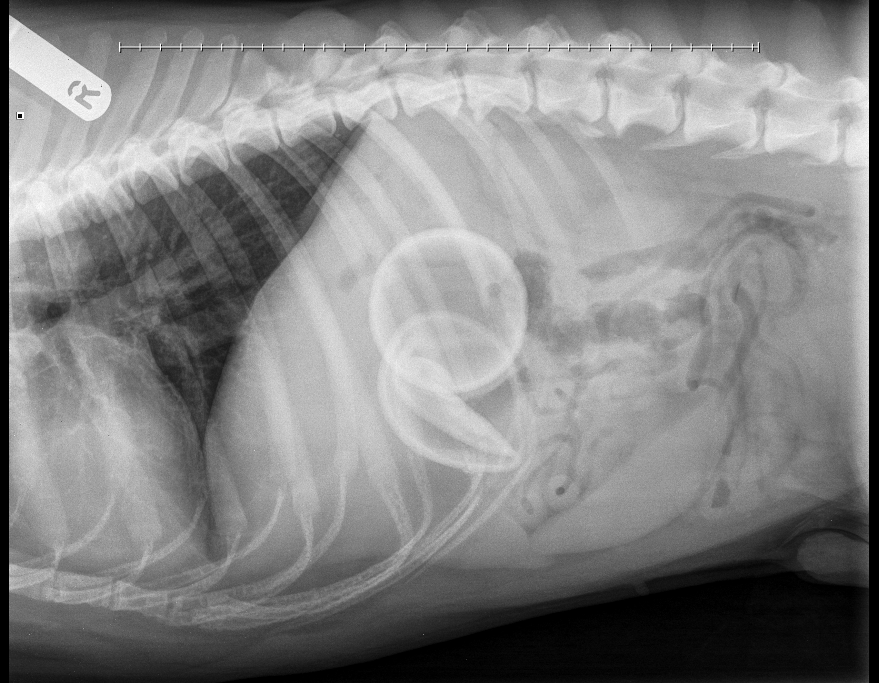
A tennis ball-obsessed dog from Wolverhampton got himself into a spot of bother after taking his hobby too far and swallowing two balls whole; leaving him needing life-saving surgery from vet charity PDSA.
Loki, a five-year-old crossbreed, landed himself in trouble after a game of fetch with his loving owner Amy, ended in disaster and an emergency trip to Wolverhampton PDSA Pet Hospital.
Amy explained: “Loki is a high-energy dog and he loves nothing more than a game of fetch. Most of his toys are the ‘super strong’ ones – he’s a gentle giant, but his toys don’t last long if they aren’t tough ones. But his favourites are tennis balls, he’s obsessed.
“It was only when Loki refused to eat, and started being sick, we realised something was wrong. He was still active and playful, but it’s not like Loki to pass up some food! When the sickness didn’t stop we called PDSA, and they told us to bring him straight in for an appointment.”
Luckily for Loki, the charity’s Wolverhampton team acted fast and an x-ray revealed the problem: two whole balls inside his stomach.
PDSA Vet Catherine Burke said: “Our vet teams treat ball related injuries every year, which can quickly turn into a life threatening situation. Loki’s situation was a case of life-or-death – without surgery, he would likely have died. One of the balls was lodged in his stomach, preventing him from keeping food down.
Loki was taken into theatre and his emergency operation was a success; PDSA’s vets managed to remove both balls intact.
But the charity is using Loki’s story to warn other owners that a bit of innocent fun with a tennis ball can quickly turn into a life-threatening situation. It’s best all round to trade out the tennis balls for safer toys.
Catherine added: “If your dog loves to chew, there is also the risk they could swallow chewed up parts of the tennis ball; which can still cause the same issues with gut blockage like in Loki’s case.”
Following the surgery, Loki is recovering well and, according to Amy, he is back to his fun, playful self.
It’s not unusual to see dogs running after and catching tennis balls. In particular at this time of year, with Wimbledon in full swing, tennis lovers may wish to play a game of fetch with their four-legged friends.
Catherine shares some of the dangers associated with tennis balls: “If your dog is a tennis ball enthusiast, they may not wish to part with their beloved toy, however there are a few important reasons they are not the best option for dogs, quite apart from the fact that they won’t last long under most dog’s jaws.
“The size of tennis balls, and the way they bounce, means that there is a risk the ball can get stuck at the back of your dog’s throat, causing them to choke. It can become wedged in position too far in for you to remove it, blocking your dog’s airway, which sadly can be fatal if the ball can’t be removed quickly.
“If this does happen, try to keep calm and if safe to do so, you can attempt to remove it from the back of the mouth. However it can be very slippery and difficult to remove. If you can’t remove it, contact your vet immediately for an emergency appointment.
“Tennis balls are covered in a felt layer; which has the appearance of yellow-green fuzz and is abrasive which means it has a sandpaper-like effect. Over time it can wear down your dog’s teeth and cause pain and difficulty chewing.”
Instead of tennis balls, PDSA recommends toys and balls specifically designed for dogs, as these are less likely to fall apart when chewed.
Make sure any ball you choose is the right size for your dog, to avoid potentially fatal choking incidents or intestinal blockage – they should be big enough to be grabbed with the teeth and carried, but not fit perfectly in the mouth.
Depending on the kind of activity your dog enjoys doing, here’s a guide to the best toy to match:
Tugging: rope toys and rubber rings are great for tugging games.
Retrieving: Balls of a safe size that they can’t choke on.
Searching: hide their kibble or treats in snuffle mats.
PDSA is the UK’s leading veterinary charity, through its 48 Pet Hospitals across the UK, the charity saves the lives of poorly pets whose owners would otherwise struggle to afford treatment.
In times of hardship pets like Loki will still fall ill or become injured and need emergency care. PDSA is appealing for donations so that the charity can continue to support owners who have nowhere else to turn by providing life-saving care to vulnerable pets.
Urgent action must be taken to improve street design and accessibility for blind and partially sighted pedestrians says the Royal National Institute of Blind People (RNIB) Scotland in their latest report, ‘Street Credibility’.
The new report explores critical areas of concern to street accessibility and safety, a topic which the charity has long campaigned for improvements in. Inaccessible streets can impact mental health too, the report claims, as many blind or partially sighted pedestrians feel anxious or unable to navigate the outdoors safely.
“Negative experiences can really knock your confidence, when out and about,” says Angela Clelland from Inverness. “We’ve come out of a pandemic, but when spaces and streets aren’t accessible, people stop going out and this impacts on their mental health too.”
The reports outlines more about the hazards of street clutter and obstructed pavements, the importance of kerbs and signalised controlled crossings, and the ability for pedestrians to avoid moving vehicles. All these are key to keeping all pedestrians, not just those who are blind and partially sighted, safe.
Edinburgh resident, Sylvia Paton said: “There’s no urgency given when a crossing facility is broken for pedestrians.
” It’s imperative that controlled crossing points are maintained. If not it’s a disaster waiting to happen.”
RNIB Scotland director James Adams adds: “All too often our streets are an obstacle course for blind and partially sighted people. We can all play a part in safe streets for everyone. It may sound simple, but we must not ignore the difference that small changes can make to people’s safety and confidence.
“This report is a valuable guide for the decision makers, urban planners, and community leaders who are tasked with creating streets that are inclusive and accessible to all.”
The Street Credibility report has been released amidst a wave of initiatives that are driving changes to Scotland’s streetscapes, following significant delays during the pandemic.
While most of these changes are positive and support the country’s net-zero goals, such as improving walking and cycling infrastructure, the inconsistent street design and enforcement negatively affect the independence and ability of blind and partially sighted people to access their work, community, and vital services like healthcare.
To address these challenges, the report draws on the policy landscape and research, as well as direct experiences, to establish a consensus on what constitutes inclusive street design for individuals with sight loss.
There are over 180,000 people in Scotland with significant sight loss.
An innovative system has launched this week to reduce accidental drowning deaths by analysing the circumstances around past water-related fatalities, in what has been hailed one of the world’s first.
The Drowning and Incident Review (DIR) has been created by the Scottish Fire and Rescue Service (SFRS) and The Royal Society for the Prevention of Accidents (RoSPA), in partnership with Water Safety Scotland (WSS). It aims to reduce accidental drowning deaths by 50 per cent by 2026 and lessen the risk among the highest risk populations, groups and communities.
Until now, the circumstances in many water-related fatalities have been unknown and the risk factors are unclear. On average, 96 people lose their lives due to a water-related fatality each year in Scotland.
The principal aim of the DIR is to gather all relevant data and information in order to systematically review each accidental water-related incident with a view to prevent a future occurrence. The review has been piloted extensively and evaluated with a recent publication in BMJ Injury Prevention.
The benefits of DIR are anticipated at both local and national level in Scotland. It will provide insight into water-based risks by local area, ensuring that those best placed to mitigate these risks are involved in the process and kept informed. Nationally, the enhanced data capture is anticipated to lead to the development of better-informed national strategies to tackle the issue of drowning prevention.
Carlene McAvoy, Leisure Safety Manager of RoSPA and founder and secretariat of Water Safety Scotland said: “DIR has been specifically created for Scotland and is one of the first of its type in the world.
“It will be used as an important tool in Scotland to enable learning from incidents and mitigate the risk of future incidents. This supports the overarching aim of Scotland’s Drowning Prevention Strategy, to reduce accidental drownings by 50 per cent by 2026.”
James Sullivan, Station Commander at SFRS and chair of Water Safety Scotland,added: “DIR provides a clear and consistent format for partners to review water related incidents and gain an understanding of contributory factors.
“This enhanced knowledge will enable a focussed approach to be taken on preventative measures both locally and nationally throughout Scotland”.
DIR is endorsed by lead Search & Rescue Partners; Scottish Fire & Rescue Service (SFRS), Police Scotland (PS), His Majesty’s Coastguard (HMCG), and the Royal National Lifeboat Institution (RNLI) as well as key partners in Crown Office and Procurator Fiscal Service (COPFS) and Public Health Scotland (PHS).
The DIR process goes live this week and can be used via Water Safety Scotland for any accidental related fatality.
Scottish Conservative and Unionist MSP for Lothian, Miles Briggs, has expressed “deep concern” over addresses that have been “red flagged” to ambulance staff across Scotland.
The concern comes amid reports that nearly 450 addresses have been identified as being “red flagged” for ambulance staff – whereby Scottish Ambulance Staff are not allowed to enter without the presence of police.
A Freedom of Information Request submitted by the Scottish Conservatives revealed the shocking statistics.
The highest number of red flagged addresses come with Glasgow and Edinburgh postcodes, with 107 and 83 addresses identified in these areas, respectively.
In the EH postcode area, the freedom of information request revealed that 83 warnings had been identified.
Mr. Briggs has highlighted concerns over the figures and has expressed doubt of how police and ambulance staff may link up, given that, under the SNP, police officer numbers in Scotland are at their lowest level for 15 years.
Mr. Briggs says that one attack on an emergency service worker in Lothian is one too many and more action must be taken to keep them safe.
Scottish Conservative and Unionist MSP Miles Briggs said: “These figures are deeply concerning.
“This is a significant number of addresses that have been red-flagged in Lothian for our dedicated ambulance staff who are putting themselves at risk for others on a daily basis.
“One attack on any ambulance worker in Lothian is one too many.
“This is a direct result of the SNP slashing local budgets and gutting the police service across the country.
“With police officer numbers at their lowest number since 2008 across Scotland, I am also concerned that they may not be able to easily link up with ambulance crews when called upon at a particular address.
“It is clear from the number of addresses that have been red-flagged in Lothian that more needs to be done to keep our ambulance staff safe, which includes handing out hefty punishments to those found to have assaulted them while they are on duty.
“At the very least, frontline staff in Lothian should be reassured that they can go about their work without serious risk of injury from members of the public.”