Two by-elections will be held in the Southside/Newington and Portobello/Craigmillar wards following the resignations of Councillors Simita Kumar and Kate Campbell.
Residents will go to the polls on Thursday 3 September to elect one new councillor in each ward. The current electorate is 24,304 for Southside/Newington and 27,347 for Portobello/Craigmillar.
SNP councillors Campbell and Kumar were elected to the Scottish Parliament in May’s elections.
Green councillor Kayleigh Kinross-O’Neill, was also elected to Holyrood through the list system but she has decided to ‘double up’, serving as an MSP whilst also remaining a councillor in Forth ward until next year’s council elections.
On 15 July the formal Notice of Election will be published, and the Election Timetable, Election Notices and Nomination Papers will all be accessible on the Council website.
Returning Officer for Edinburgh, Paul Lawrence said: “I’d like to thank Councillors Kumar and Campbell for their service as elected members and I wish them all the best in their new roles at Holyrood.
“We’ll now begin preparing for these by-elections to make sure our residents are able to make their voices heard and elect their new representatives to the City Chambers.
“I’d urge everyone in these wards to make sure they are registered to vote and to check that they have asked for a postal or proxy vote if that is what they need.”
Nomination papers can be submitted from 10am on 16 July until 4pm on 31 July to the Returning Officer in the City Chambers.
Candidates will be confirmed after nominations close on 31 July.
Polling stations will be open from 7am to 10pm on Thursday 3 September.
The election will use the Single Transferable Vote (STV) system where voters rank candidates in order of preference rather than using a single cross. Voters can rank as many or as few candidates as they like.
The deadline to register to vote in these by-elections is 18 August. For new postal vote applications, it’s 19 August and for new proxy votes it’s 26 August.
School learning environments across Scotland will become phone free under measures announced by Education Secretary Màiri McAllan yesterday.
Highlighting the damage phones can cause to pupils’ wellbeing and education, Ms McAllan confirmed forthcoming legislation to restrict their use in all of Scotland’s schools. A consultation will be launched within the new government’s first 100 days, with refreshed guidance published this summer to further encourage schools to bring in their own restrictions in advance of the law change.
A public health campaign will also be developed for young people and their parents, raising awareness of online harms while providing advice on how to stay safe on the internet.
The Scottish Government aims to build on strong foundations, delivering a phased and evidence-based public health approach to tackling online harms, informed by children and young people.
We are helping schools create better environments for learning.
Education Secretary @MairiMcAllan visited James Gillespie’s High School to hear about their phone free policy.
The Education Secretary said: “We will shortly publish a consultation on laws to make our learning environments phone free, meeting our commitment to do so in the first 100 days of this government.
“Legislation is the way for us to mandate phone-free learning, but if head teachers want to take action themselves they do not have to wait, and nor should they.
“While we prepare legislation, we are working with education authorities to refresh the current guidance by the end of June, to support schools to consider their approach from the next term.
“Our schools and learning environments should be safe and nurturing environments for our children and young people, where they can learn free from the distractions of mobile phones.”
In response to the Ministerial Statement on phone-free classrooms made yesterday, Mary Glasgow, Chief Executive of Children First said: “The strong commitment from the Scottish Government to set clear, consistent limits on mobile phone use in schools as part of a wider public health response to protect children from online harm is a crucial step in tackling the national childhood emergency of our time.
“The proposed guidance for schools must include firm boundaries for working with technology providers, so children’s data is protected and they are never exposed to advertising, addictive design or harmful content.
“Children are experiencing online harm on an unprecedented scale which must be matched by an unprecedented level of leadership and commitment. That’s why we’re calling on the Government to establish an independent online harm reduction unit within the first 100 days of the new Parliament.
“The unit would bring together expertise from across sectors to better understand risk, support parents, carers and professionals and challenge harmful and exploitative practices by tech companies.”
Any parent or carer worried about their child can contact Children First’s support line on 08000 28 22 33 or visit www.childrenfirst.org.uk/supportline for expert practical and emotional support.
Autistic people and their families across Scotland continue to face significant barriers, including long waiting times for diagnosis, a lack of support in schools and low employment rates.
Too often, children are missing out on education or are excluded from the classroom, while many people are left without support until they reach crisis point.
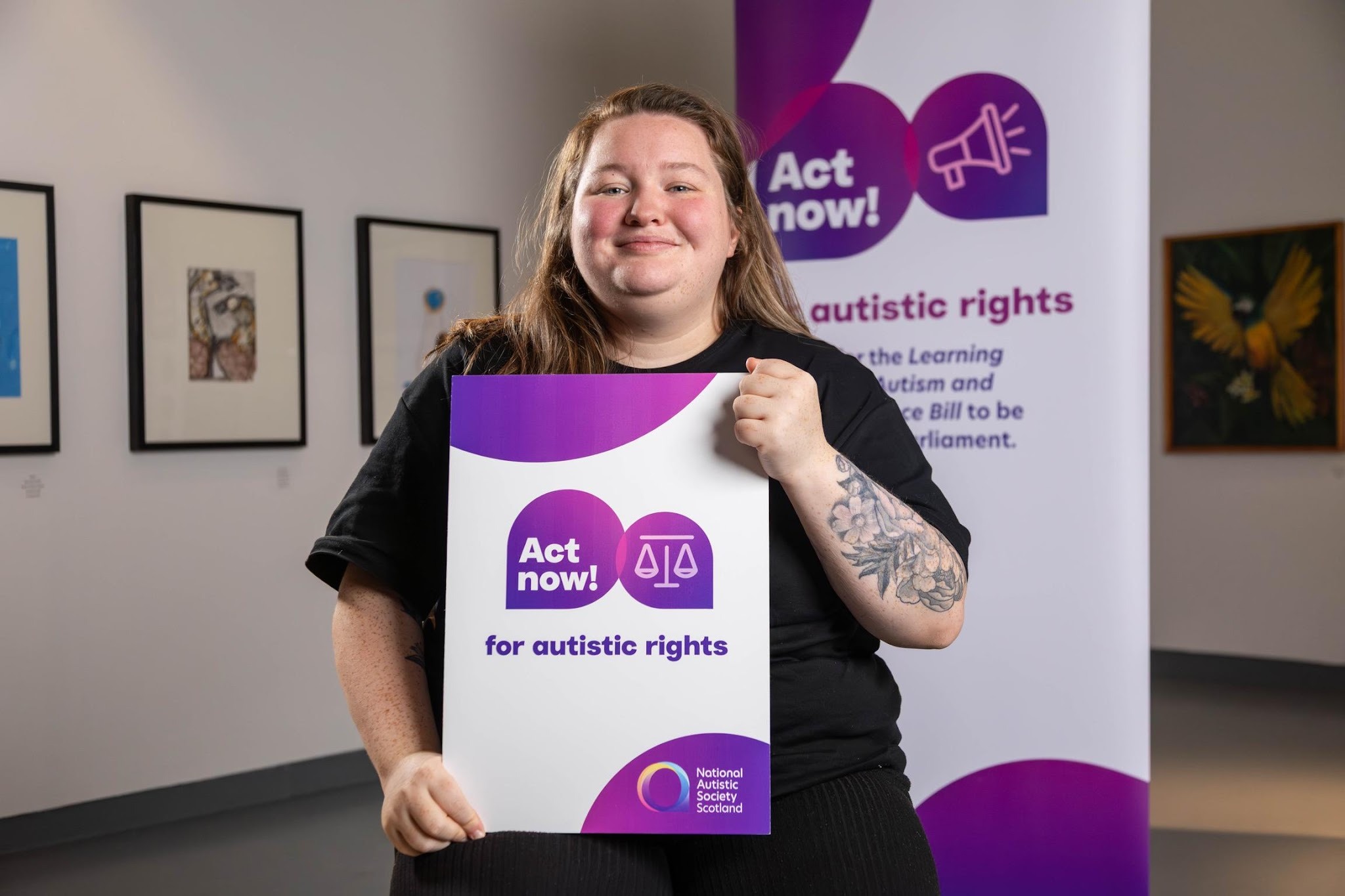
We and others have long campaigned for the Learning Disabilities, Autism and Neurodivergence (LDAN) Bill – a Bill which the SNP committed to as far back as 2021. This would provide an opportunity to address the challenges facing autistic people and deliver real change.
Legally binding national and local strategies would improve support and accountability, while mandatory training across public services such as health, education and criminal justice would ensure autistic people’s needs are recognised and supported earlier.
Years of consultation have shaped these proposals, with many in the autistic community sharing difficult and traumatic experiences in the hope of having their voices heard.
As part of the Act Now for Autistic Rights campaign, our charity has launched a petition urging the First Minister, John Swinney, to include the LDAN Bill in September’s Programme for Government, which will set out the Scottish Government’s key priorities and legislative programme for the coming year.
In the lead up to the recent election in Scotland, more than 5,500 letters were sent by supporters urging party leaders to commit to this legislation. This momentum must now be matched with action. Without a clear commitment from the First Minister, autistic people risk being left behind.
Rob Holland, Director of the National Autistic Society Scotland, said: “Our campaign had a fantastic response during the election period. Thousands of letters were sent urging all parties to commit to the Learning Disabilities, Autism and Neurodivergence (LDAN) Bill, demonstrating a significant level of support for legislation long overdue in helping secure the rights of autistic people and their families.
The importance of the LDAN Bill in tackling the inequalities faced by autistic people and their families cannot be underestimated and this legislation is a vital opportunity to improve outcomes and recognise the rights of some of our most marginalised communities.
“With the election behind us and attention now turning to the first Programme for Government, we need everyone who wants to see urgent change to sign our petition and ensure this vital piece of legislation is introduced as early as possible in the new term.”
Becca, NAS Scotland Campaigner, said: “The LDAN bill is vital for the wellbeing, safety and equality of autistic and neurodivergent people in Scotland.
“Access must be granted, training must be given and voices must be heard to ensure that autistic and neurodivergent people have equal access and opportunity as anybody else.
“The LDAN bill must be included in the Programme for Government to ensure this change happens and lives are improved.
“As an autistic person, it is a struggle to ensure my voice is heard and my opinions are taken into account, so by committing to the inclusion of the LDAN Bill in the Programme for Government, I matter.
“My voice and many others across the country matter.“
You can call on the First Minister to Act Now for Autistic Rights by signing the petition here.
A day after World No Tobacco Day, and a full year after the ban on selling single-use vapes in Scotland came into force, environmental and health organisations and campaigners are calling for further action to protect people and our environment.
While a positive decrease in littered vapes has been recorded in Scotland, alongside a 9% decrease across the UK, there is little data available to identify whether the ban has helped reduce youth vaping. And, the ongoing challenges of disposing of vapes safely, capturing precious resources via recycling, alongside tackling the ever present and harmful issue of smoking-related litter remains.
Climate Action Secretary Gillian Martin said: “Before taking action on disposable vapes, it was estimated that over half of disposable vapes were incorrectly disposed of each year in Scotland – creating a fire risk and littering our beautiful environment.
“These findings are a welcome demonstration of the success the single-use vape ban has had in its first year in tackling the threat they pose to our environment as well as to our public health.”
Alongside the Marine Conservation Society, health charity ASH Scotland and environmental scientist, campaigner and ambassador to our charity Laura Anderson (Young), we first liaised with Scottish Ministers to call for a ban on the sale of single-use vapes in 2022 after highlighting how vapes undermine the principles of a circular economy, cause harm to Scotland’s environment and damage people’s health.
Now a year-on from the ban the coalition is calling for further action, to build on the momentum and take further steps to address smoking-related litter and health impacts in children and young people – you can read the letter we sent to Scottish Ministers – calling for more action – below.
The coalition will continue to work collaboratively to tackle vapes and smoking related litter and build on its commitment to a cleaner, healthier Scotland.
THE LETTER READS:
Cabinet Secretary for Climate Action and Rural Affairs Minister for Mental Wellbeing, Public Health, Sport, Alcohol and Drugs Scottish Government St Andrew’s House Edinburgh EH1 3DG 21st May 2026
Dear Ministers,
We would like to take this opportunity to congratulate you on your appointments as Cabinet Secretary for Climate Action and Rural Affairs, and Minister for Mental Wellbeing, Public Health, Sport, Alcohol and Drugs. As a coalition of organisations and individuals working to protect and improve Scotland’s environmental and public health, we look forward to working with you on tobacco and nicotine related litter.
Marking progress: disposable vapes ban anniversary
As we approach the anniversary of Scotland’s ban on single-use disposable vapes, we wanted to recognise the brilliant cross government working that led to the legislation coming into force, and the role Scotland played in pioneering the introduction of the ban
Laura Anderson (nee Young), also known as Less Waste Laura, is an environmental campaigner and a signatory to this letter. She catapulted the issue of littered single-use vapes to the forefront of public awareness in 2022. Since then, she has inspired politicians, charities and councils to take action to tackle Scotland’s fastest growing litter item.
The Marine Conservation Society, Keep Scotland Beautiful and ASH Scotland worked closely with Laura and others to raise awareness of this issue and call for the ban on both environmental and public health grounds which came into force on the 1st June 2025.
The ban has been an important step in raising awareness of, and tackling litter that pollutes our landscapes, communities and marine environment. Early indications in litter data from Keep Scotland Beautiful and the Marine Conservation Society show a decline in littered single-use vapes.
Initial Source to Sea litter data from the Marine Conservation Society demonstrates a 9% decrease in the presence of vapes across the UK.
Keep Scotland Beautiful has seen a decrease in the percentage of sites recording a presence of littered vapes – with vapes found on just 5% of Scottish sites.
As there has been no robust data about children’s use of vapes since the 2021/22 Health and Wellbeing Census, it is currently not possible to identify whether the ban on single-use vapes has been impactful in tackling youth vaping.
The ongoing challenge of smoking-related litter
Smoking-related litter — particularly cigarette butts — continues to be one of the most commonly discarded items in Scotland’s streets, green spaces and coastlines. Keep Scotland Beautiful auditors counted almost 20,000 cigarette butts nationally in 2025/2026.
Marine Conservation Society Beachwatch data from 2025 highlighted over 2000 smoking related litter items were found on Scottish beaches and Keep Scotland Beautiful found 60% of sites nationally were polluted by cigarette butts. These contain plastics and harmful chemicals that persist in the environment, pollute waterways and pose risks to wildlife.
Cigarette filters do not reduce health harm but mislead people who smoke into perceiving cigarettes to be safer and discourage attempts to quit smoking.
In the recent passing of the Tobacco and Vapes Act, which had a four nations approach, and the associated Legislative Consent Motions, we were pleased to see the extension of provisions to ban some or all cigarette filters in the future. Local authorities, communities and volunteers bear a significant burden in clearing this waste, yet prevention remains the most effective and sustainable solution.
Opportunities for further action
We believe there is a clear opportunity to build on the momentum of the single use vape ban and take further steps to address smoking-related litter.
We believe the following steps would help to achieve this:
1. Introduce an Extended Producer Responsibility scheme (EPR) for tobacco and nicotine waste not covered by market restrictions. 2. Increase awareness and tighten up the enforcement of existing Waste Electrical and Electronic Equipment (WEEE) and the Waste Batteries Regulations for producers, distributors and retailers of vapes including disposal and recycling. 3. Ban the sale and manufacture of single-use cigarette filters which offer no health benefits and exacerbate environmental damage. 4. Require businesses to report on the number of vapes (as a percentage sold) that are returned for recycling under WEEE. 5. Routinely publish robust data on children in Scotland’s use of tobacco and nicotine products.
Taking forward these measures would deliver clear environmental, social and economic benefits—supporting cleaner communities, healthier ecosystems, and reduced clean-up costs.
A shared ambition
Our organisations share a commitment to a cleaner, healthier Scotland. We would welcome the opportunity to meet with you and your officials to discuss how we can work collaboratively to tackle vapes and smoking-related litter and build on Scotland’s leadership in this area.
We are planning on issuing a press release on Wednesday 27th May focusing on this statistical information and our collaborative asks, under embargo for 1st June. We invite comments from both of you to include to highlight the successes and further opportunities.
We wish you every success, and look forward to engaging with you in the months ahead.
Yours sincerely,
Less Waste Laura Marine Conservation Society Keep Scotland Beautiful ASH Scotland
The Royal College of Physicians of Edinburgh (the “RCPE”) is urging Scotland’s MSPs in the new session of Parliament to support a national pilot programme to monitor air pollution around city primary schools, following compelling evidence that Scottish children may be exposed to harmful levels of pollution that are currently going unmeasured.
The proposal, led by the RCPE’s Air Pollution Working Group, calls for a pilot study to look at air quality around schools by installing of air quality monitors around three schools in each of four major Scottish cities — Glasgow, Edinburgh, Dundee and Aberdeen — over a minimum period of one year. This duration is essential to capture seasonal variation and provide reliable, policy-relevant data.
The RCPE is urging MSPs from all of Scotland’s political parties to press Ministers in the new Scottish Government to support the pilot.
Why the pilot is required
Scotland rightly prides itself on having some of the cleanest air in the world and among the strongest air quality standards in Europe. Low Emission Zones and investment in cleaner public transport have delivered real progress.
However, new evidence shows that harmful health effects occur at pollution levels below current Scottish targets, particularly for children — prompting the World Health Organization to issue significantly tighter Global Air Quality Guidelines in 2021.
Despite this, pilot mapping carried out by the RCPE reveals a stark gap: air quality is rarely monitored near schools. Across five Scottish cities, over 60% of primary and secondary schools are more than one kilometre from the nearest air quality monitor. Only one primary school was found to be within 50 metres of a particulate matter monitor. The Air Pollution Working Group’s research has now been published in the BMJ Public Health Journal.
“This is a blind spot in our public health system,” said Professor Jill Belch OBE, Co-chair of the College’s Air Pollution Working Group. “We know that children are more vulnerable than adults to air pollution, yet we are failing to measure what they are breathing during the school day.”
Why schools matter
Schools are often located near busy roads and junctions. Pollution levels are intensified by the ‘school run’, idling vehicles, and congestion during drop-off and pick-up times. Vehicle emissions release nitrogen dioxide (NO₂) and fine particulate matter (PM₂.₅ and PM₁₀), pollutants known to damage the lungs, heart, brain, immune system and metabolic health of children.
Robust UK and international evidence links air pollution exposure in childhood to:
impaired lung growth and increased asthma risk
effects on brain development, cognition, behaviour and educational attainment
higher blood pressure and early markers of cardiovascular disease
increased hospital admissions, with over 1,000 excess child admissions per year in Scotland on high-pollution days
These harms are not evenly distributed. Children from more deprived communities are more likely to attend schools in areas with higher pollution, compounding existing health inequalities and environmental injustice.
A practical, affordable pilot with national impact
The proposed pilot would deploy proven Airly air quality monitors within 50 metres of selected schools, measuring NO₂, PM₂.₅ and PM₁₀ continuously for 12 months. The project would be delivered in partnership with local authorities and an experienced UK environmental consultancy, ensuring data quality, transparency and independence.
Crucially, the programme includes a citizen science and education component, enabling pupils to engage with real-time data, understand pollution’s health effects, and influence behaviour change such as reducing engine idling and encouraging active travel.
Because the project spans four cities rather than a single neighbourhood, it falls outside traditional community or charity funding models — making political leadership and public investment essential.
Strong professional and workforce backing
The proposal has received full endorsement from the Royal College of Paediatrics and Child Health and the teachers’ union NASUWT.
Mike Corbett, National Official, NASUWT Scotland stated:“Being able to quantify the scale of the problem around our schools is the first step to cleaning up the air our children breathe and moving towards a healthier and safer future.
“NASUWT is therefore very pleased to endorse and support this proposal.”
A clear call to action
The data generated by this pilot would directly inform local and national decision-making, guiding targeted interventions such as no-idling zones, low-traffic streets, cleaner school transport, greening measures and safer routes for walking and cycling. The findings would be reported to the Scottish Parliament’s Net Zero, Energy and Transport Committee, local councils, schools and the public.
In light of recent European human rights rulings recognising that failure to address environmental pollution can violate the right to life, the case for action is both moral and legal.
“There is overwhelming evidence that air pollution harms children — often permanently,” said: Professor Belch.
“What Scotland currently lacks is the data around schools to act decisively. This pilot programme is a modest, affordable step that could deliver lifelong health benefits for our children and reduce entrenched inequalities.”
Professor Mark Strachan, President of the Royal College of Physicians of Edinburgh and Co-chair of the College’s Air Pollution Working Group, said: The College has serious concerns at the lack of data on air quality levels around urban schools and considers that this gap must be addressed as a priority.
“Our Air Pollution Working Group has worked hard to develop a practical and affordable pilot proposal for air quality monitoring around urban schools and I hope that this can be supported by all of our political parties in Scotland.
“It is extremely important that we have an evidence base for mitigation where that is required given the serious impacts poor air quality can have on the health of our children and young people.”
Scotland’s political parties are now being asked to show leadership — and ensure that every child has the right to breathe clean air at school.
The devolution of energy powers to Scotland would help deliver fairness for families and bring energy bills down, Energy Minister Stephen Gethins told MSPs yesterday.
The Scottish Parliament has supported a motion calling for the formal transfer of energy policy to Holyrood.
Mr Gethins said such powers would enable the Scottish Government to lower the cost of energy and set policies that work for households, communities and businesses by reducing bills, tackling fuel poverty and securing high-quality jobs.
In line with the Scottish Parliament’s position, the Energy Minister will now urge UK Ministers to formally engage over the devolution of powers.
We are calling on the UK Government to give Scotland full control over its energy.
This will allow Scotland's energy wealth to be used to help Scottish households, communities and businesses.
Mr Gethins said: “This government has been returned with a clear instruction to deliver the benefits of Scotland’s abundant energy resources to households, communities and businesses. That is what we intend to do.
“The future lies in clean, affordable and secure power – strengthening affordability, resilience and competitiveness, and protecting Scottish people and businesses from their energy bills being dictated by events halfway across the world. After the UK Government announced bills would go up again, that is more important than ever.
“Now, with the backing of the Scottish Parliament, we are formally requesting the devolution of powers that we need to maximise our remarkable energy potential, so that it helps to deliver prosperity, security and fairness for the country.”
The Westminster government is unlikely to concede, however.
A search for 129 local heroes from all over Scotland has today been launched by the Scottish Parliament.
Each Member of the Scottish Parliament (MSP) is being asked to nominate a person in their constituency or region who has made an extraordinary contribution to the lives of other people or who has made a significant impact on their community.
Local heroes who have been selected will be invited by the Scottish Parliament, as a special guest of their MSP, to attend the Parliament’s Opening Ceremony. The event will take place on Saturday 27 June to formally mark the new session of the Parliament.
Presiding Officer of the Scottish Parliament, Kenneth Gibson MSP said:“The start of a new Parliament is to me all about optimism, hope and a renewal of the purpose behind why the Parliament exists.
“It’s about bringing the people of Scotland along with us at the start of that journey as well as celebrating the very best of our culture and heritage too.
“People from all over Scotland, from Shetland to Selkirk, from Aberdeen to Arran, are at the centre of our plans to commemorate this milestone. Which is also a reflection of our aim – to be at the heart of communities across the country.
“I am always humbled by the selflessness of people across the country who go to extraordinary lengths to give back to their communities. I look forward to celebrating our local heroes and hearing more about their achievements.”
Local Heroes have taken part in the opening ceremonies of the Scottish Parliament in 2007, 2011, 2016 and 2021. Previous local heroes have included people who have volunteered their time for charities, set up creative ways to fundraise to help local causes or supporting others.
To find out more please contact one of your local MSPs. You can find out who your MSP is by searching by your postcode on our website.
Measures to make the Scottish Parliament more efficient, topical and effective are to be put into place by Presiding Officer Kenneth Gibson MSP.
The changes, which the Parliament was informed of today, will be part of what the Presiding Officer calls “renewal and re-engagement”.
There will now be two First Minister’s Questions a week, with 30 minutes on a Tuesday for backbenchers and 30 minutes on a Thursday from Party Leaders.
MSPs were informed of the changes by the Presiding Officer during a meeting of the Parliament on Thursday.
The Presiding Officer also informed Members that:
Time taken for interventions will be added, to protect the time of speakers who most engage
Labour and Reform will alternate each week in leading off on questions in First Minister’s Questions, debates and statements
Chamber Business will run from 2pm to 5.30pm on Tuesdays and Wednesdays to provide more time for scrutiny in the Chamber
Chamber Business will run from 1.30pm to 5pm on Thursdays to accommodate more time for committee business in the morning
Questions to the First Minister will no longer be published in advance
There will be 18 general questions a week, 10 more than previously
Members will have to identify relevant procedure when making points of order
Events and cross-party groups will be permitted during Members’ debates to prevent delays to visitors
Informing MSPs of the changes, the Presiding Officer, Kenneth Gibson MSP, said: “Parliament needs renewal and re-engagement – with independent, innovative and open-minded leadership. That’s of critical importance and exactly what I’ll provide.
“We need to de-clutter and simplify how we work, make Parliament more efficient, topical end effective for those we represent.
“The collegiate working anticipated in the 90s, prior to Devolution, has not fully transpired. The status quo is not an option – and I’m keen to push at the boundaries of what’s possible within my remit.”
John Swinney: “I will be a First Minister for all of Scotland”
The Scottish Parliament has nominated John Swinney as First Minister of Scotland, following the 2026 election.
Addressing members of the Scottish Parliament, Mr Swinney outlined his ambitions for the parliamentary term, including action to tackle the cost of living, improve the NHS and grow the economy to create opportunity across Scotland. He also pledged to work together to deliver progress for Scotland and to meet the challenges facing the country.
Mr Swinney is expected to be formally appointed with a Royal Warrant from His Majesty King Charles III. He will be sworn in at the Court of Session today (Wednesday) , where he will take the Official Oath in front of the Lord President of the Court of Session and other senior judges.
First Minister John Swinney said: “I have ambitious goals for this Parliamentary session. I want to ease the cost of living crisis, ensure the NHS is protected and easy to access, ensure cohesion in our communities and protect the environment, and grow the economy and create opportunity across our country.
“I believe I can achieve a majority for every ambition I have for this Parliament and I look forward to working with many here to do so. That, of course, includes the question of Scotland’s constitutional future on which I recognise there are profound differences of opinion. Indeed the people have now elected the largest pro-independence majority in the history of devolution.
“I will be a First Minister for all of Scotland. A First Minister that works to bring people together with a strong sense of national purpose. The country I seek to build is a country where everyone feels accepted and able to contribute to our national story.
“I gratefully accept this opportunity to serve as First Minister. It is the greatest privilege and the greatest responsibility of my life. I promise to work every day to repay the trust that the people of Scotland have placed in me.”
We are concerned by the nature of the media attention focused on the election of Dr Q Manivannan to the Scottish Parliament at the recent election. Rather than celebrating the improvement in representation of Scotland’s diverse population Dr Manivannan’s election represents, our public sphere has been fixated on debating their right to be an MSP.
Less than eighteen months ago, the Scottish Parliament unanimously passed, with every party voting in favour, the Scottish Elections (Representation and Reform) Act. This gave the right to stand for election to anyone with leave to remain in Scotland, whether temporary or permanent. It is therefore clear that Dr Manivannan had a legal right to seek and win election.
That law built on earlier efforts to make the Scottish electoral system more democratic and inclusive.
The Elections (Franchise and Representation) Act 2020 expanded voting rights for the Scottish Parliament and Scottish local authorities to most people legally living in Scotland, regardless of their citizenship status. This was a recognition of the contributions that everybody living, working, raising families and studying in Scotland make to our communities and economy. It was an affirmation of the principle that Scotland is governed by and for everyone who lives here.
Dr Manivannan’s success in being elected is one of the intended results of this widely supported legislation. The people who choose to make their homes here should be included, supported and electorally represented.
It is a sad sign of the times, and the state of our public discourse, that what should have been a proud moment for Scottish democracy has been marred by partisan spin, attacks on Dr Manivannan’s identity both as an immigrant and non-binary person, and media failures to confront disinformation.
This treatment of Dr Manivannan risks further cementing barriers to public office for women, disabled people, LGBTQIA+ people and people from minority ethnic backgrounds.
Research on experiences of seeking elected office in Scotland suggests that harassment on social media and hostile media coverage is a significant factor in discouraging potential candidates from underrepresented groups.
This needs to change – especially in light of the decline in women’s representation in the current parliament.
We welcome the election of Dr Manivannan as an example of what we hope will be a more open and inclusive democracy that welcomes immigrants as both voters and representatives. We hope that the new parliament will represent all of the people of Scotland, promote tolerance and respect in the chamber, and work to uphold the rights and dignity of all.
Organisations supporting the statement include:The Young Women’s Movement, Scottish Trans, Equality Network, LGBT Youth Scotland, Inclusion Scotland, CRER (Coalition for Racial Equality and Rights), Equal Representation Coalition, LGBT Health and Wellbeing, CEMVO Scotland, ElectHER and Engender