September plant of the month: Heather

Heather heralds the arrival of Autumn

Calluna vulgaris Juliane

Heather: Nectar in the Autumn

In September, the summer flowers in the garden and on our terraces have peaked so now it’s heather’s time in the spotlight. Heather begins to flower in September and is a source of luscious late summer colour, and for this reason, it is Thejoyofplants.co.uk‘s Garden Plant of the Month of September.

Carpet

Heather (Calluna vulgaris) is a European classic and is native to the coastal areas of Western Europe, Great Britain and Ireland, as well as being one of Scotland’s most prolific plants. It grows in beautiful long shoots with shingled leaves and small symmetrical flowers. Its purple and pink flowers have a slightly weathered appearance and that gives both the plants and the countryside a tough and natural look. In the garden, the plants provide a hardy carpet that give a calm and authentic effect whilst in pots, heather becomes a robust eye-catcher.

Nectar

Heather will flower from September to early November. The flowers contain an abundance of nectar which enables the bees to have a quick restock before winter begins, thereby providing us with a plentiful supply of their delicious heather honey.

heather3

Pure Nature

Heather is a perennial plant that can survive 30-40 years in the wild. It is a little higher and less dense than other types of heath and this gives it a strong and natural appearance. In the wild, the purple and pink flowers create beautiful landscapes.  In the garden, heather has the same effect, providing a wonderful contrast to the other green and variegated leaves, with its foliage deepening and intensifying as the year progresses.

Heathers are incredibly versatile and look fantastic in pots and rockeries, as well as providing stunning ground cover alongside flowering perennials and grasses in your flowerbeds.

Care Tips

  • Heather loves the light – The more light it gets, the more beautiful the leaves.
  • It is a natural survivor and can tolerate very little care and poor soil, but it does prefer well-drained, acidic conditions.
  • Heather can be planted at any time of the year, provided the soil is not frozen, and should be pruned every year after flowering.

Interesting Facts

  • The scientific name for heather is “Calluna vulgaris”.  “Calluna” originates from the Greek word “kallune” which means “to clean” or “to brush” as the twigs were historically used to make brooms.

– Heather provides a great flavouring agent for beer, wine and tea – cheers!

– Heather is used in many cosmetics such as shampoos, lotions, bubble baths and perfumes.

– And finally, in the plant world, Heather symbolizes admiration and good luck!


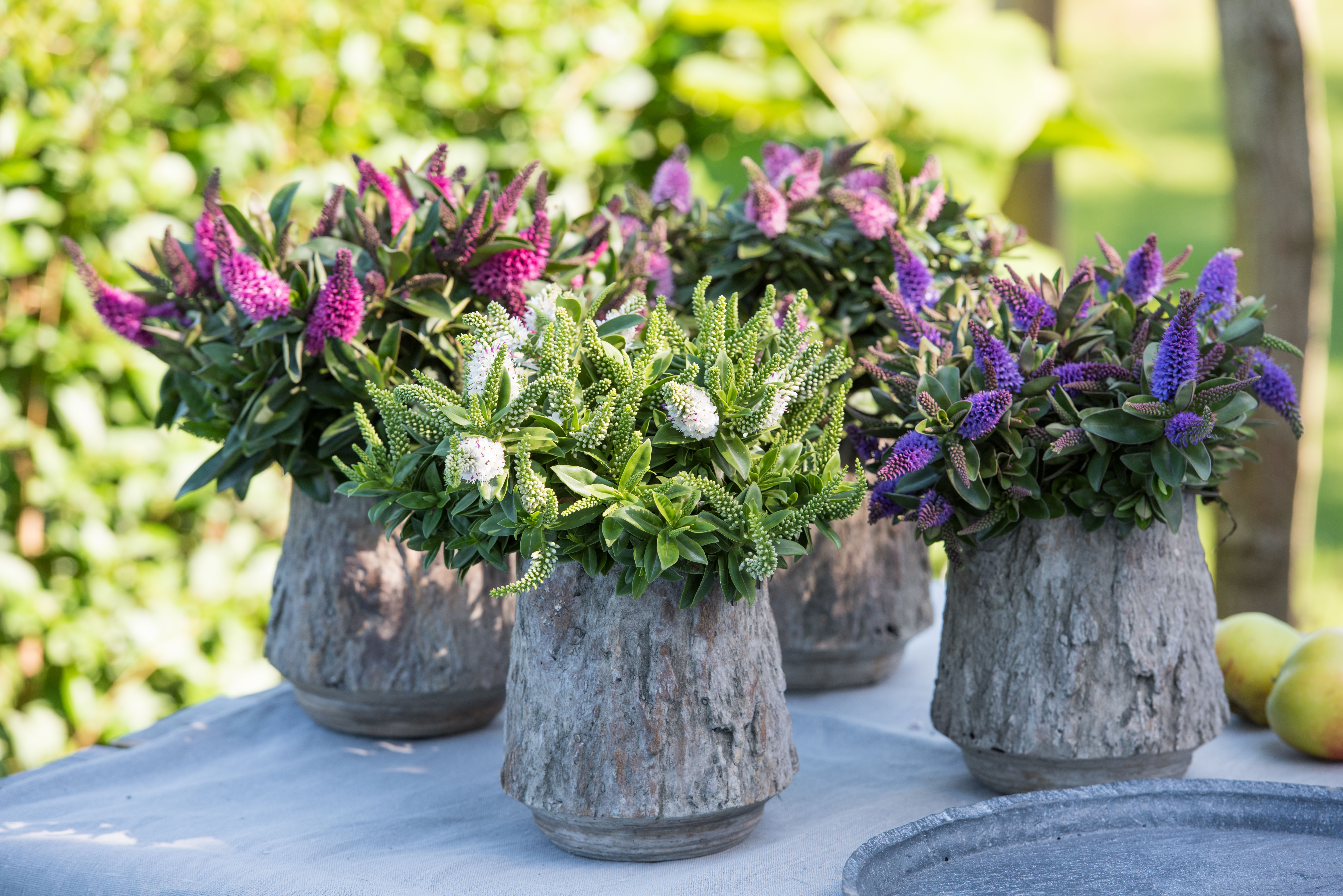
Plant of the Month: Hebe

Here’s to the Hebe

Hebe-03

Fancy giving your summer garden or terrace a boost? The Hebe is definitely the plant for you as it will introduce some sensational colour back into your garden.  The Hebe, named after the Greek Goddess of Youth who served nectar and ambrosia to the gods, is deliciously versatile and is also incredibly popular, with gardeners and butterflies alike!

For this reason, Thejoyofplants.co.uk Garden Plant for the Month of August is the Hebe.

Cheerful butterflies

The Hebe is the ideal candidate to cover any dull spots in your summer garden and it will replace them with some much needed colour and vitality.  The Hebe’s heavenly blooms will also keep your garden looking richer all the way through the summer months and well into October, enticing butterflies from far and wide to sample their stunning array of nectar filled flowers.

Plant with effect

The evergreen Hebe has numerous different species and their wide range of colourful flowers and decorative leaves will all add a great atmosphere and vivacity to your garden. You can create all kinds of interesting looks with Hebes – Why don’t you combine some white-flowered, shiny leaved Hebes with some paniculata hydrangeas in metallic containers to give that expensive, luxurious feel to your garden, or, if you would prefer to go for the untamed, wild effect, try planting a mixture of blue, violet and deep green Hebes into a variety of wooden pots and weathered containers.

Stay Green

Hebes are wonderfully easy to grow and maintain and they will thrive in most soil types.  Their supreme versatility means that they can be planted almost anywhere, in containers, borders, and rockeries, and they will also grow in both sunny and shady areas.  But most importantly of all, the enchanting evergreen Hebe will create interest and colour in your garden all year round.
Hebe-04


Garden Plant of the Month: Hydrangea

Fling the doors open to the garden and head outside!  Summer is here and what better way to spend your free time than being outside and enjoying the sunshine in your beautiful, flower-filled garden. July is the month when the blooms of the hydrangeas are at their extravagant peak and gardeners everywhere simply cannot believe their luck.  For this reason, Thejoyofplants.co.uk Garden Plant of the Month, with its abundance of blooms, has to be the hydrangea!

Hortensia-07

Take your pick

The hydrangea is a vigorous and hardy plant and is also extremely popular.  There are numerous different varieties and colours ranging from white, pink, blue and purple. One of the best known is the delightful ‘Annabelle’ (Snowball) variety, with its heart-shaped leaves and large, white, ball-shaped blooms (hence the name!).

The ‘Paniculata’ Hydrangea, with its gracefully arched branches and clusters of cone-shaped blooms, is also a great garden favourite.  Many varieties, particularly the lace-cap and mopheads, have the fascinating, chameleon-like ability to change colour when adapting to different environments and soils and will often change colour in late summer.

So, if you want to give your garden that natural, luxurious, extravagant feel, why don’t you fill your borders and terraces with white Annabelles and Paniculatas, or, if you would rather go for a playful and lively kaleidoscope of colour, try composing a combination of multicoloured hyrdrangeas in your borders and containers.

Water, water, water

The name Hydrangea, roughly translated, means ‘water barrel’ and this alludes to the hydrangea’s cup-shaped flower and its need for plenty of water. You will know straight away when your plant needs water because it will go limp but it will also immediately spring back to life once its thirst is quenched.

Enjoy for as long as you can

Hydrangeas are even beautiful in Winter. Leave the flowers on the plant and when they are covered in a layer of frost, they become the sparkling jewels of the Winter garden.

Orchid extravaganza at The Botanics

Three in one: orchid extravaganza marks hat-trick at the Botanics

orchidWith a 344 year record of bringing exotic, rare and beautiful plants to Scotland, the Royal Botanic Garden Edinburgh (RBGE) has witnessed some stunning sights.

But nothing has ever been quite on the scale of the 2,500 spectacular orchids now gracing the John Hope Gateway visitor centre. Sponsored by the Taipei Representative Office in the UK, Edinburgh Office, this awesome month-long display celebrates three significant anniversaries and highlights the Garden’s strong research and conservation links with Taiwan.

Tropical botanist Dr Mark Hughes, the man responsible for bringing the display to Edinburgh, explained: “This exhibition arrives at a particularly special time. Not only are we celebrating the 50th anniversary of our ‘new’ herbarium building – which holds our precious archive of three million preserved specimens – two other anniversaries collide: the 150th of the first specimen to reach us from Taiwan and the 50th anniversary of Taiwan’s designation of the plum blossom (Prunus mume) as its national flower.

“This orchid fair is not only a celebration of all these events, it is a significant public demonstration of an important partnership researching plant systematics in Southeast Asia”.

Running until 20  July this display of floricultural excellence is free to the public and will include additional family events at weekends throughout the four weeks.

Orchid Events coming up:

Sunday 6 July 1 – 4pm, John Hope Gateway

Chinese Flower Painting and Face Painting

Come along to learn about Chinese flower painting, and get your face painted. Free.

Friday 11 July 2pm, Patrick Geddes Room

Life in The Trees

Everything you wanted to know about orchids but were afraid to ask!  Join Kerry Walter on his fabulous tour of the largest family of plants on earth, the orchids. What do they get up to when nobody’s watching? Come and find out! Free.

Sunday 13 July 1 – 4pm, Patrick Geddes Room

Tea ceremony & tea tasting

If you don’t know your oolong, you don’t know tea!. Come and join Denise Leishman as she explains how the climate and geography of Taiwan produce some of the finest teas in the world, and taste them as prepared by her expert hands. Learn how the tea ceremony still has a place in today’s culture, and discover the stories behind our tea-related gems in the Royal Botanic Garden Edinburgh’s herbarium and archives. Free.

orchidsWith Taiwan Floriculture Exports Association and the Taipei Representative Office in the UK, Edinburgh Office.

Blackhall Plant Sale tomorrow

flowers2

Blackhall Horticultural Society are holding their annual plant sale tomorrow (Saturday 10 May) at St. Columba’s Church Halls on Hillhouse Road.

The Society plan to have an excellent range of plants for instant colour in your garden as well as some ‘home grown’ perennials, and there will be free advice on hand from time-served experts too.

Last year’s sale made over £440 and the group hopes to beat that total this weekend so get there sharp for the bargains – doors open 10am!

Blooming good news for Drylaw florist

Jackie Parry (2)Drylaw-based Curcuma Flowers has been accepted for the Good Florist Guide (GFG), a web based directory of the finest florists in the UK.

The prestigious accolade is only awarded to florists who really make the grade and allows customers to have an extra level of confidence that they are buying from the best, and local florist Fiona Smit said she was ‘delighted’ to be included in the Good Florist Guide.

Each florist shop or freelance florist invited to be in the guide has to pass a rigorous evaluation process before being approved. This meant Curcuma Flowers had to submit a detailed description of their floristry business, including range available and services offered as well as images of the business premises, their design work, their team and even the delivery vehicle!

But GFG businesses aren’t just some of the best looking, they also offer the very best value when it comes to buying bespoke floristry and flowers because not only are they true craftsmen but have the very best product knowledge to make sure the flowers and plants you buy from them will last for ages.

Commenting on their success Fiona Smit of Curcuma Flowers said; ‘We are delighted to be accepted into the Good Florist Guide. We are passionate about flowers, design, quality and the service we give to each of our customers so it is wonderful to have this recognised.’  

Caroline Marshall-Foster, the UK’s leading expert on independent bespoke florists, is responsible for setting up the Good Florist Guide. Editor of Florist magazine, the florist industry’s bible, and owner of Purple Spotted Media, a multi-faceted company providing services to all sectors of the flower industry, the Good Florist Guide is Caroline’s way of sharing the knowledge she has gained through years in the industry.

She said: You can buy flowers virtually anywhere these days. But nothing really beats the experience of receiving fabulous flowers from a truly bespoke florist and without it costing an arm or a leg. The Good Florist Guide is my way of sharing all that is good about floristry. It allows consumers to know that the florist they use is able and willing to go the extra mile and make all their purchases, big or small, truly special.”

C.Julie 12.05 (1)