In November the Scottish Government published a new draft Climate Change Plan, a critically important document which should explain how it plans to reduce emissions across all parts of the economy and society.
But it doesn’t contain the ambitious, fair action we need to tackle the climate crisis and deliver real benefits to our lives. We need your help to put pressure on the Scottish Government to improve it.
A proper climate plan should contain full details of the steps that will be taken to stop damaging the climate and to make our homes warmer, improve buses, trains and cycling, and enable us all to access healthy, sustainable food. It shouldn’t rely on unproven, expensive technologies to capture emissions that aren’t currently working at scale anywhere in the world.
You can answer as few or as many questions as you like, you don’t need to be a technical expert. What is valuable is for you to share your experiences and and what climate action would benefit your household and community.
Sending an email allows you to write what you care about without being constrained by the consultation questions and to make your MSP aware of your concerns.
If you are part of climate action happening in your community, explain what you are doing and how the government could support this.
What sort of action needs to be in the Climate Change Plan to make a real difference to the climate, your life, your local community, and to people around the world. For example, action to help make your home warmer and bills lower, public transport easier to use, or access to local, healthy food.
Don’t worry if you’ve not been able to read the draft Climate Change Plan – it’s just important that you share your views on climate action.
2. It’s essential that you complete this form and attach it to the email, to make sure your views are taken into account.
3. You could include your MSPs in the email so they are aware of the climate action you want to see – you can find their email addresses by clicking ‘find MSPs by postcode’ here. You could also ask them for a meeting to discuss the issues you are raising.
Thank you for taking part – public pressure has forced politicians to deliver more ambitious climate action in the past, and this is a critical moment to do so again.
Professor Mercedes Maroto-Valer, Heriot-Watt University’s Deputy Principal for Global Sustainability, has been awarded an Officer of the Order of the British Empire (OBE) for services to Low Energy Technologies.
The honour was announced today (Dec 30) with the publication of the King’s New Year Honours List 2026, which recognises exceptional contributions made by individuals across the 15 Commonwealth realms.
IDRIC plays a central role in supporting the green transformation of the UK’s industrial heartlands. Funded by UK Research and Innovation (UKRI), the national funding body for science and research, the centre brings together academia, industry and government to deliver practical solutions for economic growth to the country’s decarbonisation challenges at a scale that matters.
She also leads Heriot-Watt’s Research Centre for Carbon Solutions (RCCS ), a world-leading engineering centre, inspiring and delivering innovation for the wider deployment of technologies needed to meet carbon targets.
Professor Maroto-Valer was selected for the honour by King Charles III in recognition of her internationally respected leadership in energy and her remarkable contributions in low-energy technologies that reduce emissions while supporting long-term economic growth.
She said: “I am deeply humbled to receive this Honour. Addressing climate change is one of the defining challenges of our time, with low energy technologies representing not just an environmental necessity, but also an economic opportunity.
“This recognition reflects the collective efforts of the outstanding colleagues, partners and students I have had the privilege to work with in driving innovation, improving competitiveness, and ensuring a prosperous and sustainable transition to net zero.”
Professor Maroto-Valer is a globally recognised engineer whose work has helped shape the international response to climate change and supporting growth in a low-carbon global economy. Since 2022, she has led Heriot-Watt University’s sustainability strategy and goals, working closely with students, staff and alumni to embed sustainability across teaching, research and operations.
She also holds leading positions in a number of professional societies and editorial boards. These include her role on the UN Council of Engineers for the Energy Transition (CEET), a high-level, independent advisory council supporting the UN Secretary-General’s ambition to identify practical engineering pathways to net zero through expert scientific analysis and guidance.
Congratulating Professor Maroto-Valer, Heriot-Watt’s Principal and Vice-Chancellor, Professor Richard A. Williams, said: “This honour is richly deserved and reflects Professor Maroto-Valer’s exceptional leadership, global influence and unwavering commitment to tackling climate change.
“Her work exemplifies Heriot-Watt University’s mission to deliver research with real-world impact, and we are immensely proud of her contributions to engineering, sustainability and the global energy transition.”
Professor Maroto-Valer will formally receive her OBE at a ceremony in 2026.
We’re evaluating all of the brilliant data you submitted in 2025 and wanted to say thanks by highlighting the 5 ways you’ve already helped us tackle the litter emergency.
Scotland’s heritage is under threat: rising seas, heavier storms, and wetter winters are accelerating damage to historic sites and experts warn time is running out
From castles to coastal ruins, Scotland’s most iconic landmarks are facing a climate crisis and urgent action is needed to help protect them for future generations
Historic Environment Scotland (HES) proposes a long-term approach to adapting and managing Scotland’s historic places, objects and archival records in draft strategy
Public invited to share views before consultation closes on 23 January
Historic Environment Scotland (HES) is warning that some of Scotland’s most historically significant heritage properties are being affected by accelerating climate change.
Changing weather patterns, including increased rainfall and temperature variability, are creating more water ingress and placing additional stress on historic masonry. Scotland’s average temperature over the last decade was 1°C warmer than the 1961 to1990 baseline, and winters were 25% wetter, intensifying the processes that crack and erode masonry. Future projections from Adaptation Scotland suggest typical winters could be warmer and wetter, while summers become hotter and drier, increasing risks of drought and wildfires.
Sea levels will continue to rise, and long-term projections show coastal flooding and erosion will intensify, threatening sites such as Skara Brae and Blackness Castle. Dynamic Coast research (2021) estimates that coastal erosion could put around £1.2 billion worth of property and infrastructure at risk along Scotland’s shores over the next 25 years.
Climate projections also indicate intense, heavy rainfall events will increase in both winter and summer, raising the risk of flash floods and structural damage.
Changing weather patterns may accelerate decay in masonry buildings, while more variable and extreme weather will bring frequent storms and unpredictable conditions, disrupting access and increasing emergency repairs to buildings.
2025 has seen the highest number of weather-related site closures and access restrictions at HES properties in the past decade, with 281 so far this year.
HES is highlighting the huge challenges posed by the increasing rate and impact of climate change on heritage sites across Scotland as it seeks the public’s views on plans for the long-term management of the places and items it cares for. The organisation is actively identifying solutions for managing these challenges, which are set out in its draft Properties and Collections Strategy.
The organisation is calling on more people across the country to take part in the consultation, which is open until 23 January 2026. People are being asked to express their views on the proposed plans and changes to how HES could operate and manage the 300+ historic places, 43,000 objects, and 5 million archival records in its care.
HES is proposing to strengthen its response in the face of the accelerating impact of climate change, including a combination of management approaches to help mitigate its effects. As well as suggesting testing “innovative solutions,” the organisation has suggested its conservation principles must be more pragmatic, including necessary interventions as appropriate to further build resilience, such as interventions at wall heads, reinstatement of roofs and other water-shedding elements that may provide positive long-term outcomes.
According to Nathalie Lodhi, Head of Climate Change at HES, specialists are already witnessing a shift in the type and scale of challenges facing historic sites: “Unroofed historic sites, like many of our properties in care, are more susceptible to the effects of climate change as they no longer shed water effectively, putting them at higher risk.
“More frequent and intense storms mean more emergency repairs and structural monitoring, while temperature variations lead to higher risk of mould or issues from humidity. It’s not a question of what climate change is doing to our historic environment, but how fast it’s happening.
“We know that we need to use the latest data we have to understand the full extent of current and future climate change impacts on our sites and crucially, use these to inform our long-term decisions.”
Recognising the importance of planning its response to climate change now, HES is currently consulting on its draft Properties and Collections Strategy: Towards Sustainable Stewardship.
In it, HES sets out proposed plans on how it will:
Focus care on the places and objects that need it most and have the greatest potential to help people and communities.
Make decisions based on evidence, expert advice, including public input.
Work with others to protect and use these places in ways that benefit everyone.
Respond to climate change and rising costs with practical, long-term planning.
Support traditional skills and local jobs.
Improve access, learning, and visitor experiences.
HES says the long-term priorities of the strategy are focusing on the cultural assets in its care that have both the greatest conservation need and the greatest potential to make a difference to people and place, ensuring Scotland’s most significant cultural assets in a national context are conserved and sustainably managed for future generations. Public feedback through the consultation will help refine and shape the final version of the Properties and Collections strategy.
Dr David Mitchell, Director of Cultural Assets at HES, stressed the importance of public engagement in shaping the final strategy: “Our historic environment is a huge part of what makes Scotland so special.
“We already know that we need to take action to protect it for future generations, but we need input from people across Scotland to help us identify what we should prioritise and ensure our strategy reflects the needs of local communities.
“That’s why we’re urging everyone – whether they work in the heritage sector or simply feel an affinity with Scottish culture – to take part in our consultation.
“We have small window of opportunity to find ways to shape a new, positive future for the properties and collections. We want to hear from people about how we face up to the huge challenges we face, but also how we grasp positive opportunities. Your voice matters to us. Now is the time to make it heard.”
The consultation is available now on CitizenSpace and will remain open until 23 January 2026. The final strategy is expected to be published in spring 2026.
City council pushes forward with controversial Portobello parking controls
The City of Edinburgh Council is set to decide on introducing year-round parking controls in Portobello, based on surveys conducted during peak tourism months – despite widespread community opposition and the possibility of a legal challenge if the proposals proceed.
The Traffic Regulation Order (TRO) Sub-Committee will meet on 16 December to consider a recently published report recommending that councillors advance the TRO, despite the vast majority of consultation responses opposing the scheme, and with more than 1,900 people having signed a petition calling for its rejection.
Jane Grant, Chair of the local Traders Association, which represents over 50 small businesses, said: “The Council is pushing forward with a plan that will pile yet more financial pressure on already struggling households and lead to fewer people shopping locally.
“If approved, these parking controls will damage a vibrant and welcoming seaside community, make it harder for disabled people and those with caring needs to live fulfilling lives, and force more working class families to leave the area.
“As local residents and business owners we have tried to engage with the Council at every stage and will continue to do so, but if this poorly-designed and unwanted parking plan goes ahead we reserve the right to challenge its legality and process by which the Council has designed this plan.
“We are a strong and united community and will not allow the Council to ignore local people and impose these measures unchallenged.”
A local campaign group, Portobello and Joppa Residents & Businesses Against CPZ claim that the Council’s data used to justify year-round parking restrictions is flawed, inconsistent, and unrepresentative.
In a letter to the committee members (see below), issued ahead of the vote, the group highlighted that the surveys were conducted only in June and September – at the height of seasonal, temporarily heightened traffic levels, and the methodology behind the parking “heat map” remains undisclosed, with no clarity on data sources, weighting, or modelling applied.
The campaigners also highlight that Saturday parking analysis relies on just two survey days, both during peak visitor periods and unusually warm weather conditions. They assert that drawing conclusions about typical Saturday parking from such a small sample is statistically unreliable.
Furthermore, ongoing roadworks during the survey period distorted normal parking patterns, casting further doubt on the data’s reliability.
Local campaigner and resident Nikki Middleton said: “Although the Council report claims sixteen survey events, the actual data covers only seven days, with no surveys in winter, poor weather, or during term-time.
“Summer surveys, conducted during peak tourism months, have been used to justify this scheme, yet no explanation has been provided on how seasonal bias was accounted for.
“Portobello’s year-round parking pressures are very different from the summer months. This is not only unethical but goes against every principle of good governance and objective data validation.”
The proposals suggest implementing parking controls in the western part of the proposed Controlled Parking Zone (CPZ), while the eastern section (Joppa) would be reviewed within the first year.
In practice, this allows council officers to introduce controls in the eastern areas without further legal process if deemed “necessary,” effectively keeping the door open to expand the scheme at any time, but preventing proper scrutiny and input from local people.
Nikki Middleton added: “The Council pretends to reduce the CPZ boundary, but in reality, they are only temporarily shrinking it while leaving the door wide open to extend it back to their original plans within a year – a cynical ploy intended to gather more cash from local people already struggling amid a cost of living crisis.”
The proposals also adjust CPZ operating hours to Monday–Saturday, 08:30–17:30, removing Sunday restrictions – an apparent attempt, the campaigners argue, to soften public perception without addressing core concerns.
The Council received 2,341 consultation responses. While the report acknowledges strong community opposition, it omits the exact percentage of objections.
The most significant concerns cited include the cost of parking – described by about 35% of respondents as “unaffordable, unwanted, excessive, or penalising residents”- and over 15% expressing the belief that the scheme is a money-making exercise for the Council.
Nikki Middleton added: “While the Council insists this isn’t about revenue, the report itself confirms that, after operational costs, the Portobello CPZ is expected to generate an annual surplus of around £500,000.”
Community members, traders, and campaigners continue to call on the public to attend the Sub-Committee meeting next week and urge the Council to halt the CPZ proposals and respect the clear, overwhelming opposition of those who live, work, and spend time in Portobello.
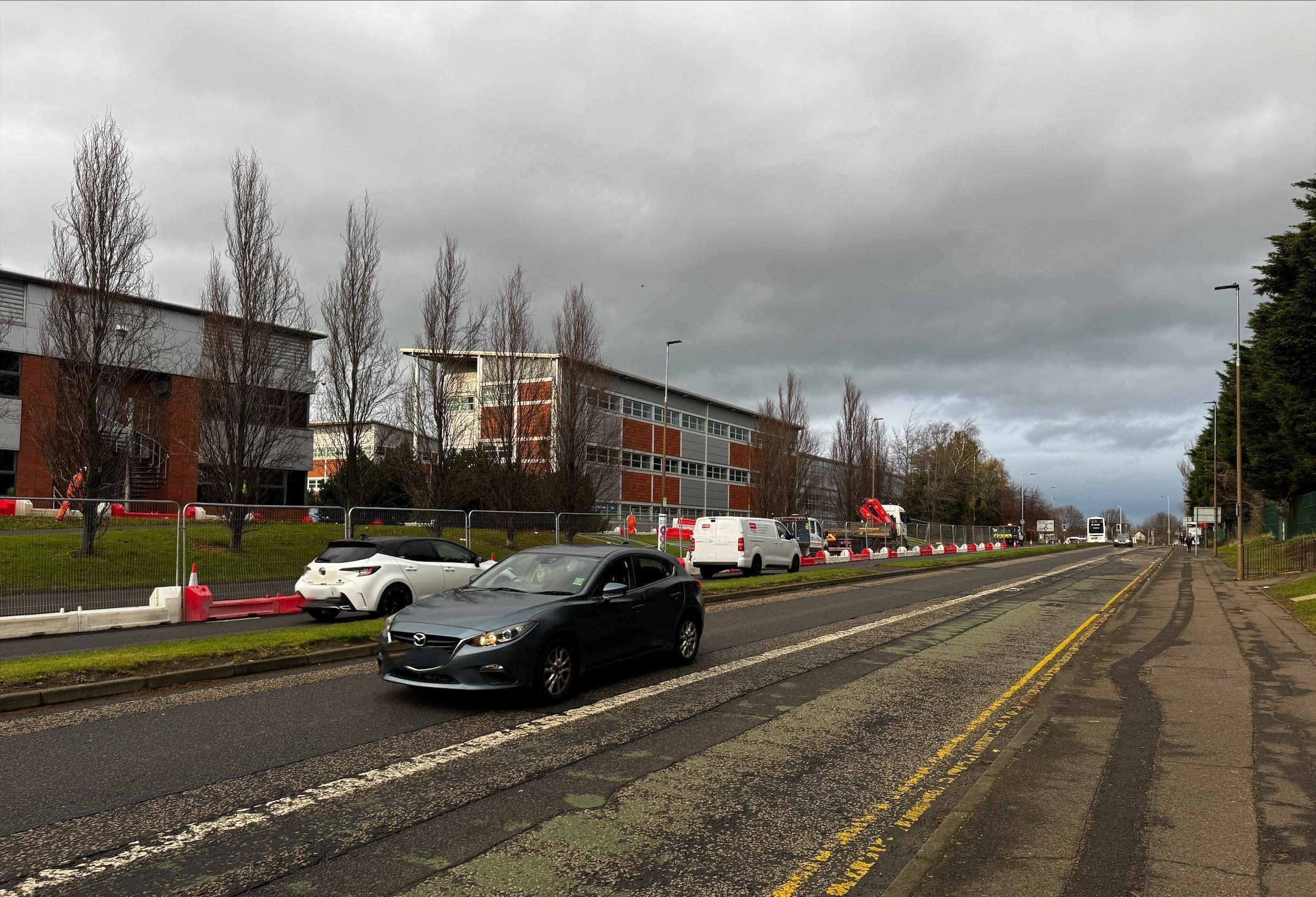
BALFOUR Beattie started work on the West Edinburgh Link this week (December 3). The West Edinburgh Link (WEL) will transform provision for cycling, walking, and accessibility around one of Scotland’s key business parks, whilst better connecting local communities to places of work, retail, leisure, and education.
WEL will also link up with key active travel routes to the city centre, including Quiet Route 8, the Union Canal and the Water of Leith Path.
Some of the work the city council is undertaking in the first phase includes new segregated cycleways on South Gyle Access and Bankhead Avenue, along with widening, surfacing, and improving lighting on the Torwood Path.
Transport and Environment Convener, Councillor Stephen Jenkinson said:“It’s brilliant to see this new work getting underway in the west of the city.
“Properly connecting our communities and encouraging our residents to travel in more sustainable and healthy ways remain key priorities for us. WEL is an important project under our ambitious City Mobility Plan as we keep Edinburgh moving.
“From revitalising active travel provision on the Torwood Path to improving access to Edinburgh College at Sighthill, alongside a host of other improvements, I’ve no doubt that local people will experience real benefits once this transformational project is complete.”
Nature is not a “blocker” to delivering new housing, but rather a necessity for building resilient towns and neighbourhoods, MPs argue in a new report.
In its report on ‘Environmental sustainability and housing growth’, Westminster’s cross-party Environmental Audit Committee challenges the “lazy narrative” that nature is a blocker or an inconvenience to delivering housing.
The Committee finds that the measures contained in the Planning and Infrastructure Bill, passing through final stages in Parliament, are not enough to allow the Government to meet its targets on both the environment and housing.
MPs also find that without further action, severe skills shortages in ecology, planning and construction will make it impossible for the Government to deliver on its housebuilding ambitions.
A full summary of the Committee’s conclusions and recommendations is included below.
Chair of the Environmental Audit Committee Toby Perkins MP said: “The Government’s target to build 1.5 million homes by the end of this Parliament is incredibly ambitious.
“Achieving it alongside our existing targets on climate and sustainability – which are set in law – will require effort on a scale not seen before.
“That certainly will not be achieved by scapegoating nature, claiming that it is a “blocker” to housing delivery. We are clear in our report: a healthy environment is essential to building resilient towns and cities. It must not be sidelined.
“There are certainly issues standing in the way of meeting both our housebuilding and environmental targets.
“For instance, the skills we need in construction, planning and ecology simply do not exist at the scale we need right now. The Government has made welcome investments in construction skills, but it may not be enough, and staff at local authorities and regulators are already stretched to their limit.
“We also need much better incentives for people to construct and live in carbon-friendly homes, or to retrofit existing ones. That’s why this report suggests innovative approaches to boost manufacturing viability of climate friendly construction products and alter the tax burden in favour of climate friendly homes.
“It is possible to build the homes we need while protecting a resilient and healthy environment and allowing nature to thrive. Some major changes might be needed, but nature is not the enemy.”
Nature must not be a “scapegoat” for housebuilding issues
While the Committee acknowledges and welcomes the Government’s amendments to the Planning and Infrastructure Bill (PIB) it says these changes are not enough on their own to ensure the Government can meet its environmental targets alongside housing targets.
“The Government must not veer down the path of viewing nature as an inconvenience or blocker to housebuilding,” the Committee says. “At worst, this approach could lead to the degradation of the natural world, preventing the achievement of legally binding climate and nature targets, upon which our society and economy depend.”
Skills shortages put targets in question
The Committee finds that local planning authorities are severely under-resourced in ecological skills. It heard evidence that staff at Natural England are “stretched to their limits”, that the skills needed to deliver the ecological aspects of planning reforms “simply do not exist at the scale, quality or capacity that is needed”.
The Committee recommends the Government establish a pilot programme for local ecological resource hubs, available to local authorities facing acute resources challenges, by July 2026.
It also recommends that the Government set out a realistic analysis of the construction workforce required to deliver housing targets and the skills that will be needed, and to clearly lay out how Natural England will operate amid staffing cuts and the additional responsibilities that will apply when the Planning and Infrastructure Bill is enacted.
Planning rule changes prioritise growth over the environment
Throughout its inquiry, the Committee heard repeated concerns that the Government’s changes to the presumption in favour of sustainable development, made in the 2024 review of the National Planning Policy Framework, would lead to the environment being “sidelined”.
The Committee finds that the present form of the presumption could result in unsustainable and speculative development. The Committee recommends that the Government amend the current definition of the presumption, to give greater weight to sustainability. It should also strengthen safeguards against environmentally unsustainable, unplanned and speculative development.
More incentives for greener homes
The Committee concludes that the Government must accelerate policies to decrease the carbon emissions of the built environment. MPs recommend the Government should consider steps it could take to incentivise homeowners, housebuilders, landlords and tenants to favour homes with lower levels of embodied carbon.
The Committee also recommends the Government review tax policies such as Council Tax and Stamp Duty to consider the merit of offering lower bands of taxation for homes with lower levels of embodied carbon.
Biodiversity net gain needs more time to succeed
The Committee offers support for the government’s Biodiversity net gain policy. It says it is too early to assess the overall success of BNG but warns against introducing new wide-ranging exemptions to BNG. Whilst accepting minor alterations to the policy, MPs say the Government should not exempt all small sites to ensure that the effectiveness of the policy is maintained.
The Committee also recommends that the Government should:
Incentivise the use of sustainable building materials such as timber or hemp, e.g. by introducing eco-labelling to identify materials with lower embodied carbon and offer support to further expansion of manufacturers in these fields.
Consult on incentives to develop houses with lower full lifecycle carbon, such as a levy on new build properties containing higher levels of lifecycle carbon.
Prioritise retrofitting over demolition by reducing VAT on retrofit projects from 20% and confirm that a property brought back into use would count towards housebuilding targets.
‘‘Dreadful’ Climate Plan does nothing for households, workers and communities’
Communities will ‘benefit from cleaner air, warmer homes and new job opportunities’ under draft plans to cut emissions published yesterday.
The draft Climate Change Plan to 2040 sets out actions designed to reduce Scotland’s greenhouse gas emissions and meet our first three carbon budgets, whilst supporting jobs, growth and community regeneration.
Scotland is already over half way to net zero having reduced emissions by 51.3% since 1990 – the largest reduction in the UK and faster than the EU average, using comparable statistics.
Climate action is not only essential to protecting our future. When done correctly, it offers one of the greatest opportunities to create jobs and prosperity for our communities.
Our draft Climate Change Plan outlines detailed actions needed to do this up to 2040.
The new plan details over 150 policies and proposals building on this progress, including:
setting a target to decarbonise building heat systems by 2045
phasing out new diesel and petrol cars by 2030
increasing woodland creation so that by 2029/30 18,000 hectares are planted every year, with 21% woodland cover in Scotland by 2032
increasing peatland restoration by 10% each year to 2030
The independent Climate Change Committee has emphasised the necessity for shared delivery and collaboration between national governments given between 30-60% of the emissions reduction required in Scotland, Wales, and Northern Ireland will be in areas of policy that are mostly reserved.
Climate Action Secretary Gillian Martin said: “Raising awareness of climate action has never been so important, with communities across Scotland and around the world already being affected – through flooding, heatwaves and wildfires.
“This draft plan includes over 150 actions across sectors such as transport, heat in buildings and agriculture that are key to achieving Scotland’s net zero goal while supporting people to make and adjust to the changes required.
“It also describes how we will seize and fairly distribute the opportunities from the transition to net zero – from new jobs, inclusive growth and better infrastructure to improved public services and healthier people – thanks to cleaner air, warmer homes and wealthier communities.
“The plan does not ask the impossible of people. We will not sacrifice people’s health or wealth.
“Through this consultation, everyone has a voice in shaping the final plan to inform future decision making and ensure that we reach our net zero in a way that is fair, ambitious and capable of rising to the emergency before us.”
Scotland’s climate coalition has welcomed publication of the Scottish Government’s draft climate routemap. However, it says there are major missed opportunities to reduce emissions in some of the most polluting sectors in ways that deliver meaningful improvements to the lives of people in Scotland.
The Scottish Government’s draft Climate Change Plan (CCP), released today, sets out how it believes the country will reduce emissions in line with national climate targets. The draft will now be scrutinised by MSPs, and the public will have the opportunity to have their say.
Stop Climate Chaos Scotland (SCCS) says the final plan must have increased focus on tangible and urgent action that is funded fairly, with reduced reliance on unproven technologies.
Ahead of conducting a full assessment of the plan, Dr Mike Robinson, chair of Stop Climate Chaos Scotland, said: “Publication of this long-awaited draft plan represents a step forward but if positive intentions are not matched with urgent delivery the plan risks being meaningless.
“Ministers needed to go much further in the most polluting sectors through things like free public transport, meaningful reform to farming support and legislation to drive changes in the way we heat our homes.
“Projections show the financial benefits of following carbon-cutting measures proposed in the draft CCP are almost 10 times the cost of implementing them – that’s a win-win for people and the planet.
“This plan must now undergo robust scrutiny to test its effectiveness, feasibility and ambition. It needs to be strengthened, with a clearer focus on immediate action that rapidly cuts emissions in ways that address the daily struggles many people are facing and unlock the benefits of fair climate action.
“Scottish ministers must also prove their commitment to funding the final Plan in a way that’s genuinely fair by making polluters pay for their damage.
“There can be no more climate action delays or mis-steps – nor a continued gamble on as yet unproven technology to bail us out.”
‘Dreadful’ Climate Plan does nothing for households, workers and communities
Environmental campaigners Friends of the Earth Scotland have reacted to the draft Climate Plan from the Scottish Government saying it “will barely scratch the surface” on climate emissions in the coming years.
The “dreadful” plan contains nothing to help oil workers, people struggling to pay energy bills or communities cut off from bus services, campaigners say.
In 2024, the Scottish Government weakened its climate commitments after years of failure by Ministers to deliver on promises.
Public support for climate action remains high with the overwhelming majority of people in Scotland concerned about climate breakdown.
Climate campaigners along with Palestine solidarity groups, migrant justice organisations and grassroots groups are organising a major climate march through Glasgow on Saturday 15th November. It is part of a Global Day of Action in the middle of the United Nations climate talks in Brazil.
Friends of the Earth Scotland head of campaigns Caroline Rance commented: “This is a dreadful plan that will barely scratch the surface never mind get us back on track to meet our climate commitments.
“There is nothing here to help people who are struggling to pay their energy bills, communities cut off by unreliable buses, or oil workers worried about their future.
“Government Ministers have made a decision not to implement any available climate solutions that would help people in Scotland to tackle either the cost of living andor climate breakdown.
“Previous plans to get cars off the road have been completely gutted and buses and trains are treated as an afterthought.
“The carbon capture pipe dream is unrealistic as ever, only pushed slightly further into the future. What are we going to do in 2040 when this technology inevitably fails as it has done for the past fifty years?”
Oxfam Scotland welcomes publication of the Plan, which outlines the policies and actions which the Scottish Government believes will deliver emission cuts consistent with ending Scotland’s net impact on the climate by 2045.
The Scottish Parliament now begins a crucial 120-day scrutiny period.
Oxfam Scotland says that, alongside testing whether the Plan will achieve the emission cuts needed, this scrutiny period must fully stress-test the fairness of the Plan.
With clear evidence that, on average, the richer you are the more you pollute, campaigners say that fairness must be central to the final Plan – including how faster action is paid for.
While recognising that the costs of inaction will be even higher, the Scottish Government estimates the price tag of delivering the Plan, once savings generated are taken into account, to be £4.8 billion, but says little about where the money will come from.
Oxfam Scotland says the upcoming Scottish Budget and multi-year Spending Review must prove that the Scottish Government is serious about funding the Plan fairly
It comes as the Cabinet Secretary for Climate Action and Energy, Gillian Martin MSP, prepares to travel to Belém in Brazil to attend the UN climate talks, COP30.
Responding, Jamie Livingstone, Head of Oxfam Scotland, said:“A liveable planet is priceless so Scotland’s new Climate Plan must make an unwavering investment in all our futures, giving us: cleaner air, healthier lives, stable, green jobs and shielding us from extreme weather.
“However, right now, the roadmap on how Scottish Ministers plan to pay for their policy ambitions is little more than a sketch. To succeed, this Plan must be backed by major new public funding, delivered fairly with the biggest polluters and the better off footing the bill.
“It’s time Ministers were straight about where the pounds behind their promises to stop pumping out pollution will come from: Ministers need to show us the money.”
More than 100 pupils from 13 schools transformed into world leaders at the University of Edinburgh last week, engaging in high-stakes climate crisis negotiations to mirror the upcoming UN COP30 conference in Belém, Brazil.
In a United Nations debate simulation organised by the British Council in partnership with the University of Edinburgh and Learning for Sustainability Scotland, students experienced firsthand the complex challenges of international climate diplomacy.
Using cutting-edge simulation software developed by MIT, the pupils took on roles as delegates from major nations, corporate lobbyists, and international media representatives, all working to tackle the critical goal of keeping global warming below 1.5°C.
During the negotiations, the pupils had to collectively agree on how much to reduce greenhouse gas emissions, how they would help struggling nations, and agree on ways to adapt to climate change to protect their cities and people.
Leading the negotiations were pupils Siri Isaksson-Galbraith and Alyssa Haston, from West Calder High School who shared the role of the United Nations Secretariat (top).
Speaking in their role as UN Secretary Generals, they had a message for world leaders ahead of COP30 in Brazil:“Today in Edinburgh, we’ve experienced firsthand how difficult climate negotiations can be, but also how essential they are. We’ve learned that every country has different challenges, but we all share the same planet and the same future.
“The decisions being made at COP30 will shape our lives, our communities, and our world. We urge world leaders to listen to youth voices, to act with urgency, and to remember that compromise doesn’t mean giving up on ambition.
“The climate crisis affects us all, but it doesn’t affect us equally. We must ensure that those most vulnerable are heard and supported. From Scotland to Brazil, young people are ready to lead, but we need action now.”
Did they reach a consensus?
The challenge was to negotiate between countries to keep warming under 2°C by the end of the century, and to aim for under 1.5°C. By the end of the debate, pupils collectively agreed to keep global warming at 1.6°C, just over the mark of the Paris Agreement target. This means they were over the target, but made headway with strategies to reduce greenhouse gas emissions, support nations, and develop adaptation measures to protect cities and people.
The debate simulation was led by climate expert Professor Pete Higgins, Chair in Outdoor, Environmental and Sustainability Education at the University of Edinburgh.
Speaking at the event, Professor Pete Higgins said:“Today’s debate couldn’t be more timely. We’re living through a period of significant political uncertainty, which makes climate diplomacy more complex than ever.
“What impressed me most was how quickly these young people grasped the competing priorities and difficult trade-offs involved, whilst maintaining their determination to find common ground.
“Young people often feel powerless when it comes to climate change, but events like this show that they have both the understanding and the diplomatic skills to navigate these challenges. My hope is that the negotiators at COP30 will show the same wisdom and commitment to meaningful action that these young citizens have demonstrated today.”
Claire de Braekeleer, Director British Council Scotlandadded: “This UN debate simulation puts young people in Scotland at the heart of the global climate debate.
“As COP30 starts in Belém next week, these pupils are gaining crucial insights into how these climate negotiations work. They are also building the diplomatic skills and understanding that will be vital for the international cooperation we desperately need.
“We believe that young people are the key to driving positive climate action, and today demonstrates how collaborating globally with empathy and understanding is the way forward.”
The simulation was part of the British Council’s Schools Connect programme, which aims to bring international perspectives into the curriculum. Students engaged in realistic debates, negotiated complex agreements, and balanced competing interests of nations.
Through the Climate Connection programme, the British Council is also supporting people globally to find creative solutions to climate change in support of the 30th United Nations Climate Change Conference (COP30) in Belém, Brazil.
The British Council is supporting the summit by engaging with networks of education professionals, students, academics, researchers, artists, civil society leaders and policymakers to participate in meaningful dialogue and bring about real change for our planet.
This initiative continues the work of the British Council’s Schools Connect programme for schools in the UK and around the world, building connection, understanding and trust between people in the UK and overseas through arts, education and English language teaching.
For more information about the British Council’s work in Scotland, visit:
SCOTLAND’s Climate Action Secretary Gillian Martin will continue to push for more ambitious climate action when she attends the COP30 UN Climate Summit in Brazil this month.
In recognition of Scotland’s leadership positions as Regions4 President and European co-chair of the Under2 Coalition, Ms Martin’s schedule will include engagements with member representatives from both organisations – to help strengthen the influence of devolved, state and regional governments within international climate discussions.
Ms Martin will also:
Share learning from Climate Justice Fund programmes, including the often-overlooked non-economic impacts of climate change, such as loss of biodiversity and indigenous knowledge
Take part in panel sessions on climate justice and human mobility with the International Organisation for Migration (IOM) and the Brazilian Ministry of Environment and Climate Change
Meet with youth activists and civil society partners from the global south, including participants in Climate Just Communities Programmes, to hear first-hand how they are being impacted by climate change
Ms Martin said: “We have a unique opportunity as Under2 European co-chair and Regions4 president, to champion the essential work taking place across the globe to support vulnerable communities who are at most risk from the impacts of climate change.
“I will continue to use these leadership positions at COP30 to advocate for accelerated action to tackle the devastating impacts of our warming planet, and for greater inclusion in international climate discussions.
“Scotland’s commitment to ending our contribution to global emissions by 2045 at the latest is ambitious, but it is achievable. We will shortly be publishing our draft Climate Change Plan setting out the policies needed to meet our first three carbon budget targets, while supporting people to adjust to the changes required.”
Scottish Catholic International Aid Fund (SCIAF) Advocacy and Communications Manager Line K. Christensen said: “It is vital that Scotland has a strong voice at COP30.
“The challenges we face are global, and Scotland’s presence ensures that our values of innovation and climate justice are part of the international conversation.
“The Cabinet Secretary’s participation will allow Scotland to continue its leadership on Loss and Damage, and to demonstrate that we are a nation standing shoulder to shoulder with countries around the world on the frontline of the climate crisis.”