First Minister: Please, please stick to restrictions

Statement given by the First Minister Nicola Sturgeon at a media briefing in St Andrew’s House, Edinburgh, on Thursday, 30 April:

Good afternoon. Thanks for joining us for today’s briefing.

I want to start – as I always do – by updating you on some of the key statistics in relation to the spread of the virus in Scotland.

As of 9 o’clock this morning, there have now been 11,353 positive cases confirmed – that is an increase of 319 since yesterday.

A total of 1748 patients are currently in hospital with either confirmed or suspected cases of COVID-19 – that is an increase of 21 from yesterday.

A total of 109 people last night were in intensive care, again with either confirmed or suspected cases. That is a further decrease of 5 since yesterday.

I am also able to confirm today that since 5 March, a total of 2,538 patients who had tested positive for the virus and been admitted to hospital as a result, have now been able to leave hospital.

However, on a sadder note, I also have to report that in the last 24 hours, 60 deaths have been registered of patients who have been confirmed through a test as having the virus – that takes the total number of deaths in Scotland, under that measurement, to 1,475.

These numbers, as I stress every single day, are not just statistics. They represent people who are right now deeply missed by the friends, families and their wider network of loved ones. So once again, I want to send my deepest sympathies and condolences to everyone who has lost a loved one to this virus, we are all thinking of you at this time.

I also want to thank – as I always do – our health and care workers. At 8 o’clock this evening I will join with many others in applauding our health and care workers, in what I think has become a very precious and very special moment in the week.

And to health and care workers, I hope that this shows you, albeit in a symbolic way, just how grateful everybody across the country is for the extraordinary and very courageous work that all of you are doing.

There are two things I want to talk about today. First of all, I want to take the opportunity to emphasise the vital importance of sticking with the lockdown restrictions at this time.

I set out last week our decision making framework for starting – slowly and gradually – to ease aspects of the lockdown when it is safe to do so, and the factors and uncertainties we will have to take into account as we make these difficult decisions.

I promised to be open with you as our thinking and our decision making develops and I absolutely will be. I intend to update you again next week – ahead of the official review date of 7 May – on our considerations and judgements so far. I am very grateful to all of you have taken the time to send us views on the paper that we published a week ago today.

But part of the grown-up conversation I want to have involves me being willing, when necessary, to deliver tough messages as well as hopefully the more positive messages about how, when it is safe to do so, we can start the journey to what I described last week as a ‘new normal’, and start to reduce some of the harms to the economy and our well-being that we know the lockdown restrictions are having.

Right now, that means I have to be straight with you that it may very well be too early, even this time next week, in any meaningful way, to safely lift any of the current restrictions.

I want to share with you the reasons for that.

We have worked very hard as a country to bring down the transmission rate of this virus – and we are definitely seeing results from those efforts.

In fact we see that fewer people are now in intensive care than two weeks ago, and that figure appears to be reducing now on an ongoing basis, and hospital admissions, although they are fluctuating as you see today, are also on a slowly reducing curve.

Overall, we think that transmission in the community of the virus has been reduced very significantly as a result of the lockdown – although of course we know that it remains higher in settings such as care homes.

The R number which you hear us talk about – the rate at which the virus reproduces – is, we believe, now below 1. Remember, that at the start of lockdown, we think it was above 3. So that is real and very positive progress.

And that progress matters. With the R number below 1, that means every 100 people with the virus, between them pass it on to fewer than 100 more people and so on – and so the total number of cases will gradually decline.

We do think that is happening now. However we are not confident that the R number is very far below 1. That means any easing up at all in the current restrictions – either formally by government decisions, or informally by people becoming a bit less compliant as we all get more and more weary and frustrated – would quickly send it back above 1. Indeed, there have been reports in the last day or so from Germany that their R number is rising again as a slight easing up there has been taking effect.

And if the R number does go back above 1 – let’s say it goes to even 1.5 – then our 100 people from a moment ago would between them transmit the virus to 150 people, they in turn pass it on to 220 people and so on and so on, and suddenly the virus is spreading exponentially again.

That would mean more people in hospital and in intensive care and even more people dying.

So the point I am making today is not an easy one, but it is an essential one. The progress we have made is real and it is significant, but it is still very fragile. The margins we have for ensuring the virus does not take off again are really, really tight. That means we must be very cautious at this stage.

That’s why it’s so important that everyone sticks with the restrictions. In recent weeks people have been absolutely superb at doing that – and I will never be able to tell you how grateful I am to all of you for that. You are the reason that the NHS has not been overwhelmed, as I really feared a few weeks ago that it might be, and by sticking to the guidance,  you have undoubtedly saved lives.

However we are now seeing slight increases in people using our roads. In addition, more people are using concessionary bus travel than a few weeks ago. Both of these trends are from low starting points, but they are still sources of some concern.

For example the number of people who are using concessionary transport increased by almost 1/6 last week.

The car traffic we’ve observed on major roads is less than 1/3 of its pre-lockdown levels, but it has increased this week by about 5% this week, compared to last week. On some town and city roads, traffic has been 10% higher than in the week before.

So what I am asking all of you to do today, and you know the reasons that I am asking you to do this, is think about whether or not it is the case that right now you are a little bit more active than you might have been at the start of the lockdown, and to ask yourself why that is the case.

Was your journey really essential? You might think it’s only you making an extra journey, and that it’s only one trip – and you might well feel you deserve it after weeks of restraint. Believe me, I really understand all of that. But all of it adds up – and the fact remains that if everyone eases off, the virus will quickly take off again and it will have devastating consequences for all of us.

I know this is a long haul – I know that people want to travel a bit more, I know that children want to spend more time outside. I absolutely know that every grandparent is desperate to see and to hug their grandchildren. But as things stand, our progress against the virus, albeit very real progress, is too fragile for us to let up.

But the more we do stick to the lockdown, the more we will reduce the R number below 1, and the lower it goes, the more scope we will have to ease the lockdown measures in future.

So please, I am asking you again, stay at home – except for essential purposes.

If you do leave home, remember to stay more than 2 metres away from other people, and don’t meet up with people from other households.

If you have any symptoms of the virus, you and your household should isolate completely. And everybody should still be washing their hands regularly and thoroughly.

By sticking to all of that, we can keep that R number below 1. We will slow the spread of the virus, protect the NHS, and we will save lives. And – while it might not feel like it right now, and I am pretty sure it doesn’t – we will actually all help each other to come through the other side of this a bit more quickly.

The other thing that I want to update you on, is our support for business.

Today, three new business support funds, which total £100 million, open for applications.

They are part of a wider package of measures to support business, which are worth around £2.3 billion in total.

One of the funds is the Newly Self-Employed Hardship Fund, which is managed by Local Authorities.

It is open to newly self-employed people who are facing hardship but – because they became self-employed in the last year – are ineligible for other support. They will be able to apply for grants of £2,000.

The lack of support for newly self-employed people is something which has been much commented upon – I am glad we can now do something now to give assistance.

The second fund is the Creative, Tourism & Hospitality Enterprises Hardship Fund. This is managed by our Enterprise Agencies with support from Creative Scotland and VisitScotland.

It will provide grants of up to £25,000 for smaller creative, tourism and hospitality companies who do not benefit from business rates relief – for example if they do not have premises which can benefit.

And finally, we have also established the Pivotal Enterprise Resilience Fund, which is again managed by our Enterprise Agencies.

This will provide grants and support to small and medium sized businesses which we think are potentially vital to Scotland’s economic future, or to the economies of certain local areas – but which have been made vulnerable by this crisis.

This is an important way of trying to safeguard our economic future and potential – by ensuring that smaller companies with lots of potential are not driven out of business during this crisis.

Applications for these funds will be open from 2 pm today. We hope that successful applicants will start receiving money in the next couple of weeks.

If you think that you might qualify for one of these grants, you can find more detail at www.FindBusinessSupport.gov.scot

I want to end by re-iterating my earlier message. Please stick to the guidance. I know this is not easy. And when I say that, I am not just saying what I know you want to hear – I really know this is not easy. But it is making the difference: so please, please, stick with it.

Prime Minister: ‘We can now see the sunlight and pasture ahead of us’

Prime Minister’s statement on coronavirus (COVID-19): 30 April 2020

Good afternoon, welcome everyone again to this Number Ten press conference where I am joined by Professor Chris Whitty, Chief Medical Officer, and Sir Patrick Vallance our Chief Scientific Advisor.

And I am sorry not to have been part of this trio for so long

I want to thank everybody who has been doing such a good job in my absence and I want to thank the NHS for so much

Including getting me back here and I might add for a much happier hospital visit yesterday

In a few minutes I am going to hand over to Patrick to update you on the epidemic

But first I am going to set out today’s latest data

901,905 tests for coronavirus have now been carried out in the UK, including 81,611 tests yesterday

171,253 people have tested positive, that’s an increase of 6,032 cases since yesterday

15,043 people are currently in hospital with coronavirus, compared to 15,359 people yesterday

And sadly, of those tested positive for coronavirus, across all settings, 26,711 have now died. That’s an increase of 674 fatalities since yesterday across all settings. This figure of course includes deaths not just in hospitals.

Across this country, therefore, families every day are continuing to lose loved ones before their time

We grieve for them and with them

But as we grieve we are strengthened in our resolve to defeat this virus

To get this whole country back to health, back on its feet

And we are determined urgently and in particular to overcome those challenges that in the last few weeks have been so knotty and so infuriating

I’m not going to minimise the logistical problems we have faced in getting the right protective gear to the right people at the right time, both in the NHS and in care homes

Or the frustrations that we have experienced in expanding the numbers of tests

But what I can tell you is that everyone responsible for tackling these problems whether in Government or the NHS, or Public Health England, local authorities

We are throwing everything at it, heart and soul, night and day

To get it right – and we will get it right and we are making huge progress

And I will not underrate the work and the achievement of those who are dealing with global shortages, in a global pandemic

They are rising to a challenge we have never seen in our lifetimes

And the same can be said of the entire people of this country Staying in enforced confinement

Not seeing family, not seeing friends or grandchildren

Worrying about their jobs and the future

And so my message to everyone again today is your effort and your sacrifice is working and has been proved to work

Today the number of Covid hospital admissions is falling

The number of patients in ICU is falling

We have so far succeeded in the first and most important task we set ourselves as a nation

To avoid the tragedy that engulfed other parts of the world

Because at no stage has our NHS been overwhelmed

No patient went without a ventilator

No patient was deprived of intensive care

We have five of the seven projected Nightingale wards

And it is thanks to that massive collective effort to shield the NHS that we avoided an uncontrollable and catastrophic epidemic where the reasonable worst case scenario was 500,000 deaths

And so I can confirm today for the first time that we are past the peak of this disease. We are past the peak and we are on the downward slope

And we have so many reasons to be hopeful for the long term

The UK is leading international efforts to find a vaccine

Today Oxford university has announced a partnership with Astrazeneca to develop what they believe could soon be a means of inoculating ourselves against this disease

But until this day comes – and I am afraid we cannot say exactly when it may be

We will have to beat this disease by our growing resolve and ingenuity

So I will be setting out a comprehensive plan next week

To explain how we can get our economy moving, one,

How we can get our children back to school, back into childcare, second, and third how we can travel to work and how we can make life in the workplace safer

And in short how we can continue to suppress the disease and at the same time re-start the economy.

A huge amount of work has been going on on that that plan and as we produce it we are being guided by the science, and we will try to build the maximum political consensus as we produce it across all parties and across the UK

But there will be five key tests that we must satisfy before we can put that plan into action

We must be sure that we can continue to protect the NHS and its ability to cope

We must see a sustained fall in deaths

We must be sure that the infection rate is falling

We must overcome the operational and logistical challenges on testing and PPE

Fifth, and this is the most important, we must all make sure that the measures we take do not risk a second spike that would overwhelm the NHS

We have come through the peak

Or rather we’ve come under what could have been a vast peak

as though we’ve been going through some huge alpine tunnel

And we can now see the sunlight and pasture ahead of us

And so it is vital that we do not now lose control and run slap into a second and even bigger mountain

And so to avoid that disaster our fifth and final test is that nothing as I say we do should lift the R or the reproduction rate of that disease back above one

And before I hand over to Patrick I am going to ask for a short explanatory clip about the one

And before we come to that clip, let me just emphasise that keeping the R down is going to be absolutely vital to our recovery, keeping the reproduction rate of the disease down, and we can only do it by our collective discipline and working together

I know we can do it, because we did it, we’ve shown we can do it, in phase one of this disease

This country came together in a way few of us have seen in our lifetimes

To protect the NHS and to save lives and that’s why I am absolutely convinced we can do it in phase two as well

Museums & Galleries Edinburgh launch Covid-19 collecting drive

Museums & Galleries Edinburgh has launched a new Covid-19 collecting drive with an open call to Edinburgh people to contribute their own items and stories which reflect how life in the city and the city itself has been impacted by the global pandemic and lockdown.

The curatorial team leading on this project are gathering public contributions in order to record and preserve this significant moment in Edinburgh’s history, so it can be chronicled for future generations.

The Covid-19 pandemic and resulting lockdown has affected every aspect of the lives of Edinburgh’s residents, and Museums & Galleries Edinburgh are keen to create a contemporary collection which charts these significant changes to everyday life in the city.

The call is for donations of objects and stories which capture the everyday experiences of the people of Edinburgh and the many ways in which they adapted and responded as their lives were transformed by Covid-19.

Items such as a note of an offer of help received by a neighbour, pyjamas worn all day indoors or a rainbow artwork created in support of keyworkers are all welcome. These are of course only suggested items and the call is very much about recording those objects and stories which helped people cope and get through the many challenges and uncertainties presented by the pandemic.

Those who are keen to contribute are asked to email 

anna.macquarrie@edinburgh.gov.uk 

with details and an image if possible on the item or items for potential donation.

Given the current lockdown restrictions, no physical donations will be accepted until venues reopen but the curatorial staff will contact those contributors to make arrangements at an appropriate time.

City of Edinburgh Council Leader Adam McVey said: “This is an extraordinary period in our history that in due course we will want to look back on. By collecting objects, photographs and first-hand experiences of citizens now, we’re making sure we can capture this moment for future generations.

Depute Leader Cammy Day added: “Often we look back and wish we could ask previous generations about the historic events they lived through and witnessed – this is our chance to document Edinburgh and Covid-19. The stories and images we capture for this collection will create a valuable insight into 2020 for generations to come.”

Anna MacQuarrie, Curator of History, Museums & Galleries Edinburgh said; “Our social history collections reflect daily life in Edinburgh over some hundreds of years.

“It’s never been more important for us to continue to show changes in the city than during this pandemic. Object donations from Edinburgh residents will help us to preserve experiences of this challenging time for future generations to understand how everyday life in the city changed so much and so suddenly.”

Further details on the project can be found www.edinburghmuseums.org.uk

Coronavirus update: First Minister’s speech 29 April

Statement given by the First Minister Nicola Sturgeon at a media briefing in St Andrew’s House, Edinburgh:

Good afternoon everybody. Thank you once again to all of you for joining us for this daily update.

I want to start as usual with an update on some of the key statistics in relation to COVID-19 in Scotland.

Now as usual on Wednesdays, today’s update will have two parts – an update on the daily figures that you are used to hearing me present, and also a summary of the key points from today’s weekly publication from National Records of Scotland.

That means more complexity and a bit more length than normal – so please bear with me.

I also know and want to be upfront about this today that both speaking about and hearing about people dying is extremely upsetting. But I hope you understand that it is important that I do report these numbers and do so in some detail.

Let me turn firstly to the usual daily figures.

As at 9 o’clock this morning, I can report that there have been 11,034 positive cases confirmed – which is an increase of 313 since yesterday.

A total of 1,727 patients are currently in hospital with either confirmed or suspected COVID-19 – that is a decrease of 27 from yesterday.

A total of 114 people as of last night were in intensive care with either confirmed or suspected cases of the virus. And that is a decrease of 12 on yesterday’s figures.

Let me say again that these are encouraging figures.

I am also able to confirm today that since 5 March, a total of 2,521 patients who had tested positive for the virus have now been able to leave hospital.

However I also have to report that in the past 24 hours, 83 deaths have been registered of patients who had been confirmed through a test as having the virus – and that takes the total number of deaths in Scotland, under that measurement, to 1,415. Although I’ll come on to the figures from the National Records of Scotland publication shortly.

Unfortunately there is a further group of deaths that I am able to report on today. Over the course of the pandemic, I can sadly confirm that 6 members of NHS staff and 5 members of the social care workforce have died from the virus. And my thoughts, and the thoughts of all of us in the Scottish Government are with their family and friends.

Now I should stress and it is an important point to stress that it will not necessarily be the case that all of these members of staff contracted COVID through their work – and in some cases, people may not have been in their workplace for some time.

However it is really important for us to understand how many frontline workers lose their lives from this virus, it’s also really important that we ensure appropriate investigation into the circumstances, and of course learn any lessons that we can from those circumstances.

Now the numbers that I have read out – for health and care workers, and indeed for all deaths – are not just statistics. And this is a point that is important for me to make every single day. Behind every one of these statistics is an individual an individual who is loved and cherished an individual who is now deeply missed by those that they’ve left behind. So once again, I want to send my deepest condolences and thoughts to everyone who has lost a loved one to this virus.

And finally I want to thank – as I always do – our health and care workers for the extraordinary work that you continue to do. The entire country owes you such an enormous debt of gratitude.

Now I have spoken before about the different ways in which we record figures, but I think it’s helpful if I briefly go through the key points again.

For our daily update figure – which is the one that you have just heard me give – we report on deaths that have been registered by National Records of Scotland, but where the individual has been tested and confirmed as having COVID-19.

These figures are the most accurate ones that we are able to provide on a daily basis. However, as you’ve heard me say before, they don’t capture all deaths associated with the virus.

So National Records of Scotland – or NRS – now produces a weekly report every Wednesday. It’s been published just over half an hour ago.

And this captures all deaths registered within a 7 day period, ending on the preceding Sunday. And it includes – not just those with a confirmed laboratory diagnosis of COVID-19 – but also deaths which are presumed to be linked to the virus.

So it includes cases where COVID is entered on the death certificate as a suspected cause of death, or as a contributory factor in the death, but where no formal test had been carried out.

The number of deaths covered under this reporting system is therefore larger than under the daily system, when you compare the two figures according to the same date. But it is more comprehensive, and it provides a fuller picture of how the virus is affecting our communities.

As I said NRS published the fourth of its weekly reports today. It covers the period up to Sunday 26th April – which is three days ago. At that point, if I can remind you, according to our daily figures, 1,262 deaths had been registered of people who had tested positive for the virus.

However, today’s report shows that by Sunday, the total number of registered deaths linked to the virus – confirmed and presumed – was 2,272.

656 of those were registered in the 7 days up to Sunday the 26th. And that is an increase of 5 from the week before, when 652 COVID-19 deaths had been registered.

Now, as I said a moment ago, these figures are difficult to hear – and they are of course very difficult and upsetting for me as well to report on.

But this more comprehensive information is vital, because it does help to give us as full a picture as possible of the toll the virus is having, and to see how and when it is progressing and where it is progressing. And that is important as we take decisions for the future.

Now because of the importance of this information, NRS once again provided breakdowns of these figures by age, health board area and setting. And I want to discuss briefly some of what these latest figures show.

First, the data says that in total, 52% of people whose deaths have been linked to COVID died in a hospital; 39% of people died in a care home; and 9% of people died at home or in another setting.

However in the past week, on its own more than half of all COVID-related deaths – 338 of the total – were in care homes. That partly reflects the fact that COVID-19 deaths in hospital do now seem to be declining.

The proportion of deaths in Scotland in care homes – while obviously deeply distressing – is however broadly in line with the proportions being reported now for many other countries. And that demonstrates again how crucial it is to make care homes as safe as they can possibly be during a pandemic of this nature.

Care homes have had strict guidance to follow since 13 March. And it is incumbent all care home providers, whether they are in the public or private sector to follow and to implement that guidance.

Our NHS Directors of Public Health are also playing a lead role in assessing how each care home in their area is managing infection control, staffing, training, physical distancing and testing.

Patients being discharged from hospital should provide 2 negative tests before being admitted into a care home, and all new admissions to care homes should be tested and isolated for 14 days.

All care home residents with symptoms of COVID-19 are tested.

Social care staff with symptoms or their families should be tested and we have worked with the care sector and continue to work with the care sector to ensure appropriate provision of PPE.

We know that care homes – due to the age and often the frailty of their residents, and because many people are living together in the same setting – are very, very vulnerable to this virus, not just here in Scotland but across the UK and other countries too. The steps we have taken so far are designed to ensure that they are as safe as they can possibly be. And we will continue to take whatever steps are necessary and appropriate to make sure that is the case.

The second issue I want to briefly cover is that we have again today in this publication provided information on what is sometimes called “excess deaths” – that is the difference between the total number of deaths last week, and the average number of deaths, in previous years, for that particular week.

Today’s figures show that there were 743 excess deaths last week. That is actually lower than in the previous two weeks – by more than 100 – but it is still a much higher number than we would want to see. The overwhelming majority of those excess deaths – 85% of them – can be and are attributed to COVID-19. But there are 112 additional deaths which cannot be attributed to the virus.

That figure – for unexplained excess deaths – is actually also lower than in previous weeks, but it is of course still a source of concern.

The figures published today show that a significant proportion of these additional deaths are due to Alzheimer’s or dementia, or circulatory conditions such as heart disease or stroke.

The other point I would make about the excess deaths overall is that they are high and far too high but on the most recent comparable data we have in Scotland, the proportion of excess deaths is slightly lower at this stage than in England and Wales.

Now I know there have been questions raised about whether all deaths thought to be from Covid are recorded in that way. And I want to be very clear that in reporting and analysing all excess deaths, I hope the NRS report provides some reassurance on that point. And we of course continue our work to understand what lies behind these increases and in particular to understand the excess deaths that are not attribute to the virus.

Thirdly, in terms of the points I want to cover, these figures again demonstrate that this virus disproportionately affects the elderly and that is not just elderly in care homes, the vast majority – nearly all – of deaths from this virus are in the over 65 age group.

However they also show that anyone can get this virus, and that people of all ages have died or become seriously ill from it. So for all of us, strict hand hygiene and sticking to social distancing rules is still the best way of protecting ourselves, as well as protecting our loved ones and our communities.

And that brings me to my final point – and it is one which you hear me make every day but I think it is more important than ever to make it during these Wednesday briefings than perhaps at any other time.

I know how upsetting these numbers are to listen to, because I know how upsetting they are to report on. And there’s a danger of feeling – when you hear numbers like this – dispirited, certainly very sad but also powerless, as a result of the fact that the death toll is still so significant, given all of our efforts in recent weeks.

But every one of us does have power to protect ourselves, our loved ones and communities. And not withstanding these figures, deeply distressing figures of numbers of people dying. Some of the earlier statistics that I have sighted today show that we are making progress.

So by exercising the power that each of us as citizens have, we have already all of us helped protect the NHS, we’ve helped to push transmission rates in the community to a much lower level now than was the case several weeks ago.

So please, I ask you, continue to stick to the rules.

Stay at home – except for essential purposes such as buying food or medicine, and exercising.

If you do leave home for essential purposes, don’t mix with people from other households – stay more than 2 metres away from other people. If you have to be in an enclosed space with other people, like a food shop or public transport, please consider covering your nose and mouth with a face covering like a scarf.

If you have symptoms of the virus, you and your household should isolate completely.

And everybody must still wash their hands regularly and thoroughly and follow all of the other hygiene guidance.

These measures are tough for all of us, and as I say every day because it’s true they are getting tougher. But they are having a positive impact. Notwithstanding some of the upsetting news I reported today. But the converse of that point is equally important and equally as stark, easing up on them now would also have an impact but it would be a negative impact – and that impact would be felt very rapidly.

So we do need to stick with it. These restrictions are the ways in which all of us, together, will slow the spread of the virus even further, continue to protect our NHS, and save lives. So thank you once again to all of you who are doing that.

And please, please keep doing that because you are making a difference.

FORTH 1 listeners lift spirits with ‘Stay Home Orchestra’

Forth 1 listeners have been staying home and staying upbeat while creating their own mass version of club classic ‘Carnaval De Paris’ by Dario G. 

The Boogie In The Morning breakfast team, consisting of Boogie, Arlene and Marty, have been encouraging listeners of all musical talents from across Edinburgh, the Lothians, Fife  and Falkirk to get involved in the ultimate ‘Stay at Home Orchestra’ which went live yesterday (Tuesday 28th April). 

Otherwise known as the ‘Working From Home Amateur Massive Musical Orchestra (WHAMMO), listeners from across the east of Scotland were keeping themselves occupied during this period of isolation by filming themselves playing along to the song which was originally recorded for the 1998 FIFA World Cup in France.

Speaking about WHAMMO, Boogie, who hosts Forth 1’s Boogie In The Morning, said: “We all know how important it is to stay at home at the moment to protect our NHS and save lives. However, that doesn’t mean we can’t have some fun. 

“We’re all in this together and we were not let down by the fantastic response we had from our listeners.

“I was really impressed with the musical talents and creativity of the entries – they definitely showed me and the rest of the team up…apart from Arlene, who was annoyingly, really quite good!” 

You can check out the full ‘Stay At Home Orchestra’ video on the Radio Forth WHAMMO webpage now. 

Watch as Boogie and the team give it a go themselves:

Boogie – https://www.facebook.com/227407058938/videos/205426760719169/

Arlene – https://www.facebook.com/227407058938/videos/169254434107738/

Marty – https://www.facebook.com/227407058938/videos/525774795043064/

 Join Boogie In The Morning every weekday from 6am on Forth 1.

 Keep up with all the latest news, music, competitions and gossip on Forth 1 on FM, online, on DAB radio, via our app, on your Smart Speaker, on Facebook, Twitter, Instagram and Snapchat: 

Coronavirus: Care home deaths now outstrip those in hospital

As at 26th April, 2,272 deaths have been registered in Scotland where COVID-19 was mentioned in the death certificate, according to statistics published by National Records of Scotland (NRS) today.

Between 20th April to 26th April, 656 deaths relating to COVID-19 have been registered, an increase of four from the previous week, 13th April to 19th April.

To place these statistics in context, the total number of deaths registered in Scotland from 20th April to 26th April was 1,830 – 68% more than the average number of deaths registered in the same week over the last five years, 1,087.

Of these 743 excess deaths, 85% were deaths where COVID-19 was the underlying cause of death.

Over a third of all registered deaths involving COVID-19 occurred in care homes, 39%. 52% of registered deaths were in hospitals and 9% were at home or non-institutional settings.

Almost three quarters of registered deaths involving COVID-19 to date were people aged 75 or over. Of all deaths to date involving COVID-19, 53% were male and 47% were female.

Pete Whitehouse, Director of Statistical Services, said: “Every death from this virus is a tragedy. These statistics, alongside the other important evidence being made available by the Scottish Government and Health Protection Scotland (HPS), are valuable to the understanding of the progress and impact of the COVID-19 virus across Scotland.

“Our aim is to ensure that our statistical publication provides information that is as useful as possible and adds value to the understanding of how the virus is spreading throughout the country. We will continue to review and develop these statistics as new information is made available.”

Conservative health spokesman Lothian MSP, Miles Briggs, said: “My condolences are with family and friends of everyone who has tragically died from Covid-19.

“It is extremely concerning that in Edinburgh and the Lothians we are now in a position where there are more deaths in care homes than there are in hospitals.

“Care home residents are highly at risk to Covid-19 and every measure must be taken to protect care home residents, including full PPE being available, regular testing for Covid-19 and full training for staff on infection prevention.”


Stay at Homers turn to new interests

Bored Britons are switching off their TVs and finding new ways to entertain themselves during lockdown with a new study revealing the nation’s most popular isolation hobbies.

Penny pinching experts from NetVoucherCodes.co.uk used Google trends data to research which affordable new hobbies the UK public are adopting from their homes.

They found increasing numbers of us are turning away from our screens and finding new ways to stay entertained as the lockdown continues.

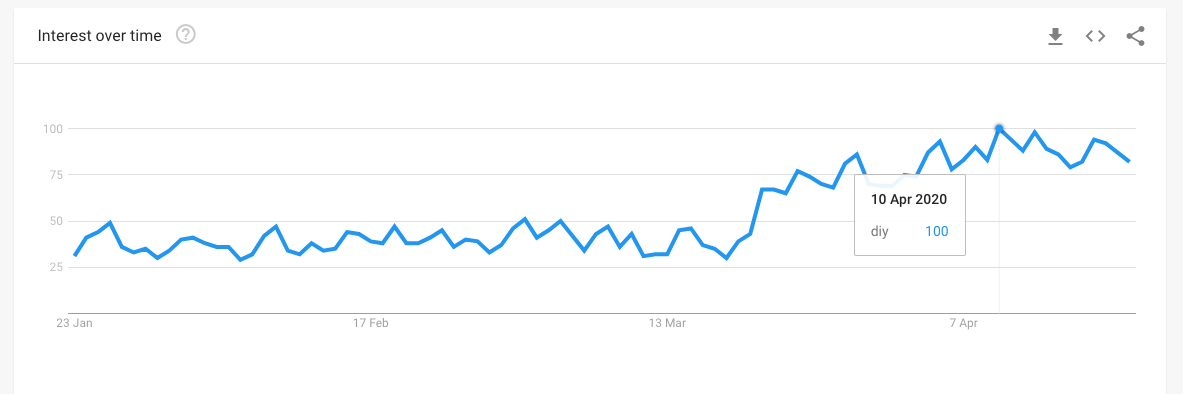
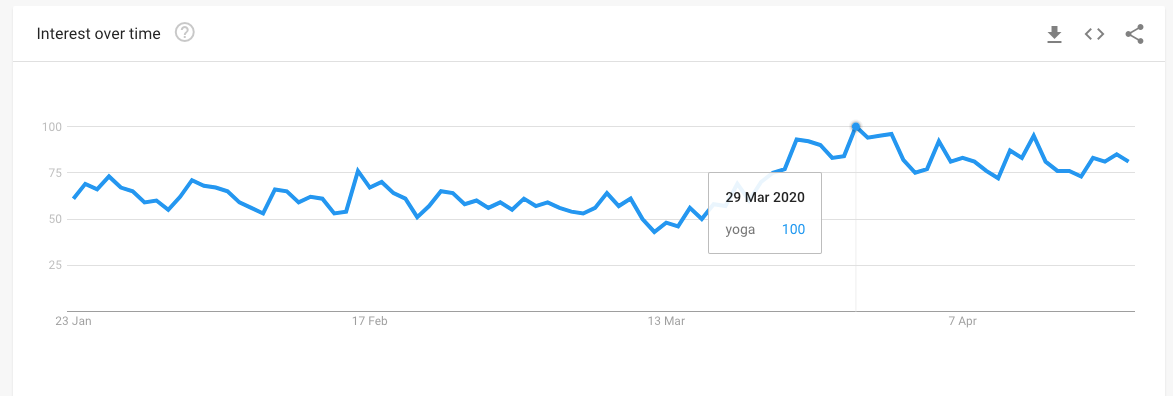
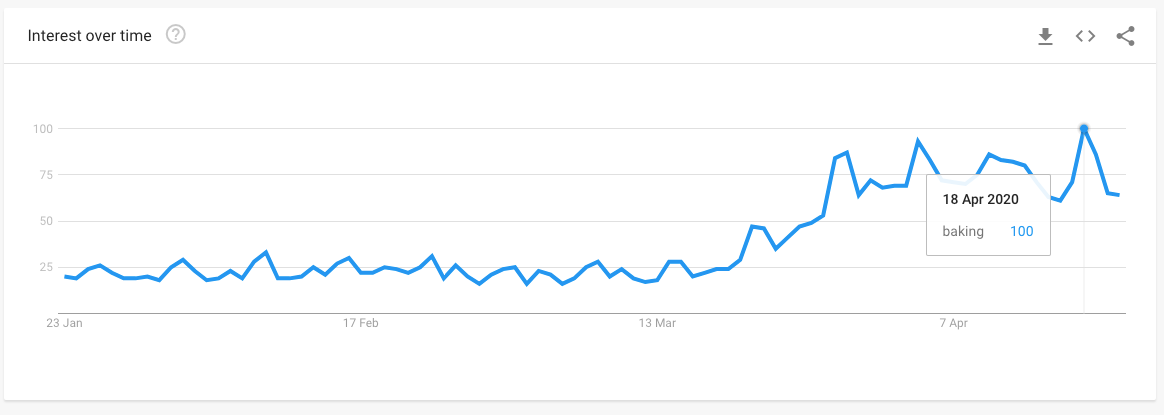
As well as classic hobbies such as baking, gardening and DIY, many of us are using the lockdown to learn a new language or get fit with home workouts or yoga sessions.

A spokesperson from NetVoucherCodes said: “Many people have a lot more time on their hands right now than they are used to and as the lockdown continues increasing numbers are switching off their televisions and finding more interesting ways to keep themselves entertained.

“The perfect hobby is one that lets you tap into some of your energy and creativity but doesn’t tap into your wallet in a significant way. Families up and down the UK need a break, and hobbies provide them the chance to have fun and relax.

“Immersing yourself in a new hobby can be really good for mental health and helps reduce stress, which is really important at the moment.

“Using Google Trends’ search data in the UK over March and April, many hobbies had increased search interest. Using this we calculated the percentage increase in interest in those topics, and identified the date of peak popularity.

“Alongside ‘How to make a facemask at home’ and ‘How to claim 80% of wages’, here are the results of the UK’s most searched isolation hobbies, along with tips for getting started with each.”

  1. Learn a Language

The UK population doesn’t have to give up on their dreams of becoming fluent in a second language. As we are all in lockdown, many Brits are prioritising learning a new language.

With the most searches occurring on 29 March, the great thing about learning a new language is you can set your own pace and milestones. Consequently, you won’t get a failing grade if you don’t reach your goals.

There are many apps that are free which give great introductions to a new language, whether it be Italian or German. You may not have spoken French or Spanish since school, but there’s no reason why you can’t finally master speaking a new language this year.

  1. Training With Resistance Bands

With gyms and health clubs closed due to COVID-19, the UK is looking for alternative ways to keep up with their fitness and training programmes. In the world of weight training, resistance bands tend to fly under the radar. But due to current circumstances, they are perfect for home workouts for all levels.

With peaked interest for both weight training and resistance bands on the 22nd March, using resistance bands can hit all muscle groups and you can progress difficulty really easily. Not to mention they are lightweight, easy to store and relatively inexpensive.

  1. DIY

DIY is always a popular pastime for Brits, but we have seen a steady increase in interest throughout April as lockdown measures are continuing. This is a perfect time to pick up those jobs you’ve been putting off for ages, and if you are unsure on how to do something, buy a book on DIY, or research through YouTube.

You can still get deliveries and do click and collect to buy the tools you need. It’s a good opportunity to start a new project and you’ll learn a new skill while improving your home!

  1. Yoga

With mental health and wellbeing at the forefront of the UK’s minds, it is no surprise to learn that interest in Yoga peaked in March. Studies have shown practising Yoga regularly can help with anxiety, improve your concentration, ease pain, and boost your cognitive health overall.

Before you dive into a sun salutation or downward dog, have a look through YouTube videos to learn the basics. Starting small is actually a good idea if you want to make yoga a part of your regular routine.

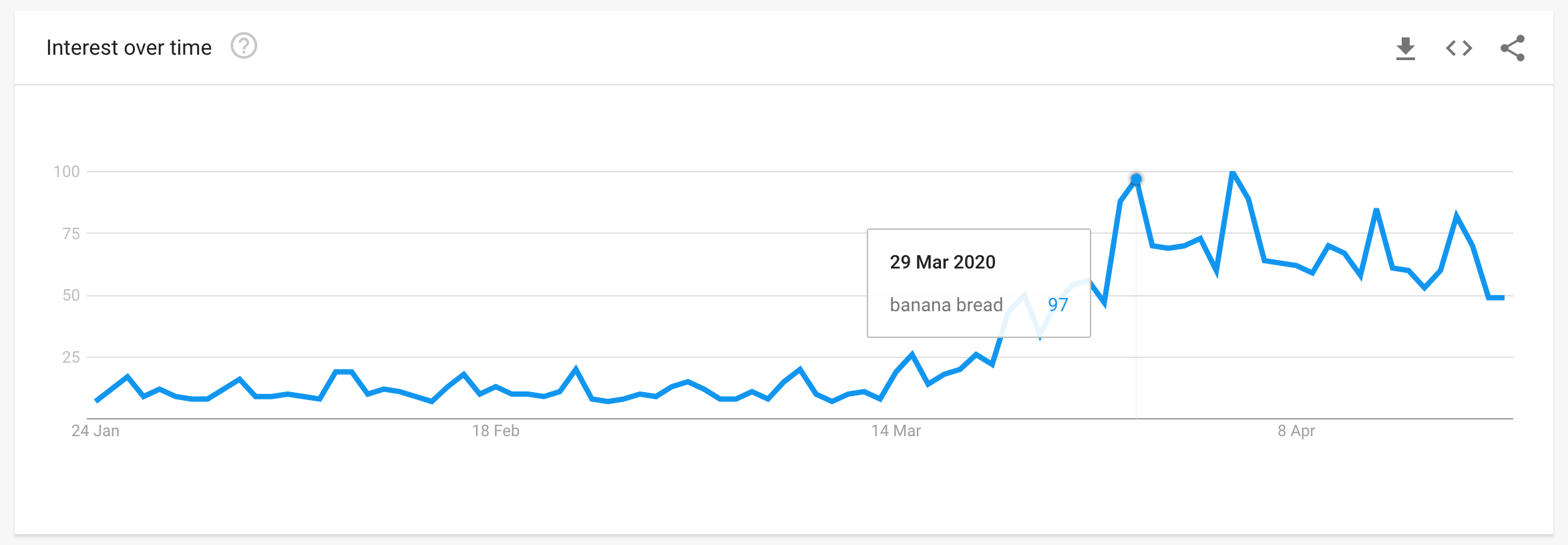
  1. Baking

Baking might seem a little intimidating for first-timers out there, which is why many are starting with basic recipes such as Banana Bread. The UK has seen a remarkable peak in searches for both baking and more specifically Banana Bread in March and April.

Alongside Banana Bread, there are a wealth of beginner bakes for Brits to start out on; Victoria Sponge, Brownies and Cupcakes are all relatively straightforward household favourites.

  1. Gardening

Gardening is a great exercise for both the body and the mind. Usually associated with the older generation, interest in gardening is now peaking.

Whether we’re planting new flowerbeds, nurturing an allotment (following Government guidelines) or simply tending to indoor plants, the UK is finding that gardening is more than a hobby and can provide food for the family at a fraction of the cost. Online gardening centre Gardening Express has seen a huge rise in sales since lockdown began.

Growing your own vegetables also eases concerns over food availability as lockdown has slowed distribution of some crops.

Further expansion of access to coronavirus testing

Anyone in England with coronavirus symptoms who either has to leave home to go to work or is aged 65 and over will now be able to get tested.

  • Everyone in England aged 65 and over with coronavirus symptoms can now get tested, along with symptomatic members of their household
  • Symptomatic workers who are unable to work from home also eligible for testing
  • Testing of all asymptomatic NHS and social care staff and care home residents also being rolled out
  • New expansion of testing made possible due to rapidly increasing testing capacity

Anyone in England with symptoms of coronavirus who has to leave home to go to work, and all symptomatic members of the public aged 65 and over, will now be able to get tested, the UK government has announced.

This will mean people who cannot work from home and those aged 65 and over can know for sure whether they have coronavirus and need to continue isolating.

Members of their households with symptoms – a new continuous cough or high temperature – will also be eligible for testing.

Anyone eligible can book a test using an online portal.

The government also announced that NHS staff, care home staff and care home residents will be eligible for testing whether or not they have symptoms.

Working with Public Health England, the Care Quality Commission and the Association of Directors of Adult Social Services, the government is piloting sending packages of ‘satellite’ test kits directly to care homes across England to enable testing of residents.

So far, 4,760 tests have been delivered to more than 4,300 locations. In addition, over 25,000 care staff have already been tested.

Secretary of State for Health and Social Care Matt Hancock said: “Expansion of our testing programme protects our most vulnerable and keeps people safe.

“Testing is now available to all over 65s and members of their households, if they have symptoms.

“Any worker who needs to leave their home in order to go to work, and their households, if any of them have symptoms can also get a test. This means construction workers to emergency plumbers, research scientists to those in manufacturing – can now be tested.

“All they need to do is go on the internet and apply for a test.”

Testing for coronavirus helps the government and scientists understand its current spread and plan how to manage the pandemic.

As capacity has increased, testing has been offered to different groups in a phased approach, prioritising NHS workers. However, the ultimate aim is that anyone who needs a test will be able to have one.

Yesterday’s announcement marks a further step towards that goal. It follows the announcement last week that all essential workers with symptoms can now book a coronavirus test, or order a home testing kit, using the new online portal.

There are now more than 40 drive-through testing sites across the country, and, by the end of the week, 25,000 home testing kits will be available for ordering every day.

A network of mobile testing units is also travelling the country to reach care homes, police stations, prisons and other sites where there is demand for testing. The network is expected to reach over 70 units by the weekend.

Since the beginning of April, the government has significantly increased the UK’s coronavirus testing capacity, which currently stands at 73,400 tests per day and is on track to reach 100,000 tests daily by the end of the month.

The response to coronavirus is a national effort. Each of the devolved administrations will have their own eligibility criteria and testing priorities, however the government is working closely to align approaches.

Project Wingman takes off at Royal Infirmary Edinburgh

Staff at the Royal Infirmary Edinburgh are set to receive the first class treatment as the latest Project Wingman lounge opens on site.

The facility, which is run by pilots and crew from across every UK airline, will provide a space for staff to unwind, de-compress and de-stress before, during and after their shifts.

The lounge, the first of which to open in Scotland, takes inspiration from the ‘first-class lounge’ experience and will offer a relaxing and friendly environment where staff can be treated to refreshments such as teas and coffee, as well as light snacks.

The Edinburgh facility is part of a UK wide initiative spearheaded by British Airways pilot and captain Dave Fielding, Emma Henderson, an EasyJet pilot, and Prof Rob Bor, a psychologist at the Royal Free hospital in London.

While a light-hearted nod to the movie Top Gun, the initiative aims to provide support for staff who are busy providing first-class care for patients.

Furloughed, grounded, or made redundant by the COVID-19 crisis, the aircrews involved are all volunteering their time to put a smile on faces, while offering a much needed space for rest and relaxation.

Inga Cosway, Healthy Working Lives Co-ordinator, Royal Infirmary Edinburgh, said that across NHS Lothian, work has been ongoing to provide a range of facilities and support for staff. This has included the provision of a number of support helplines, as well as quiet spaces for staff to use.

Inga said, “We are delighted to welcome airline crew to our forces here at the Royal Infirmary. The Project Wingman lounge will provide a welcome space for colleagues to pause, reflect and unwind as together we respond to the COVID-19 pandemic.

“Most of us will never have experienced the luxury of a first-class lounge, but I know that staff are delighted to have this facility available to them and cannot wait to meet the captain and his crew.  We are grateful to the Edinburgh and Lothians Health Foundation who have provided essential funding to make this happen.”

The Edinburgh facility, is being run and managed by Captain Paul Singleton, a pilot with Virgin Atlantic. Paul said that he wanted to give something back to NHS staff after personally seeing the work that they do day in and day out.

Paul said: “Like many others I wanted to do something to help and support the NHS at this critical time. My son had a major operation at the Royal Hospital for Sick Children in Edinburgh and I cannot thank staff enough for the outstanding care that he received. I was in awe of NHS staff before the COVID-19 crisis hit, but now, more than ever I wanted to express my heartfelt thanks and admiration.

“As aircrew, we are highly trained, well organised & excellent communicators. Using these skills we hope to support every member of staff at the Royal Infirmary, who are working tirelessly as we navigate the uncharted territories that COVID-19 is presenting us with.”

The Project Wingman lounge is available for all staff and is open daily from 7am – 9pm.

Lothian MSP, Miles Briggs, said: “This is an excellent initiative run by pilots and crew from airlines across the UK to use their skills and experience to support NHS staff at this challenging time.

“NHS frontline staff are going above and beyond every single day, putting themselves at risk to care for everyone, and it is more important than ever to look after those who look after us.

“The incredible efforts made by all NHS staff during this period must be recognised not just now, but also in the future, by continuing to support those who are risking everything for us.”

Scots encouraged to use face protection in enclosed public places

Coronavirus update: First Minister’s speech Tuesday 28 April 2020:

Good afternoon. Thanks for joining us for today’s briefing.

I want to start – as I always do – by updating you on some of the key statistics in relation to Covid-19 in Scotland.

As at 9 o’clock this morning, there have been 10,721 positive cases confirmed – an increase of 200 from yesterday.

A total of 1,754 patients are in hospital with Covid-19 – that is an decrease of eight from yesterday.

A total of 126 people last night were in intensive care with confirmed or suspected Covid 19. That is also a decrease of 8 since yesterday.

These figures continue to give us cause for cautious optimism.

I am also able to confirm today the positive news that since 5 March, a total of 2,448 patients who had tested positive for the virus have been able to leave hospital.

On a much sadder note, I have to report that in the last 24 hours, 70 deaths have been registered of patients who have been confirmed through a test as having Covid-19 – that takes the total number of deaths in Scotland, under that measurement, to 1,332.

Tomorrow of course will see the publication of National Records of Scotland weekly statistics that cover not just those who have die having had a positive test,  but those where Covid-19 is a presumed factor in the deaths.

These numbers, as I stress every day, are not just statistics. Behind each of these numbers is a unique and irreplaceable individual whose loss is a source of grief to many. So once again, I want to send my deepest condolences to everyone who has lost a loved one to this virus.

I also want to thank – as I always do and consider it important that we always do – our health and care workers. Everyone across Scotland is grateful to you for the extraordinary work that you are doing.

Many of us will have joined the minute’s silence at 11 o’clock today to honour the frontline workers – including, of course, health and care workers – who have sadly lost their lives while working to tackle this pandemic.

It was a reminder of the selflessness of our health and care workers – choosing to treat and care for others during a time of crisis – and it was also a reminder of the government’s duty to do everything we can to keep those workers safe.

I have two issues I want to update you on today.

The first relates to testing. We have been making steady progress on increasing our testing capacity over the last month – from an initial starting capacity that could cope with 350 tests a day to a capacity of at least 3,500 by the end of this month.

We will give a further update on testing capacity at the end of the week.

As a result of the work we have been doing so far to build capacity, we have already been able to expand testing in some priority areas.

Tests are currently made available and processed within NHS labs for:

  • people in hospital with symptoms of Covid-19 and all those in intensive care
  • people who have been referred for testing by their local Covid hubs
  • people in care homes who have symptoms
  • people who are being admitted to care homes
  • and key workers in our health and care services and where appropriate their family members. More than 20,000 people in that category have now been tested.

In addition, of course, key workers in other sectors – for example the prison service – are now able to book tests online for the drive through centres established at different locations around the country.

We are today expanding testing further.  All NHS Boards are now being asked to put in place procedures to test all those over 70 who are admitted to hospital for any reason – not just those with Covid symptoms.

As we know, the virus can have an especially severe impact on older people. And so although we don’t usually test people without symptoms – because the test isn’t totally reliable in those cases – we do think that there could be a benefit in testing older people both on their admission to hospital and then at intervals thereafter.

So patients in this category will be tested on admission, and then every four days throughout their stay in hospital.

This will help us identify if the virus is being transmitted in hospital, and if so, how and where. It will also help us provide better care for older people in hospital and therefore contribute to our wider efforts to slow the spread of the virus.

The second issue I want to address relates to face coverings, an issue which has attracted lots of attention recently. Guidance on this has just been published on the Scottish Government’s website.

I want to stress at the outset that I am talking here about face coverings made of cloth or other textiles, such as a scarf. I am not talking about medical grade face masks that health and social care workers wear.

The guidance makes clear that the most important step we can all take to prevent transmission of the virus is to comply with the current stay at home, social distancing and hygiene rules.

Face coverings are not – I repeat not – a substitute for any of that.

The guidance also makes clear that the evidence on use of face coverings is still limited.

However, it recognises that there may be some benefit in wearing a face covering if you leave the house and enter an enclosed space where you will come into contact with multiple people and safe social distancing is difficult – for example on public transport or in shops.

Of course just now, most shops are closed so this would apply in particular to food shops.

To be clear the benefit comes mainly in cases where someone has the virus but isn’t aware of that because they are not experiencing  symptoms and therefore not isolating completely – so wearing a face covering in these circumstances may reduce the chance of that person transmitting the virus to others.

The Scottish Government is now recommending the use of face coverings in these limited circumstances as a precautionary measure.

Given that the evidence is relatively weak, we are not at this stage making this mandatory or suggesting that it will be enforced, though we will keep that under review as we go into future phases of managing and tackling the pandemic.

And of course it is worth bearing in mind that there are some people – people with asthma, for example – may have very good reasons for choosing not to cover their mouth and nose when they are out and about.

And we are not recommending the use of face coverings for children under the age of two.

However, to repeat we are recommending that you do wear a cloth face if you are in an enclosed space with others where social distancing is difficult, for example on public transport or in a shop.

Let me emphasise the key point here which is that you should not really be in situations very often like that right now if you are complying with the stay at home rules.

The guidance states that there is no evidence at this stage to suggest that there are benefits to wearing a face covering outside, except in unavoidably crowded situations. Again, we are keeping that aspect under review.

The guidance also includes some information on how to safely apply and wash coverings.

When you are applying or removing the face covering, you should wash your hands first, and avoid touching your face. And after each time you wear the covering, you must wash it at 60 degrees centigrade, or dispose of it safely.

The detailed guidance, as I’ve said, is available on the Scottish Government’s website, and the guidance on the NHS Inform website will also be updated very soon.

The most important point I want to stress is this one. The wearing of facial coverings is an extra precaution that you can and, we are suggesting, you should take. It may do some good in some limited circumstances. It is not – and must not be seen as – a substitute for the other rules and guidelines that we have been stressing. 

In particular, anyone with symptoms of Covid-19 – and all members of their household, regardless of whether or not they have symptoms – must self-isolate. Guidance on that is available on the NHS Inform website.

And physical distancing, hand washing and respiratory hygiene – covering up coughs with disposable handkerchiefs, or even with your sleeve – remain the most important and effective measures we can all adopt to prevent the spread of coronavirus.

So please, above all else, continue to follow the rules that we have set out.

Stay at home, except for essential purposes such as buying food or medicine, or exercising.

If you do leave the house, you should stay 2 metres apart from other people, and you should not meet up with people from other households.

And you should wash your hands thoroughly and regularly.

I know that sticking to these rules is really, really difficult but it is essential. It is how all of us can help to slow the spread of the virus, to protect the NHS, and continue to save lives. So thank you for sticking with it.