
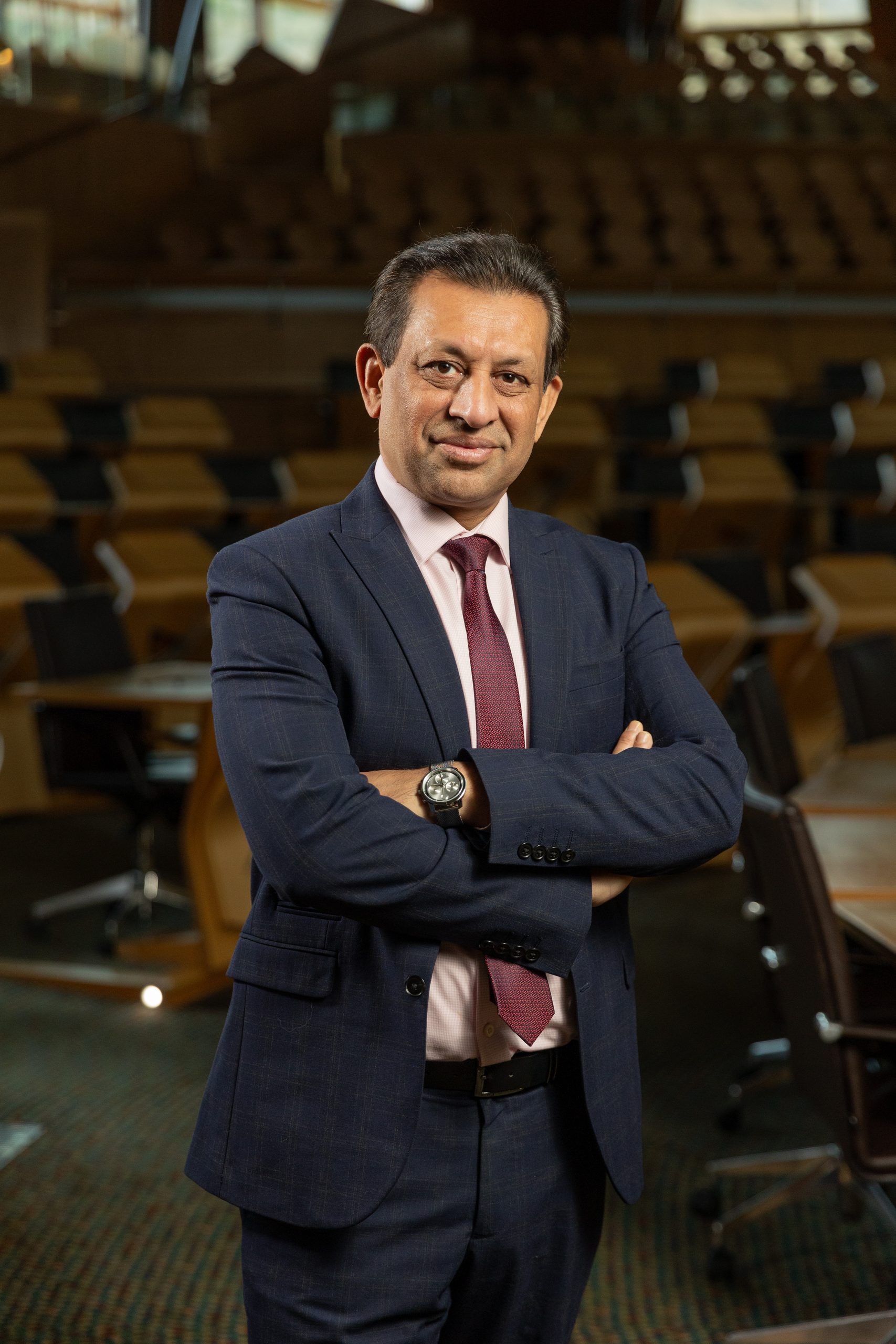
WEDNESDAY’s UK Budget presents an important opportunity to consider how public investment can support a fairer, safer and more inclusive Scotland (writes FOYSOL CHOUDHURY).
While decisions about funding are often discussed in terms of economic growth, public services and household costs, we must also consider how investment can help tackle discrimination, strengthen relationships between communities and protect people from hatred.
As Scotland considers its Budget priorities, I hope the Scottish Government will recognise the importance of investing in equality education, cultural understanding and community safety. Public spending is not just about financial figures; it is also about the opportunities we create for young people and the kind of society we want to build.
As a former Member of the Scottish Parliament (MSP), I spent considerable time working with communities, raising concerns about discrimination and advocating for equality. My parliamentary questions, meetings and engagement with educational institutions and community organisations reflect my longstanding belief that everyone should be able to live, learn and practise their faith without fear of prejudice or intimidation.
I believe the Scottish Government should work closely with third-sector organisations, schools, colleges and universities to ensure that equality education receives appropriate funding and support. Young people should have opportunities to learn about different cultures, religions and traditions, understand one another’s experiences and challenge prejudice wherever they encounter it.
My commitment to this work comes from years of community engagement, including my time as an MSP, my work as Chairman of Edinburgh and Lothians Regional Equality Council (ELREC), and my role as Convenor of the Scottish Parliament’s Cross-Party Group on Challenging Racial and Religious Prejudice.
Drummond Community High School has a particularly important place in my life. I attended the school, and my family has maintained strong links with it over the years. As Chairman of ELREC, I supported initiatives bringing the school and community organisations together, including the Refugees’ Voices event in December 2016.
This initiative helped connect refugees with organisations offering advice and support on education, housing, healthcare and other important issues. I also supported the school’s football team and helped with football coaching. These experiences reinforced my belief that education, sport and community engagement can bring people together and help young people understand the value of diversity.
Beyond my connection to Drummond Community High School, my work has extended across numerous schools, colleges, and educational institutions throughout Scotland. Each plays a vital role in supporting young people at different stages of their development. My engagement with institutions like Edinburgh College, alongside the many schools I have visited, reflects the importance I place on listening directly to students and creating inclusive educational environments where people from all backgrounds can learn, develop, and progress.
Schools and colleges should be places where students feel respected and supported, regardless of their ethnicity, religion or background. I hope the Scottish Government will work with these institutions to ensure they have the resources, training and partnerships needed to promote equality, inclusion and mutual respect.
During my time as an MSP, I used parliamentary questions to raise concerns about discrimination affecting young people and students. I believe elected representatives have a responsibility to listen to the experiences of those affected by prejudice and bring their concerns directly to government.
On 23 June 2022, I asked the Scottish Government about action to protect Muslim communities from Islamophobic incidents and progress on the Hate Crime Strategic Partnership Group. This reflected my concern that people must be able to practise their religion and participate in society without fear of hostility.
On 17 January 2023, I sponsored a Scottish Parliament event entitled Islamophobia, Education, and the Future, organised by the Community Policy Forum. The event brought together people concerned about the relationship between education, discrimination and the experiences of minority communities.
On 29 November 2023, I lodged written parliamentary question S6W-23363, asking what action the Scottish Government had taken to improve the reporting and recording of Islamophobia in schools, colleges and universities. On 4 December 2023, I lodged a further question, S6W-23522, seeking an update on progress in implementing recommendations from the Scottish Islamophobia inquiry.
On 26 June 2024, I raised concerns about making hate crime reporting more accessible in a parliamentary question. People who experience discrimination or religious hatred must have confidence that they can report incidents and that their concerns will be taken seriously.
I returned to these issues on 28 November 2024, asking about ministerial discussions on tackling Islamophobia and progress on recommendations concerning a definition of Islamophobia and a workplace discrimination toolkit. On 20 December 2024, I lodged further parliamentary questions, S6W-32712 and S6W-32713, seeking updates on implementing recommendations from the Scottish Islamophobia inquiry and its 2023 update.
These questions reflect a simple principle: discrimination must not be ignored. Students deserve to feel safe in their educational environments, and incidents of racism and religious prejudice must be recorded, investigated and addressed appropriately. Educational institutions need clear procedures, effective support for those affected and the resources to turn equality policies into meaningful action.
My concern about the experiences of students was also reflected in my parliamentary work on racist bullying. On 12 June 2025, I asked the Cabinet Secretary for Education and Skills how the Scottish Government was ensuring schools tackled racism and racist bullying. I raised the case of a pupil who had experienced prolonged racist bullying and asked how anti-racism resources were being put into practice. I also asked whether the Cabinet Secretary would meet me and the pupil’s mother to hear directly about the impact of the bullying.
I believe it is essential that young people and their families are listened to when they raise concerns about discrimination. Policies and guidance are important, but their effectiveness must be judged by whether they improve pupils’ everyday experiences. Schools must be equipped to respond to racist bullying, support those affected and take appropriate action when incidents occur.
Teachers and school staff also need suitable training and resources to recognise discrimination and create inclusive learning environments. No child should feel that their ethnicity, religion or cultural background makes them less welcome at school. Every pupil deserves to learn in an environment where they feel safe, respected and able to fulfil their potential.
As Convenor of the Scottish Parliament’s Cross-Party Group on Challenging Racial and Religious Prejudice, I worked to bring together parliamentarians, equality organisations, academics, faith representatives and community groups to discuss discrimination and identify practical ways to improve understanding between communities.
The group provided an important forum for discussing Islamophobia, racism, religious intolerance and the experiences of people affected by prejudice. It also offered opportunities to consider how government, public institutions and community organisations could work together to address these issues. The group’s discussions highlighted concerns about racial and religious hatred, threats against places of worship, online misinformation and the need for stronger cooperation between communities.
These issues cannot be addressed by one organisation or institution acting alone. Parliamentarians, government departments, police, educators, faith leaders and third-sector organisations all have a role to play. As Convenor, I considered it important to ensure that these conversations continued and that the experiences of affected communities informed discussions about policy and practical action. My parliamentary questions on the implementation of recommendations from the Scottish Islamophobia inquiry were part of this wider commitment, driven by the belief that recommendations must lead to tangible improvements in reporting, education, public awareness and the treatment of victims.
I am particularly concerned about the damage that inflammatory political rhetoric and misinformation can cause to community relations. Politicians have a responsibility to recognise that their words can influence public attitudes. Robust debate and disagreement about public policy are essential parts of democracy, but they should never become excuses for stigmatising entire communities or encouraging hostility towards people because of their ethnicity or religion.
When politicians or other influential voices repeatedly spread misleading claims about minority communities, the consequences can extend beyond political debate. Such rhetoric can deepen divisions, reinforce stereotypes and contribute to an environment in which people feel targeted or unwelcome.
Online misinformation can make these problems worse by allowing false claims and hostile messages to spread rapidly. We must challenge inaccurate information, encourage responsible public debate and ensure that people are able to discuss difficult issues without being subjected to racial or religious hostility.
We must challenge Islamophobia, antisemitism, racism and all forms of religious hatred consistently. No community should be singled out for hostility, and nobody should be excused from responsibility for encouraging hatred because of their political position or public profile.
Freedom of expression and political debate must be protected. At the same time, threats, harassment and incitement to violence must be taken seriously and addressed in accordance with the law.
Education and dialogue are essential, but they must be accompanied by practical measures to protect people. The Scottish Government should work with Police Scotland, local authorities, faith leaders and community organisations to ensure that appropriate security arrangements are available to communities facing credible threats. This includes effective systems for reporting hate incidents, timely investigations, support for victims and appropriate security advice for places of worship and community facilities.
Police officers need the resources and training required to respond effectively to hate crime and protect the public. People must have confidence that when they report threats or incidents of hatred, their concerns will be taken seriously. Online threats and incitement to violence must also be addressed.
The relevant authorities should enforce existing laws effectively, investigate credible threats and work with appropriate partners to tackle harmful online activity, while respecting freedom of expression and civil liberties.
Security measures must be proportionate and evidence-based. Protecting one community must never come at the expense of the rights of another. Security is not simply about preventing an attack; it is also about ensuring that people can attend school, go to work, visit their places of worship and participate in public life without fear.
Third-sector organisations are essential partners in promoting equality and preventing discrimination. They often have direct relationships with communities and understand the barriers people face when experiencing racism, religious prejudice or social exclusion.
These organisations can provide support to individuals, build relationships between communities and help educational institutions develop more inclusive approaches. Their knowledge and experience should be valued when the Scottish Government develops policies and makes decisions about public spending.
As Chairman of ELREC, I recognise the importance of supporting organisations that work directly with people affected by discrimination. Their work can help ensure that individuals understand their rights, receive appropriate support and have opportunities to participate fully in society.
I hope the Scottish Government will establish and maintain meaningful partnerships with equality organisations, schools, colleges and universities. These partnerships should be supported by appropriate funding, long-term planning and clear objectives. Practical initiatives could include training for teachers, culturally inclusive learning resources, opportunities for students to engage with people from different communities and programmes that help young people understand different faiths and traditions. Sustainable funding is essential if organisations are to plan effectively and provide consistent support to communities.
As Scotland considers the implications of yesterday’s UK Budget, I hope ministers will give serious attention to the resources required to promote equality, improve education and protect communities.
The UK Budget affects the funding available to Scotland, but it does not automatically guarantee additional spending on equality education or community security.
The Scottish Government must make its own decisions about devolved spending priorities and ensure that public money is directed towards areas where it can make a meaningful difference.
I believe equality education should be recognised as an important investment in Scotland’s future. Schools, colleges and universities need appropriate support to create inclusive learning environments, while third-sector organisations need the resources to continue their work with communities.
The Scottish Government should consult the organisations and institutions that have direct experience of these issues, listen to students and families affected by discrimination, and assess whether existing policies are delivering meaningful improvements.
Investment should support prevention as well as responses to incidents when they occur. By helping young people understand different cultures and religions, we can challenge prejudice earlier, strengthen relationships and encourage greater respect across communities. At the same time, government must ensure that appropriate security, reporting and support arrangements are available to those who experience threats or hatred.
My experience as an MSP, Chairman of ELREC and Convenor of the Cross-Party Group on Challenging Racial and Religious Prejudice has reinforced my belief that lasting change requires cooperation.
My engagement with schools, colleges, universities, students and community organisations has also demonstrated the importance of listening to people and understanding their experiences. These relationships can help identify challenges, encourage constructive dialogue and develop practical ways to make educational institutions and communities more inclusive.
Students, teachers, families, community organisations, faith leaders and public institutions all have a part to play in building a society where people feel safe and respected. As Scotland considers its Budget priorities, I hope equality education, cultural understanding and community safety will receive the attention they deserve. We must invest not only in what young people learn, but also in how they learn to understand and respect one another.
Equality education, community safety and inclusion are connected responsibilities. By supporting all three, Scotland can build a society in which diversity is valued, discrimination is challenged and everyone has the opportunity to belong and thrive. Everyone deserves to live in a country where they can pursue their education, practise their faith and participate in public life without fear.
That is the Scotland we should continue working towards.
Foysol Choudhury MBE is a former Member of the Scottish Parliament and Chairman of Edinburgh and Lothians Regional Equality Council (ELREC)
