Community projects and services working to tackle poverty and inequality in some of Scotland’s most disadvantaged communities across Scotland will share in more than £30 million over the next three years, First Minister John Swinney has announced.
The new Scotland Together Fund will support grassroots organisations to address pressing issues facing communities affected by poverty, disadvantage, and racism from 2027/28.
By improving living standards for the people they support, the projects backed by funding will help communities to become stronger, more cohesive, and more resilient.
The First Minister said: “Scotland is stronger for its diversity, and we want to ensure that common ground and shared values between diverse communities are promoted and strengthened.
“We know that poverty and disadvantage can fuel the conditions that lead to tensions within communities, and that is something we all need to do our part to tackle.
“This Scotland Together Fund over is being designed to provide multi-year support a wide range of grassroots projects in communities across Scotland to help to improve people’s quality of life and ensure they have access to support with a range of issues.
“By making people’s lives better, it will help tackle tensions between communities and create a more inclusive and resilient society, building bridges between different groups.”
First Minister announces series of interventions to tackle violence against women and girls
A new Respect Fund for Scotland will see school pupils supported to reject misogyny and promote respect as part of a package of Scottish Government action to tackle violence against women and girls.
Up to an additional £1 million will be invested from 2027/28 to ensure high school pupils can access third sector programmes teaching young people how to reject misogyny, whilst primary school pupils will receive age-appropriate learning on respect.
The funding will be bolstered by the rollout of a Scottish Government backed campaign with leading sporting organisations and prominent sportsmen for a new phase of the Don’t Be That Guy campaign.
Initially run by Police Scotland in 2021, the advertising campaign rose to international prominence for encouraging men to challenge attitudes and behaviours that contribute to violence against women and girls.
Scottish Rugby, the Scottish Football Association and Scottish Tennis are amongst the leading national organisations backing the refreshed campaign, along with leading sports personalities including Scotland rugby players Jamie Dobie and Grant Gilchrist, and tennis player Connor Thomson.
The move forms part of a package of action led by the First Minister to tackle misogyny in Scotland, including a commitment to introduce a Misogyny Bill before the 2027 summer recess.
First Minister John Swinney said: “Violence against women and girls is completely deplorable and has no place in the Scotland we are building. I am determined we do all we can to tackle it and ensure men change their behaviours.
“People of all ages need to feel able to talk openly to their male friends and colleagues about behaviour that is misogynistic and damaging to women, and contributes to a culture that targets, minimises and harms women and girls.
“This funding will help empower pupils to challenge the attitudes that help perpetuate harmful behaviour, backed by the refreshed Don’t Be That Guy campaign – which will use the reach and influence of some of Scotland’s most well-known sporting personalities, to give prominence to this important national conversation.
“I want Scotland to be a place where women and girls live free from violence, coercive control, abuse and exploitation, which is why over the coming year this government will also bring forward a Misogyny Bill to give women and girls specific legal protection from harassment.”
Sporting organisations working with the Scottish Government to support positive action to promote positive masculinity and respect:
A new digital platform for recording, transcribing and translating spoken Gaelic has been awarded £600,000 through the CivTech innovation programme.
AITEAL – which means “ray of light” – will help in developing advanced technologies, including AI, for Gaelic speakers.
The project will initially create four jobs including three fieldworker posts in rural and island communities and a dedicated Project Manager. Over 18 months, the team will record up to 500 hours of high-quality spoken Gaelic in the Western Isles and Skye.
This data can then be used to improve existing technologies like speech-to-text software or develop new ones such as Gaelic AI chatbots. It could also be used to make educational resources or automated transcription and subtitling services.
AITEAL has been created by the Gaelic arts organisation Fèisean nan Gàidheal alongside the charity Community Enterprise and digital technology partner Northcode Digital.
It is one of the successful projects to benefits from Round 11 of the Scottish Government’s CivTech programme, which provides critical support to some of Scotland’s most promising and growing tech start-ups, harnessing their creative talent and innovation to improve public services.
Cabinet Secretary for Education, Culture and Gaelic Màiri McAllan said: “The lack of data on Scottish Gaelic presents a significant barrier in developing technologies for Gaelic speakers. AITEAL aims to overcome this, ensuring Gaelic language and culture thrive.
“This exciting project will enrich communities, safeguard cultural heritage and unlock economic opportunities, providing lasting benefits for Gaelic speakers.
“AITEAL has the potential to be of international significance as it can provide a model which other languages can follow to overcome digital inequality.”
CEO of Fèisean nan Gàidheal and Director of AITEAL Limited Calum Alex Macmillan said: “We look forward to working directly with Gaelic speakers in their communities, recording the language as it is naturally spoken and capturing the richness of its dialects and idioms in everyday use.
“AITEAL presents exciting opportunities to make Gaelic more accessible and usable across all aspects of community life, from education and healthcare to public services, workplaces and everyday interactions in our communities.
“The company’s ambition extends beyond the initial 18-month development and data collection phase. Established to provide long-term stewardship of both the project’s linguistic resources and supporting technology, AITEAL will oversee the management, governance and future development of the data. It also creates potential opportunities for future specialist roles as the initiative grows and evolves.”
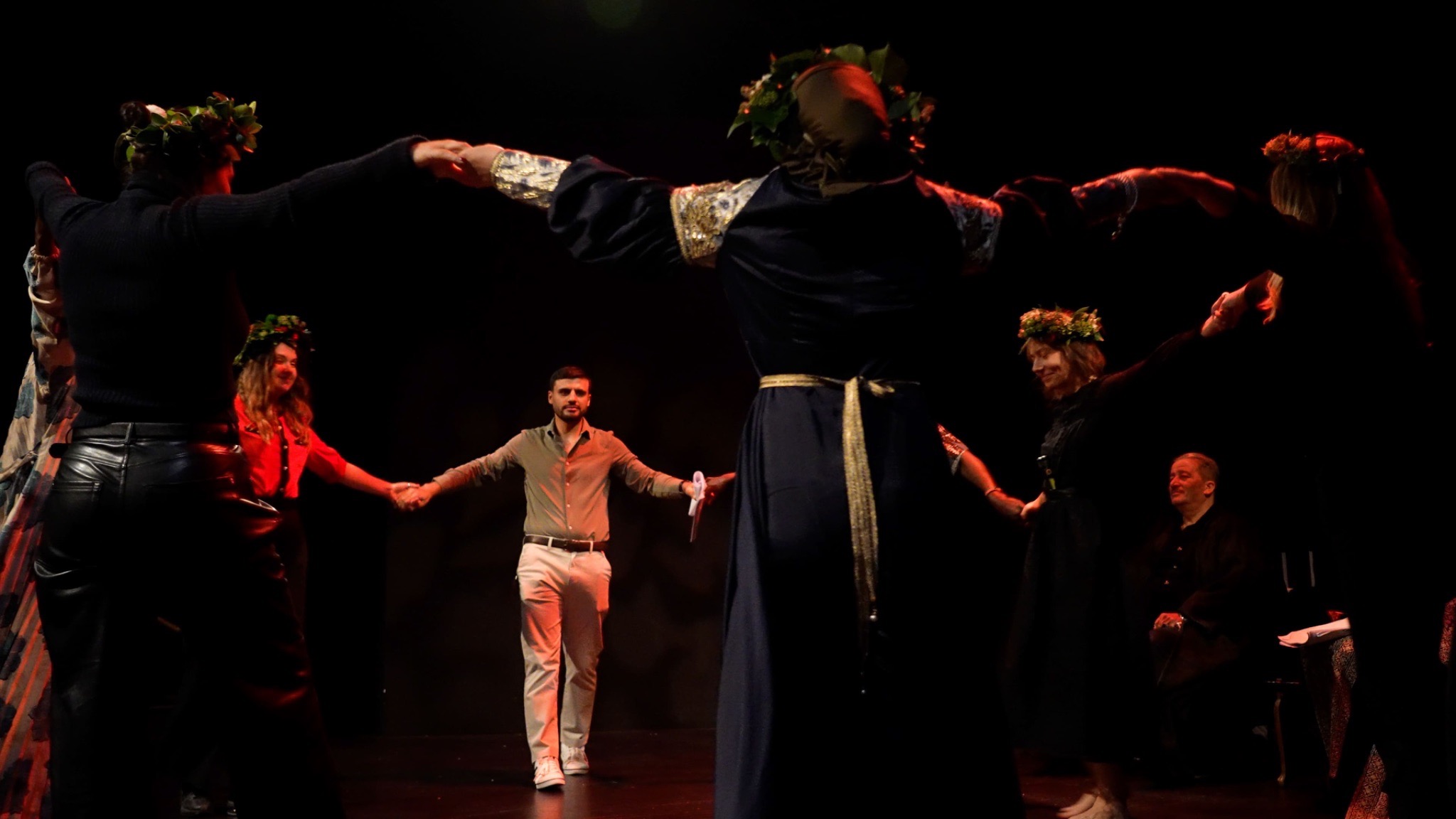
Refugee and asylum-seeker stories are being preserved for future generations as the Trojan Women Project expands its living oral archive into Scotland, following a series of sold-out performances in Stirling.
Founded in 2013 by award-winning foreign correspondent and filmmaker Charlotte Eagar and award-winning filmmaker William Stirling, the project combines oral history, theatre and storytelling to give people who have fled war, persecution and political oppression the opportunity to tell their own stories.
The project’s latest expansion has seen refugees and asylum seekers from Ukrainian, Afghan, Sudanese, Syrian and other backgrounds come together with local people in Stirling. Weekly workshops combining drama, storytelling and oral history culminated in sold-out performances at Macrobert Arts Centre on 24 and 25 September.
Alongside the performances, participants are creating a permanent oral-history archive intended to be housed at the University of Stirling, preserving first-hand accounts of displacement as part of Scotland’s historical record.
Its podcast, ‘Why Am I In Your Country?’, forms the public-facing part of the growing archive. Hosted by Eagar, Stirling and Luna Laurenti, it takes listeners beyond the statistics and headlines to hear directly from refugees and asylum seekers about the lives they left behind, the events that forced them to flee and what happened when they arrived in Britain.
The stories collected through the project illustrate the personal histories behind migration, from Iranian photographer Mina – who describes surveillance and restrictions on women in Iran, the aftermath of the death of Mahsa Amini in state custody in 2022, and the experiences that eventually led her to flee the country – to Afghan artist and former Afghan Businesswoman of the Year Samira Kitman, who describes escaping Afghanistan after receiving death threats and her efforts to preserve the work of Afghan artists.
Charlotte Eagar, co-founder of the Trojan Women Project, said:“Refugees are often talked about in terms of numbers, crises and headlines, but behind every statistic is a human life, a family, a history and a story that deserves to be heard.
“We created the Trojan Women Project because we believe those stories should not disappear when the news moves on.
“By recording people’s experiences in their own words and preserving them as an oral archive, we are creating a lasting record of what displacement actually means, not just for those living through it today, but for generations to come.”
William Stirling, co-founder of the Trojan Women Project, continued: “Drama is an ‘archive of human emotion’, capturing not only what happened to people, but their memories, voices and lived experiences.
“Theatre gives people a different way to tell their stories. When someone stands on stage and speaks about what they have lived through, it becomes something shared between the person telling the story, the people listening and the community around them. That is why we see the archive and the theatre as inseparable: one preserves the voice, while the other allows that voice to be heard”
With 16 episodes currently available, ‘Why Am I In Your Country?’ continues to grow alongside the archive, which brings together recorded testimony, podcast interviews, performance and the memories generated through the project’s workshops.
For Eagar and Stirling, the archive is about preserving more than facts and dates. Drawing on Euripides’ 2,400-year-old tragedy ‘The Trojan Women’, which centres on civilians displaced by war, the project uses theatre as a way for contemporary refugees to explore and share their own experiences.
The Scottish project builds on more than a decade of work by the Trojan Women Project. In Hounslow, approximately 120 refugees and asylum seekers took part in 40 workshops over 11 months, culminating in a 2025 production featuring participants from communities including Syria, Palestine, Ukraine, Afghanistan and Iran.
The oral-history material is intended to be housed at Gunnersbury Park Museum.
For more information about Trojan Women Project, please visit the official website.




 Interested in Scottish History? Our group has 2 spaces available!


 0131 315 4989
 Or send us a message on Facebook


