Better adult education, transport investment and improvements to Scotland’s urban centres needed.
Covid-19’s economic damage makes the task of improving Scotland’s economy and spreading prosperity almost four times harder according to Centre for Cities’ annual study of the UK’s major urban areas – Cities Outlook 2021.
30,900 people in Scotland’s largest cities now need to find secure, well-paid jobs to rebuild and improve the economy – compared to 8,600 last March.
In Scotland, Dundee faces he biggest challenge, followed closely by Glasgow.
Scottish cities facing the biggest economic challenges post-Covid
Rank
City
Percentage point reduction in unemployment to rebuild and improve the economy
1
Dundee
4.1
2
Glasgow
4.1
3
Aberdeen
3.4
4
Edinburgh
3.0
Source: ONS, Claimant count 2020, population estimates 2019.
In addition to hitting some Scottish cities and the rest of the UK as a whole badly, Covid-19 has also hit many previously prosperous places such as Edinburgh, Aberdeen and London disproportionately hard.
The Government must act fast to prevent a levelling down of these places that the whole UK depends on to create jobs and fund public services.
The UK and Scottish Governments should announce how they will use their respective powers to deal with Covid-19’s short-term damage to cities and large towns. The plans should include:
Making permanent the £20 rise in Universal Credit.
Supporting jobless people to find new good jobs.
Consider the merits of a renewed Eat Out to Help Out scheme for hospitality and non-online retailers once it is safe.
Acting to prevent further economic damage by Covid-19 is not the same as levelling up. Once the health crisis ends, the Scottish Government will need to spend additional money on further measures to level up, including:
Further education to train jobless people for good roles in emerging industries.
Making city centres better places for high-skilled businesses to locate.
Improvements to transport infrastructure in city-regions.
“Rebuilding and strengthening the economy of Scotland and its cities will not be cheap and will require more than short-term handouts. Government support and investment for new businesses in emerging industries will be essential, as will spending on further education to train people to do the good-quality jobs created.”
The charity warns referrals are likely to rise further under current lockdown restrictions
NSPCC urges people to speak out if they have concerns about a child’s safety or wellbeing
Referrals from the NSPCC helpline to agencies in Scotland about children living with domestic abuse have increased by more than 30% during the pandemic.
The latest figures reveal that the average monthly number of referrals about this issue to Scottish agencies, such as police and local authorities, has risen from 32 in the first three months of last year to 42 in the remainder months. A total of 377 referrals were made between April 1 and December 31.
Across the UK, the average monthly number of contacts to the NSPCC helpline about this issue has increased by more than 50%. Concerned neighbours have increasingly reported hearing non-stop arguing and kids crying to the charity’s confidential helpline for adults worried about children.
The NSPCC’s frontline teams are concerned that the risk of young people suffering the toxic consequences of domestic abuse has been heightened.
One member of the public who called the Helpline for advice said: “For the past few weeks, I’ve been hearing loud and aggressive shouting between a man and woman who live a few doors away from me.
“They’re at it pretty much every day and it generally lasts a couple of hours. Sometimes I hear their children crying when the parents are arguing. I’ve only really noticed this since I’ve been at home on furlough. I’m worried the kids aren’t being looked after properly.”
Left unaddressed this form of abuse can have profound and long-term impacts on children’s physical and mental wellbeing that can last into adulthood.
Joanna Barrett, NSPCC Scotland Policy and Public Affairs Manager, said: “With families facing increased pressure behind closed doors, lockdown restrictions have made some children more vulnerable to experiencing domestic abuse, as well as other forms of abuse and neglect.
“It is vital that no child becomes invisible at this time, and support is available and provided now to all children and families who need it.
“It is also so important that people speak out if they are concerned about a child. Our helpline experts are there to answer any questions and concerns, provide reassurance or take quick action if we feel a child is in danger.”
Young people who experience domestic abuse can have trouble learning, depression or suicidal thoughts, or develop eating disorders drugs or alcohol problems.
One 13-year-old told Childline: “Recently my mum has been yelling at me and calling me names for no apparent reason. My parents fight a lot, like really a lot. My dad overreacts but mum makes the situation worse.
“Today my parents got in a huge argument that included a lot of shouting and my dad was throwing things at my mum. I was shocked because none of their fights have got physical before, and now I am wondering how bad things could get.
“My parents don’t talk anymore and they treat me like their little messenger passing comments between them. It is really affecting me as I constantly feel anxious and cry myself to sleep. I really need help.”
Anyone who is experiencing domestic abuse or has concerns that someone else may be can contact the NSPCC’s Helpline for information and advice on 0808 800 5000, emailhelp@nspcc.org.ukor fill in ouronline form.
A DIGITAL service, to add to the support available for people in Edinburgh who are homeless, has been developed by researchers and community partners, including leading Scottish homelessness charity, Simon Community Scotland.
The website and an accompanying app – called Street Support Edinburgh – provides advice, support and resources for homeless and vulnerable people, plus the wider Edinburgh community who want to help and emergency services personnel.
Street Support Edinburgh has been developed as part of a project by the University of Edinburgh’s Centre for Homeless Inclusion and Health (CHIH) and the Manchester-based Street Support Network.
Information includes providers of meals, drop-in services, food banks and accommodation.
The digital hub also features advice on financial help, health services and training and employment opportunities.
Organisers say the resource provides a vital service to vulnerable people and the community by providing accessible information in one easy-to-use location.
Advice on Covid-19 and support available during the pandemic has also been added.
The information hub has been launched by the University of Edinburgh and the leading homelessness charity, Simon Community Scotland, which runs the Streetwork service in Edinburgh.
Researchers at the University’s School of Informatics have assisted with technical aspects of the project.
Street Support Edinburgh features content from more than 30 organisations and has been backed by both Police Scotland and The City of Edinburgh Council.
The platform is the first resource of its type in Scotland. Organisers are hoping to offer similar digital provision elsewhere in Scotland.
Dr Fiona Cuthill, director of the Centre for Homelessness and Inclusion Health at the University of Edinburgh, said: “Street Support Edinburgh is a great opportunity for the University of Edinburgh to build on our existing community networks and to work together to help to reduce homelessness in our city.”
The Street Support Network has assisted in the launch of similar Street Support services in several locations in England, such as Portsmouth and Cambridge.
Lorraine McGrath, chief executive, Simon Community Scotland, said: “A year of Covid-19 has been hugely challenging, but it has also forced all of us to rethink how we deliver our services and reach the most vulnerable people on our streets, with some incredible outcomes.
“Lockdown created the opportunity for organisations in Edinburgh to come together and almost eradicate rough sleeping in the city. It has shown us what we can achieve by collaborating, being creative and keeping people at the heart of what we do.
“Street Support Edinburgh is a natural progression for us in connecting the talent, expertise and commitment of people and organisations across the city in preventing homelessness and the need for anyone to ever have to sleep on our streets.”
The app is available to download from the Apple App and Google Play stores.
Colin Beck, chair of the Edinburgh Health and Social Care Partnership at The City of Edinburgh Council, said: “I welcome this innovative way of providing information, which will help people connect.
“Knowing how and where to get help and support is a crucial component of feeling included. I realise there are access issues for some people and we must search for solutions to help people connect.”
Grants of between £10K and £70K available for grassroots music venues
Deadline for applications: Wednesday 3 February 2021
In response to the impact that the ongoing Covid-19 pandemic is having on art and culture in Scotland, on December 20, 2020 the Culture Secretary Fiona Hyslop, announced an additional £4m in emergency funding for the Grassroots Music Venues Stabilisation Fund, delivered through Creative Scotland.
The purpose of the fund is to provide grassroots live music venues that were financially sustainable before Covid-19 with the funds to prevent permanent closure and stabilise until end June 2021.
Iain Munro, Chief Executive, Creative Scotlandsaid: “In these extremely challenging times, this additional £4m in support of Scotland’s grassroots music venues is enormously welcome.
“Grassroots music venues are a vital part of Scotland’s cultural ecology, developing music and audiences as well as supporting talent. They will play a vital role in Scotland’s cultural recovery as and when we emerge from the COVID-19 pandemic.”
The awards for the first round of the Grassroots Music Venue Stabilisation Fund were announced on Tuesday 22 September, when £2.2m in emergency support was provided to 68 venues across Scotland.
Just 11.8 % of fathers took the lead on helping their children keep up to speed during the first lockdown
As mums and dads return to home schooling, will the burden fall more equally this time round?
It turned out that mothers were picking up almost all the home teaching burden during the first schools lockdown, with just 11.8 percent of fathers taking the lead on helping their children keep up to speed.
That was the shock finding from a survey of hundreds of parents of primary school-aged children carried out by leading education resources and lesson plan experts PlanBee.
PlanBee’s Oli Ryan, a former primary school teacher, said: ‘We know that not all families are willing or able to help their children with home learning, but we were amazed to find that there was such a huge gender disparity in terms of who was taking up the teaching mantle.’
He continued: ‘The vast majority of primary school workforce are women, but we still find it surprising that when it comes to home teaching Dads appear to be doing so little. If it’s a sign that teaching young children is considered to be “women’s work”, it’s pretty alarming.’
And parents – the vast majority, women – were allocating significant parts of their day to home schooling, with over a quarter (27.7 percent) spending more than four hours a day on it.
Now, many parents are reporting that because schools have had time to prepare their home schooling lessons, the quality is much improved.
In March, an extremely limited number of subjects were being sent to pupils at home by their schools. Nearly all respondents said they had received work in Maths (93.04 percent) and English (92.17 percent), with science in third place at just 38.26 percent.
Fitting in home schooling with other work and other commitments was the top challenge for parents, with over a third (35.29) per cent citing it. Keeping their children engaged with learning was second biggest bugbear, at 31.09 percent.
And just 10.92 percent said they were loving home-schooling their children!
Nearly 40 percent of the respondents were primary school teachers as well as parents. And home-schooling was having a big impact on parents’ perception of teaching, with nearly one-third (33.6 percent) saying it had altered their attitude.
Parents have now deluged schools inspectorate Ofsted with emails and Tweets praising teachers and school staff for their work during the pandemic citing how quickly schools had set up work on short notice following the last-minute lockdown.
One respondent to the PlanBee survey remarked: ‘Trying to get children engaged to learn is very hard! I know it’s a challenging time, but my Year 4 struggles to engage if he doesn’t like the subject and I can see how that would translate in the classroom! Hats off to all teachers!’
A teacher-parent said that home-schooling was quite different from work: ‘I am a teacher but it’s different when trying to teach your own!!’
And for teacher-parents, the challenges were particularly marked: ‘I now have to teach the children in my class remotely as well as home school my own child. I respect myself and my colleagues a lot more.’
Another said: ‘Although I work in nurseries and I’m qualified as a teaching assistant, I don’t think I realised just how much work (and patience) goes into teaching.’
Mr Ryan said: ‘It’s great that so many parents are showing their appreciation for teachers by writing to Ofsted. As to whether Dads will do their fair share of home schooling remains to be seen. I won’t hold my breath!’
Amaazin.Scot is a new online marketplace that aims to showcase and support independent Scottish designers. This Burns night, Amaazin.Scot is hosting a virtual Burns marketplace, highlighting the fantastic independent businesses within Scotland.
Monday the 25th of January is Robert Burns Day, a day in which Scotland is highlighted to the rest of the world. Burns day will be slightly different this year due to the pandemic supporting an artist through Amaazin.Scot is a great way to commemorate one of Scotland’s greatest writers.
Over the past ten months, the Scottish economy has faced continued economic upheaval due to the COVID 19 pandemic. It has affected every member of society but the impacts that it has had on small independent business owners, in some cases, has been fatal.
“Amaazin.Scot is giving me a new sales opportunity where I can demonstrate my work to a brand new audience,” said Toben Lewis, Book Design and Bibliopegist.
Amaazin.Scot has created a platform for small businesses during these difficult times. Moreover, it provides accessibility and ease for consumers as they no longer have to spend hours searching for small designers. The Amaazin.Scot goal is for us all to work together to make Scotland better than ever.
Burns day celebrates Robert Burns, Scotland national Bard and the Ploughman Poet. Over the decades Burns Day has become synonymous with Scottish culture and heritage as a whole. However, this year many Burns day or night traditions such as Burns suppers and ceilidhs will not be possible due to current lockdown restrictions.
Not long left till the 25th!
We may have no control over lockdown and the virus – a haggis for ten has become a haggis for one! – however, we can still celebrate Burns night in style at home.
Support fantastic small Scottish businesses this Burns night whether it’s with a beer from Bellfield brewery over Zoom or over a Taxi board game after your dinner.
We won’t forget Scotland’s Bard even if we can’t leave the house – click here to discover how to keep your Burns night special. https://amaazin.scot/
The number of people following a vegan diet has risen in recent years and this month, many people are challenging themselves with ‘Veganuary’. A vegan diet contains only plant-based foods, such as grains, fruit, vegetables, nuts and seeds. It is generally accepted that a vegan diet can offer benefits for the environment, animal welfare and your health.
The benefits of the vegan diet for your heart depends on which foods you choose and what else you do with your lifestyle. People who cut animal foods out of their diets tend to benefit from more fruit, veg and fibre and less saturated fat, with favourable blood pressure and cholesterol levels.
Why not try out some of our Vegan inspired Healthy Heart Tips:
Rapeseed oil, flaxseed oil, walnuts, green leafy vegetables and soya products contain omega-3 fat which, when swapped for foods high in saturated fat, like fatty meats and cheese, could help to protect your heart and arteries. To cut down on animal fats, why not try swapping minced beef in your recipes for lentils, beans or chickpeas.
Look for reinforcements
To make sure your body isn’t missing out on essential nutrients, a vegan diet needs to be well-planned and you might need to top up on some vitamins. This time of year when sunlight exposure is limited, everyone in the UK should consider taking a vitamin D supplement.
This is especially important if you’re cutting out animal products. You’ll also need to supplement on vitamin B12 as you can’t get this from plant-based foods. Check food labels for the word ‘fortified’- most vegan spreads, breakfast cereals and soya products have vitamin D, calcium and B12 added to them.
The vegan diet isn’t the be all and end all to good health, but taking a leaf out of the vegan way could set you off in the right direction when it comes to heart health.
So why not give it a go, start with one meal a day or one day a week and see how you like it.
Whilst many of our cupboards are overflowing with leftover bottles of Christmas booze, it’s understandable if you don’t fancy drinking the dregs – but there’s no excuse to throw it out!
With Burns Night around the corner, why not put your booze to good use and create an alcohol-infused feast to get the celebrations rolling?
Not everyone has skills like Mary Berry or James Martin, which is why the team over at The Bottle Club have rallied together five quick and easy recipes which will perfectly accompany a Burns Night feast, allowing you to indulge in some delicious boozy calories.
Typsy Laird
This simply boozy Scottish trifle is the perfect pud for a Burns Night dinner and isn’t called Typsy Laird for nothing. For those who haveleftover Christmas sherry, this is how to use it. Be warned, this sweet is not suitable for children!
This dessert can be generously doused in Sherry andDrambuie (a Scotch whisky liqueur infused with heather honey, herbs and spices), accompanied by custard and raspberries. You can adjust quantities of the individual ingredients based on your trifle dish and personal tastes, but making the custard from scratch is key, and it’s easier than you may think.
Preparation time: 20 minutes
Serves 8
Ingredients:
Base:
340 grams sponge or pound cake
140ml Sherry
60ml Drambuie
230 grams raspberry jam
finely grated rind of a fresh, organic lemon
6 ladyfingers
Custard:
4 egg yolks
60ml milk
3 tsp sugar
1/2 tsp vanilla
Top:
250ml cream
1 or 2 tbsp Drambuie
Method:
Break the sponge cake into pieces and place on the bottom of a trifle bowl (or individual bowls).
Place the Sherry and Drambuie in a measuring jug. Heat the jam slightly and add a little of the liquor to make it a bit runny. Pour the jam over the cake evenly.
Add the crushed biscuits on top of the jam and sprinkle the lemon rind over the biscuits.
Next, pour the liquor over the top of the crushed biscuits. Leave to soak.
Make the custard by putting it into a bowl to cool a little, stirring constantly, before adding to the top of the trifle base. Cover and refrigerate overnight (at least 8 hours).
Finish by whipping cream and add 1 or 2 tablespoons of Drambuie. Spoon or pipe the whipped cream onto the top of the trifle. Decorate with almonds, raspberries and mint leaves.
If you loved chicken before, you’ll certainly love it once infused with some bubbly booze- prosecco and chicken is such a wonderful combination. This isn’t a typical dish on a Burns night menu, but similar to Scottish Deviled Chicken and perfect for those who don’t fancy haggis.
This dish is simply rustic-style chicken served with stir-fried vegetables and a simple green salad, but the key to this dish is the flavoursome sauce, made with butter, rosemary, onions, chicken stock and of course, Prosecco.
Preparation and cooking time: 30 minutes
Serves 4
Ingredients:
2 tbsp extra virgin olive oil
1 tbsp butter
5 cloves of garlic
1 medium onion
250 ml of prosecco
450 grams boneless chicken
10 tbsp chicken stog
1 sprig rosemary
1 large courgette (chopped)
1 large carrot (chopped)
1 cup button mushrooms
Method:
Add 1 tablespoon olive oil and butter to a deep pan. When the butter has melted, add chicken and saute until cooked through. Set aside on a plate.
Add garlic and onions, lower the heat to medium and cook for five minutes until onions have softened.
Add your prosecco and stir well to glaze the bottom of the pan, bringing to the boil. Add the chicken and lower to simmer, covering the pan to cook for 10 minutes.
Remove rosemary and transfer onion mixture to a blender, add remaining two tablespoons chicken stock and puree until smooth. Set aside.
In another pan, add remaining olive oil, zucchini, carrots and mushrooms and cook on medium/high heat for 5-7 minutes until vegetables are tender but still have a crunch. Add salt and pepper seasoning.
Pop all ingredients into a large bowl, toss well and serve.
As strange as it may sound, chocolate haggis is actually pretty tasty and perfect for those who are a bit squeamish about eating the real thing and more importantly, the perfect chance to splash away all that leftover whisky from Christmas
This haggis- for those who don’t like haggis- is essentially shortbread and whisky fridge cake, ideally served with ice cream ‘tatties’ and orange jelly ‘neeps’. The end result, a seriously rich and boozy easy to make no-bake fridge cake.
Image: Food Quine
Preparation time: 20 mins
Serves 4
Ingredients:
3 Tbsp Scotch Whisky (splash the good stuff!)
50g Sultanas
100g Butter
100g Cocoa Powder
1 Free Range Egg
100g Caster Sugar
150g Shortbread
50g Mixed Nuts, chopped
Icing Sugar to dust
Method:
Put the sultanas and whisky into a small bowl and leave to soak whilst you prepare the remaining ingredients
Melt the butter in a saucepan, then sieve in the cocoa powder and stir until you have a smooth paste
In a separate bowl, whisk the sugar and egg together until pale and creamy
Place the shortbread in a zip lock bag and bash it with a rolling pin. You want a mixture of chunks and crumbs
Combine the chocolate mixture with the sugar/egg mix and stir in the shortbread, chopped mixed nuts and the whisky soaked sultanas, plus any remaining whisky
Layout a double thickness of cling film and tip the chocolate mixture out onto it forming a haggis shape
Roll up and continue to manipulate into shape tying a knot at each end of the cling film
Chill in the fridge for 4 hours or overnight to harden
Remove the cling film, slice and serve alongside a wee dram
These boozy breakfast buns are a comforting sweet yet salty treat and can be enjoyed any time of the day. Scots are always partial to a splash of rum, so these buns are the perfect way to soak up any leftover at the back of the cupboard.
Fluffy, light and tender, hot cross buns with rum-soaked currants are a treat any time of year but make holidays feel extra special, best served slightly toasted with a smear of salted butter, washed down with a nice warm brew- or a hot toddy.
Boil 300ml of milk on a low heat and in a separate pan, place 50g of butter over low heat until melted. Add warmed milk and melted butter into a bowl, mix and leave to cool until mixture reaches room temperature.
Separately, mix 500g of flour, 1 tsp of salt, 75g of caster sugar and 1sp of baking powder into a bowl.
Pour in the warm milk and butter mixture and add 1 beaten egg. Add in a splash of spiced rum, and combine the ingredients to form a sticky dough and place onto a floured surface.
Knead until the mixture becomes smooth and then place the dough into a flour-covered bowl, leave to rise for 1 hour until the mixture has doubled in size.
Once the dough has risen, place the mixture back onto a floured surface and tip in 75g of sultanas, 1 tsp of ground cinnamon and knead this into the dough.
Divide the dough into 16 squares and on a floured surface, roll these squares into balls.
Line these balls onto a baking tray and cover with a damp tea towel to allow the balls to prove for an additional hour until they have doubled in size.
Add 5 tbsp of water, 1 tbsp at a time, to 75g of plain flour to make the paste, then pipe two lines across the top of the buns to make a cross on each, using a piping bag or a spoon.
Place the hot cross buns in the oven at 200 degrees for 20 minutes and set aside to cool on a wire rack once fully golden.
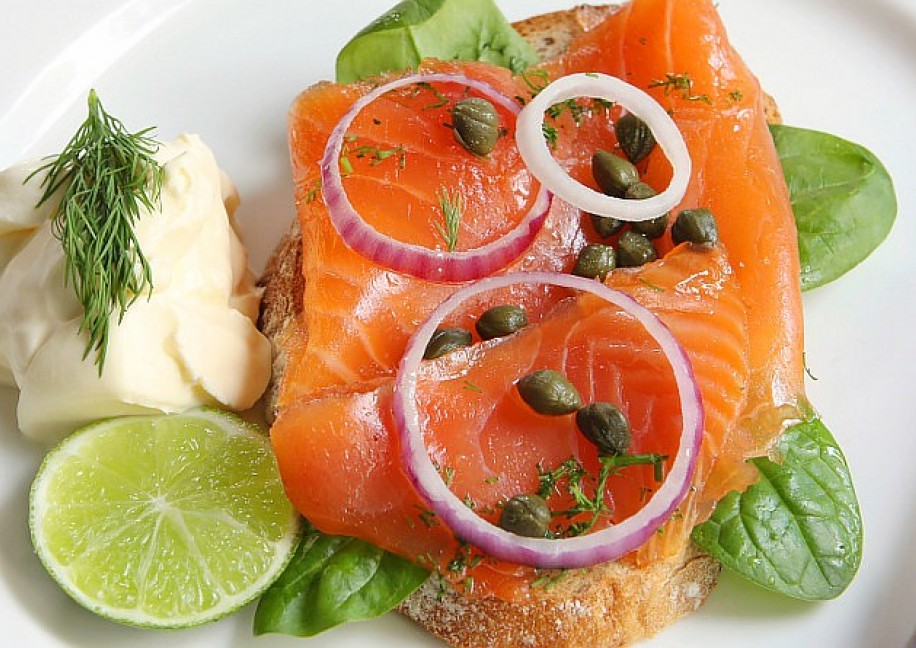
On the coast, long summer days are often spent fishing salmon in the fast-running local rivers. Whisky-cured salmon is a Scottish favourite, served on a large wooden board with a range of accompaniments: oatcakes, thinly sliced pumpernickel bread, small bowls of assorted homemade pickles, crème fraîche, and lots of lemon wedges.
Line a baking tray and rinse the salmon under cold water and pat dry. In a bowl, mix together the salt, sugar, peppercorns, and juniper berries. Sprinkle half the salt mixture onto the prepared baking sheet and spread one bunch of dill on top.
Lay the salmon skin-side down on the dill and drizzle with the whisky. Cover with the remaining dill, and top with the rest of the salt mixture.
Wrap the salmon in a tight plastic wrap and refrigerate for 48 hours.
When ready to serve, remove the plastic wrap from the salmon. Using the back of a knife scrape the cure mixture off the fish and lay on a large wooden board. To serve, thinly slice the salmon into diagonal strips leaving the skin behind.
The Bottle Club tips for cooking with whisky: “The flavours of a single malt Scotch whisky, for example, are derived from malted barley fermentation, the distillation process and maturation in oak casks over several years, which makes it ideal to boost a wide variety of flavours in foods”
As we return to stricter lockdown regulations or to shielding, charity Sporting Memories rolls out its latest national resource: the Sporting Memories #KITbag. Delivered to people’s homes, the KITbag pack includes exercise equipment, a DVD, reminiscence resources and personalised record books. However, the KITbag is about so much more than what arrives in the post.
Since the start of the pandemic, Sporting Memories – the charity which in ‘normal’ times brings together older people across Scotland at over 130 Clubs for companionship and physical exercise – has reacted quickly. They have developed ways of keeping in touch and a wide range of physical, online and radio resources.
Through their #TalkAboutSport campaign, they encourage everyone to use the power of sporting memories to tackle loneliness and depression, and spark positive memories for people living with dementia. The campaign has attracted practical support from many well-known personalities from the world of sport.
Their latest national project is the Sporting Memories KITbag, which in Scotland has received funding from the ScottishPower Foundation, the National Lottery Community Fund, the CORRA Foundation and Spirit of 2012.
Delivered to people’s homes, the KITbag pack contains inclusive equipment for helping with being active, a DVD with magazine programmes, an exercise guide, Sporting Memories sports articles and quizzes, and a personal record book.
Donna Mackey, Sporting Memories Partnership Manager, is one of the team behind the KITbag. “Recipients receive either regular keep-in-touch (KIT) phone calls or participate in weekly online or telephone Sporting Memories Clubs where we offer motivation and general conversation.
“Our Club members tell us how Sporting Memories Clubs bring them enjoyment and something that often becomes the highlight of their week. We spark conversations and fond memories. That is exactly what we will also be doing with those who receive our KITbag when we keep in touch each week.”
Melanie Hill, Executive Officer and Trustee at the ScottishPower Foundation, said: “The ScottishPower Foundation is passionate about supporting projects that help bring people together to create deep and lasting connections.
“During these challenging times, this has never been so important and it’s brilliant to see the way the Sporting Memories Foundation is adapting to provide vital support despite the difficulties caused by the pandemic. The KITbag helps tackle loneliness and isolation so we’re proud that our funding has been able to support such an amazing project that brings joy for so many people.”
Chris Wilkins, Sporting Memories Co-Founder, says: “As a team and working with partners, Sporting Memories Club members, our volunteers and carers, we have been working on our own, longer-term solutions, just like the health sector has been working on COVID treatments and vaccines.
“We are delighted to have received ScottishPower Foundation and National Lottery Community funding, along with funding from the CORRA Foundation and Spirit of 2012, meaning that this service has been made possible and we will be able to support even more people to be active at home.
“We have been conscious throughout the pandemic that many of our Club members either could not engage with online activities or their conditions meant that these were not suitable. At the same time, so many of our members were not getting out of their homes, some through those early and now current months of shielding, and others through fear and inactivity. For some, reduced mobility has really taken hold.”
The charity accepts that the Sporting Memories KITbag is no panacea – but it is a project that brings long-term and ongoing benefits, both physical and in terms of companionship.
For organisations who would like to find out more about the #KITBag services and how to become involved, there is further information on the Sporting Memories website, at thesmf.co.uk
At first glance it looks like any other tribute to our NHS staff – a rainbow taking pride of place on the wall of a busy corridor.
But on closer inspection, it’s clear this rainbow means more than most. It is made of up more than 300 coloured hand-prints, alongside more than 300 names and a simple message – ‘These hands helped, held, healed and honoured … together we were stronger’.
This rainbow is a very powerful, personal tribute to every single member of the Emergency Department at the Queen Elizabeth University Hospital in Glasgow.
Consultants, porters, nurses, domestics, even the volunteers who gave their time at the height of the crisis – they’re all there, side by side. No hierarchy, no pecking order, just one team. A family, in fact.
Ever since the beginning of the COVID-19 pandemic, the Emergency Department at the QEUH, along with every other area of the NHS, have been working under a level of pressure very few have ever experienced.
The effort they put in and the resilience they showed – keeping smiling and keeping supporting each other every day – was something that Leanne Kennedy and Karen Hughes, both Senior Charge Nurses and Emergency Nurse Practitioners in the department, wanted to make sure would never be forgotten.
“Myself and Karen wanted to do something to recognise the efforts that people were putting in when they came to work,” said Leanne.
“COVID has been the first big crisis that the department has had to deal with since the opening of the hospital and, once we’re long gone, we wanted to leave something as a permanent reminder of who they were and the amazing work they did.”
They knew they wanted to do something special, but the idea for the hands came from Karen’s sister.
“We were batting around some ideas of what we could do and I happened to mention it to my sister. She works in M&S, and she mentioned the rainbow of handprints that used to welcome people into the store. The idea came from there really.
“We tried to think of ways to do it, but eventually approached a sign company and asked them for help. They were happy to be involved and the company donated the sign for free, which we’ll always be grateful for.”
In July last year, the finished sign was put up in the corridor used by ambulance crews to bring patients into the department. Staff were thrilled, and Karen and Leanne were delighted to see their dream become reality – a special thank you to every member of the team.
“It’s wonderful to see everyone’s efforts recognised in this way,” Karen said. “When this crisis started we had no idea it would still be going nearly a year on. The way the team has dealt with it – the way they’re still delivering the very best care after all this time – is something I’ll always be proud of.
“At the beginning we all clapped every Thursday for our NHS. But even if we clapped every second, every day, I still don’t think we could do enough to say thank you to the amazing people who work here.”
Alan Whitelaw, Consultant in Emergency Medicine and Clinical Director for Emergency Medicine at the QEUH, said: “All our staff are working extremely hard and face unprecedented pressure just now. Gestures like these, large and small, go a long way in helping raise morale and reminding us we’re all in this together.”
Denise Wilkinson, Lead Nurse at the Emergency Department, said: “This has been a really difficult time for our staff. They have endured long days, wearing hot and sweaty PPE, yet they have kept going and even now, after all this time, they are delivering a fantastic level of care.
“We have a lot of fairly newly qualified staff – how they have dealt with it has been phenomenal. In fact, I don’t know how everyone in the team managed to keep going and support each other through this. I’m so proud of them all.”
The banner in the Emergency Department may carry the names of the hundreds of staff who work there, but Leanne wanted to pay tribute to all staff across the NHS in Greater Glasgow and Clyde and beyond, who have played such an important part throughout the pandemic.
However, she had special mention for the emergency services who work day in, day out with the Emergency Department, and whose badges also appear on the banner.
Helping hands – hundreds of them – a fitting tribute to just one part of the NHS that is doing so much to keep us all safe.