
Holyrood Should Not Be a Platform for Division
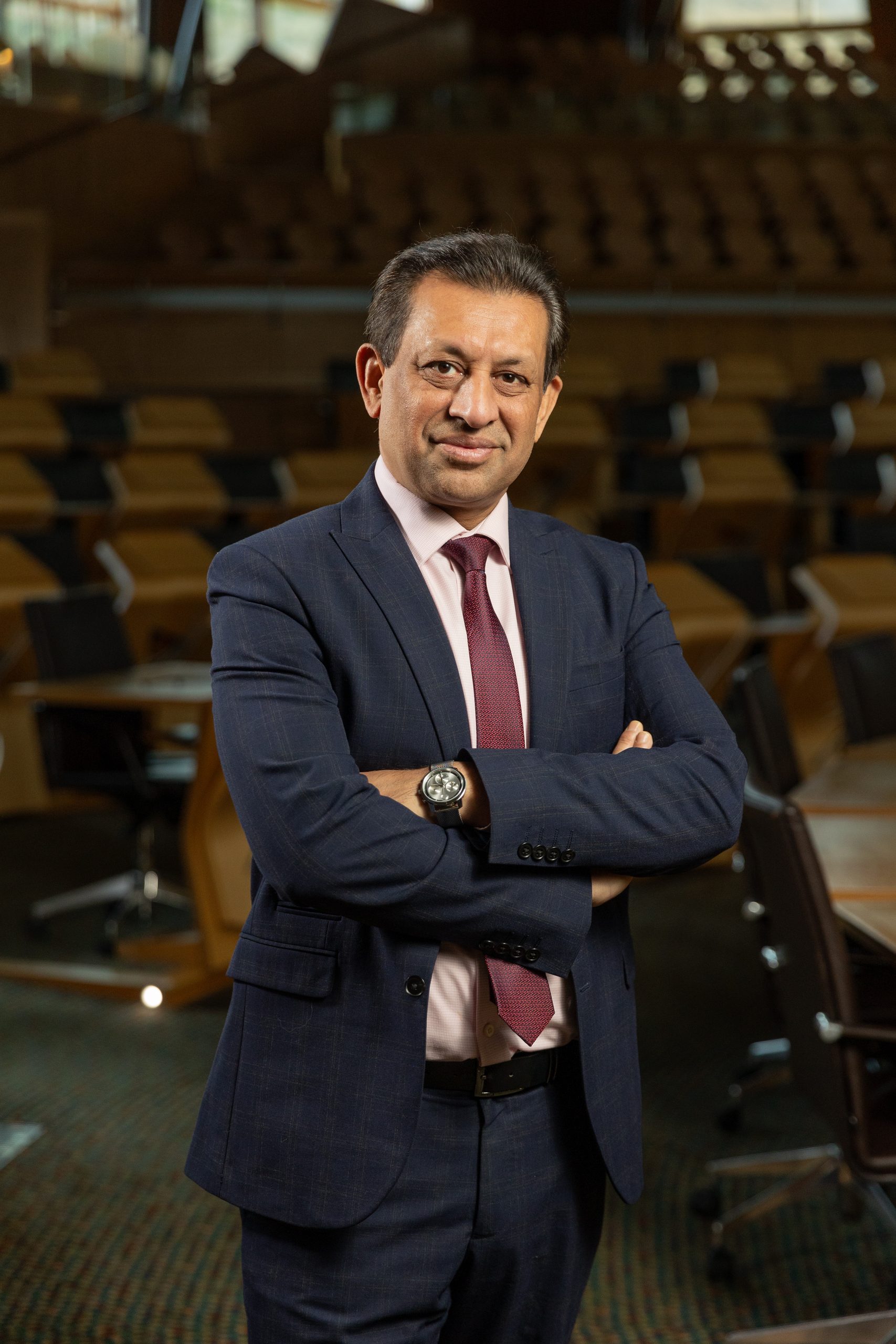
Watching recent proceedings in the Scottish Parliament, I have found it deeply disturbing to see our national chamber used to question the fundamental rights, dignity, and personal choices of Muslim women (writes FOYSOL CHOUDHURY).
In the current climate, elected leaders should be working together to unite communities and tackle the real challenges facing families across Scotland, rather than manufacturing division for political gain or undermining a religion. When politicians single out a faith group from the floor of Holyrood, the harm does not stay confined to the debating chamber.
Hostile rhetoric from elected representatives legitimises prejudice on our streets and is a major reason why we continue to see rising religious attacks, verbal abuse, and intimidation directed at minority communities.
Preventing that kind of harm was the driving force behind the work I championed in Parliament on equality, anti-racism, and inclusive education. During my time serving as a Member of the Scottish Parliament for the Lothian region, and as the Convener of the Scottish Parliament Cross-Party Group on Challenging Racial and Religious Prejudice, I worked across party lines to build a Scotland where every citizen feels safe and respected.
Whether through my long-standing leadership with the Edinburgh and Lothians Regional Equality Council (ELREC), where we championed women-only activities and community support, or through working closely with NKS (Nari Kallyan Sangho), Milan, and many other vital third sector organisations across Scotland, that experience taught me a clear lesson.
Genuine support for women’s rights means defending a woman’s absolute autonomy, including her right to decide how she dresses for religious, cultural, or personal reasons.
Since these divisive debates took place, I have been approached by numerous third sector organisations and Muslim women across Scotland who are deeply distressed by what they have heard from Holyrood. Many have told me plainly that targeting women’s fundamental rights and religious freedoms in this way feels like “a crime against humanity.”
Conflating Muslim women’s religious dress with criminal behaviour and balaclavas does nothing to advance women’s liberation or public safety. Instead, it singles out one minority community and exposes a glaring double standard.
We need to ask Thomas Kerr a straightforward question: why is he targeting Muslim women who choose to wear the burqa or niqab, when women across many other faiths wear modest clothing or head and face coverings as part of their devotion and identity?
Across Britain and around the world, Christian nuns wear habits and veils, many observant Jewish women cover their hair with wigs or scarves, and many Hindu and Sikh women wear traditional veils, dupattas, or turbans as expressions of faith and heritage. None of those practices are treated as threats to public order or subjected to parliamentary bans. Singling out Muslim women while respecting the religious dress of other faiths reveals that this campaign is not about safety or equality, but about targeting a specific community.
Thankfully, voices across the chamber pushed back against this harmful framing during the October 8 debate. As my former colleague, Glasgow MSP Pauline McNeill, rightly observed, respecting women’s autonomy means accepting their personal decisions rather than policing them:
“I know many women who wear the burqa and the niqab, and they do it out of choice. I have had my photograph taken with many women who wear the burqa. It is not for me to question it. I respect their right to do it.“
During that same session, another former parliamentary colleague, Edinburgh Northern and Leith MSP Ben Macpherson, drew a clear line between tackling genuine antisocial behaviour, noting how “in recent years, we have seen an increase in balaclava wearing, generally” by individuals “seeking to intimidate others,” and trying to legislate away women’s religious clothing.
Moray MSP Laura Mitchell also captured the core principle at stake when challenging the false argument that banning clothing liberates women: “We cannot defend a woman’s freedom to choose by taking away a choice that belongs to her.
“A woman’s autonomy belongs to a woman. It does not belong to her family, her community or the state, and it certainly does not belong to Thomas Kerr.“
Scotland’s strength has always rested on mutual respect, inclusion, and the freedom to practise one’s faith without fear of harassment or state interference. We must be clear and unequivocal: a woman should be allowed to wear what she wants to wear.
Policing women’s bodies and clothing has no place in a modern, democratic Scotland. Instead of wasting parliamentary time on ill-judged debates that fuel intolerance, Holyrood should focus its energy on the issues that truly matter to people’s daily lives: fixing our NHS, investing in education, and bringing down soaring energy prices for struggling households and businesses.
FOYSOL CHOOUDHURY is a former Member of the Scottish Parliament and Shadow Minister for Culture, Europe, and International Development
