For our communities to live well locally, councils are essential. Councils provide safer communities, housing, roads and transportation, education, social work and social care, environmental health, trading standards, mental health services, advice services, employability, recycling and waste services, libraries, leisure facilities and many more vital services that support and create opportunities for every community in Scotland.
This manifesto sets out what local government needs from Scottish Government to continue to serve local communities and enable us all to live well locally.
Our key asks are grouped under six priority areas, divided into ‘enabling priorities’ focusing on key levers at our disposal (finance, workforce and democratic powers) which enable delivery of our ‘outcomes-focused priorities’ (future generations, thriving places and thriving communities).
We need Scottish Government to work together with local government, as equal partners, to deliver lasting change and improve outcomes.
FASTER CARE FOR THOUSANDS THROUGH NHS USE OF INDEPENDENT SECTOR
A total of 6.15 million appointments, tests and operations were delivered by independent providers for NHS patients this year.
The almost 500,000 increase on last year is helping to cut waiting times, free up NHS capacity and deliver national renewal through the government’s Plan for Change
Patients able to cut waiting times by up to five months by switching to nearby hospital with shorter queues.
Hundreds of thousands of people are receiving faster care thanks to the Labour government’s partnership with the private sector, which is helping provide the treatment they need to get back on their feet – free at the point of use.
More than 6 million tests and operations for NHS patients were delivered by independent healthcare providers over the past year – almost 500,000 more than last year.
Independent healthcare providers delivered an average of 19,000 surgical procedures and 100,000 outpatient appointments every week this financial year – helping to treat more than 1.1 million people
This is all part of the drive to use every resource available to stop patients suffering on the unacceptably long waiting lists this government inherited – which have now fallen by 206,000 over the past year.
Using spare capacity in the private sector is central to the government’s goal that 92% of patients in England should wait no longer than 18 weeks from referral to treatment – which is fundamental to delivering the renewal this country needs.
Health and Social Care Secretary Wes Streeting said: “I’ll do everything I can to get NHS patients treated faster, free at the point of use.
“This is a principled, progressive position, not just a pragmatic one. We’re not prepared to continue two-tier healthcare, when those who can afford it get treated on time, and those who can’t are left behind. Wealth shouldn’t determine health.
“This is just one reform which has helped deliver 5 million more appointments, grown NHS productivity, and cut waiting lists by 200,000.
“We are also investing in growing the NHS capacity, opening up CDCs and operating theatres at evenings and weekends, and bringing in modern technology like robotic surgery. Through investment and relentless reform, we will make sure every patient is treated on time, not just those who can afford to pay.”
The partnership with the private sector comes alongside the other UK government measures to cut waiting times and expand NHS capacity in England, including:
Opening more Community Diagnostic Centres seven days a week, 12 hours a day. They have delivered over 8.7 million diagnostic tests since July 2024, closer to where people live, freeing up hospitals.
Opening new 22 new surgical hubs and expanding a further 12.
Introducing a national programme of weekend High-Intensity Theatre (HIT) lists once a month in 50 hospitals to get through a week’s worth of planned operations in a day
Setting up NHS Online, which will deliver up to 8.5 million appointments in its first three years and allow patients to digitally connect to expert clinicians anywhere in England.
The partnership with the independent sector strengthens the commitment set out in the 10 Year Health Plan to boost patients right to choose where they are treated, with new research showing patients are cutting their wait for an NHS operation by up to five months by switching to a nearby hospital with shorter queues.
Sir Jim Mackey, NHS Chief Executive, said: “The independent sector is playing a vital role in supporting our efforts to bring down waiting lists and ensure patients can get the NHS care they need faster.
“Thanks to the ambition and hard work of NHS teams, we are seeing early signs of progress with waiting lists falling for the first time in years – but we are determined to go further and faster to improve patients’ experiences and this data shows clearly that maximising use of this capacity is an approach that is working for patients.”
Research from the Independent Healthcare Providers Network (IHPN), alongside the Patients Association and Arthritis UK, found patients need to travel on average just under 13 miles – typically under 30 minutes by car – to cut over two and a half months off their waiting time for treatment.
For particular treatments, patients can cut their wait even further. For example, in the South East, patients requiring general surgery such as a hernia operation could cut their wait from an average of 27 weeks to just 6 weeks – a reduction of almost five months – by travelling from the areas with the longest waiting times to shortest.
David Hare, Chief Executive of the Independent Healthcare Providers Network, said: “These latest figures demonstrate just how important the independent sector is in providing much-needed NHS treatment – delivering around 10% of all NHS elective activity, and a record amount of appointments, tests and scans – all free at the point of use to patients.
“In committing to better commissioning, patient choice and clear incentives, the recent NHS & Independent Sector Partnership is having real benefits to patients and by sticking to these principles, the Government and the independent sector can continue to drive down NHS waiting lists long into the future.”
Deborah Alsina MBE, Chief Executive of Arthritis UK said: “Thousands of people with arthritis in need of life changing hip and knee replacements are waiting in unnecessary pain.
“We know that the longer people wait, the more impact this has on their lives and causes a further deterioration in their joints which results in more complicated and expensive surgery and too often worse health outcomes.
“Promoting patient choice, including being able to be treated by independent providers, is therefore an important tool which may ensure that people can get faster access to the treatment they so desperately need.”
Sarah Tilsed, Head of Partnerships and Involvement, The Patients Association: “It’s encouraging to see more patients receiving the care they need sooner, with over six million NHS appointments, tests, and operations delivered through the independent sector in the past year.
£Every patient who has their treatment brought forward no longer has their life on pause and is able to take the next step in their care journey.
“As the NHS continues working to reduce the backlog, it’s vital that patients are supported with clear information and real choice about their options. Using all available capacity to deliver care sooner is essential, as long as patients are well informed of their right to choose and feel in control of their care journey.”
All figures above relate to the period September 2024 to August 2025
Independent healthcare providers deliver NHS care free at the point of use under contract to the NHS
7.6 MILLION people were on NHS England waiting lists last month
Popular discount supermarket, Aldi, is celebrating 30 years of trading in Musselburgh, marking three decades since the store first opened its doors to local shoppers on 26 October 1995.
Since welcoming its first customers, Aldi’s Musselburgh storehas become a staple in the community, providing high-quality products at unbeatable prices while supporting jobs and investment in the local area.
Over the years, Aldi has grown from its first Scottish store in Kilmarnock in 1994 to a household name, with more than 100 stores across the country today. The business is a major employer in Scotland with over 3,600 staff located between its stores and headquarters in Bathgate.
Aldi is consistently recognised by shoppers and the industry for its championing of locally produced Scottish food and drink. It is the only retailer to have a dedicated Scottish Buying Department, and it currently works with more than 90 Scottish suppliers and stocks 450 Scottish products.
In 2016, Aldi’s Musselburgh store underwent a major extension to meet growing demand, increasing its shop floor space from 760 sqm to 960 sqm, allowing it to offer an even wider range of Aldi favourites to local shoppers.
As well as serving customers for three decades, Aldi’s Musselburgh store has been at the heart of the local community. In 2023, the store was one of the branches selected for Aldi’s popular Supermarket Sweep initiative, which saw a Musselburgh local raise over £650 for The Pennypit Trust Foodbank. That same year, the Musselburgh Windsor 2011 Girls Team was awarded the top amount of £2,500 from Aldi’s Scottish Sports Fund.
Peter Greasley, Store Manager, said: “It’s been a pleasure to serve the people of Musselburgh for the past 30 years.
“Over the past three decades, we’ve had the privilege of welcoming generations of customers through our doors, and their loyalty and support have made this milestone possible. We are very much looking forward to continuing to serve the community for many more years to come.”
Sandy Mitchell, Regional Managing Director, Aldi Scotland, said: “It’s really special to look back at how far we’ve come as a business since we first opened our doors in Scotland.
“We are incredibly grateful to our loyal customers and devoted team members in Musselburghwho have been with us every step of the way.”
The Scottish Council for Voluntary Organisations (SCVO), the national membership body representing over 3,800 voluntary sector organisations in Scotland, has partnered with cloud accounting software leader AccountsIQ, to modernise its finance operations and drive efficiency.
SCVO needed to replace its legacy, server-based finance system, which was costly to maintain and relied heavily on manual processes across sales, purchase ledgers, banking, and reporting. With Salesforce already embedded as SCVO’s CRM system, it was critical to implement a financial management platform with proven integration, flexibility, and ease of use.
AccountsIQ was selected for its cloud-native architecture, intuitive interface, and seamless Salesforce integration as well as smart automation features and data-driven reporting capabilities. The onboarding process included bespoke support to configure general ledger and reporting structures tailored to SCVO’s needs.
Since implementation, the platform has automated repetitive workflows, eliminating time-consuming manual data entry and freeing the finance team to focus on higher-value tasks. Bank reconciliations have been streamlined through automated feeds, significantly reducing errors. Integration with Excel also enables fast, accurate, real-time reporting, giving the finance team instant visibility across the organisation.
Martin McComb, Head of Finance at SCVO, said: “AccountsIQ stood out because of its intuitive platform and proven history of Salesforce integration.
“The onboarding process was smooth and efficient, and we now have far greater automation across our finance function. It has saved us significant time, reduced errors, and allowed our team to focus on strategic, value-added work.
“I would absolutely recommend AccountsIQ to any organisation looking for a scalable, cloud-based solution.”
The system is agile and continues to evolve alongside SCVO’s operational requirements, ensuring that the finance function remains efficient and future-ready. The result is a single, integrated finance ecosystem where reports can be generated in seconds, routine processes are automated and the finance team can concentrate on analysis and strategic priorities rather than administrative tasks.
Darren Cran, CEO at AccountsIQ, added: “We’re proud to be supporting SCVO in its mission to champion Scotland’s voluntary sector.
“By integrating seamlessly with Salesforce and automating critical finance processes, AccountsIQ is enabling SCVO’s finance team to save time, improve accuracy and focus on what really matters – supporting members and driving social impact.”
Just 68.2% of P7 children in the tenth most deprived areas were found to be decay free – compared to 91.5% in the tenth least deprived – a gap of 23.3%, up from 20.1% in 2019.
The report acknowledges that since 2005 obvious decay experience has declined, but this downward trend appears to have flattened out since the COVID-19 pandemic.
Reform to the system NHS dentists work to was rolled in November 2023. While the BDA secured some improvements there remain question marks as to whether the level of change is sufficient to keep practices sustainable and narrow inequalities of both access and outcomes. The BDA is advocating a fully funded workforce plan to ensure Scotland has the dental professionals it needs.
Gillian Lennox, Chair of the British Dental Association’s Scottish Dental Practice Committee, said:“Vital progress tackling deep oral health inequalities has at best plateaued, and at worst gone into reverse.
“As we head into an election year It’s a stark reminder that there can be no complacency when it comes to dentistry.
“Our children will pay the price for any indifference here.”
We’re thrilled to share some good news! Earlier this year, we were successful in receiving grant funding from Pets Foundation!
This multi-year funding will help part-fund our dedicated Foodbank Coordinator role, ensuring that our Pet Food Bank can continue to support pet owners across our community.
Since launching in 2019, our Pet Food Bank has provided essential meals to owners facing financial difficulties, illness, homelessness, or domestic abuse.
Last year alone, we provided 674,734 meals to pets in need!
Thanks to this funding, we can continue keeping pets where they belong – at home, with their families.
A network of corrupt company directors has been jailed for more than 70 years after they were caught planning an elaborate multi-million-pound tax fraud during clandestine meetings.
The company at the heart of the fraud, Winnington Networks Ltd (WNL), deliberately understated how much VAT was owed to HM Revenue and Customs (HMRC) between 2011 and 2014.
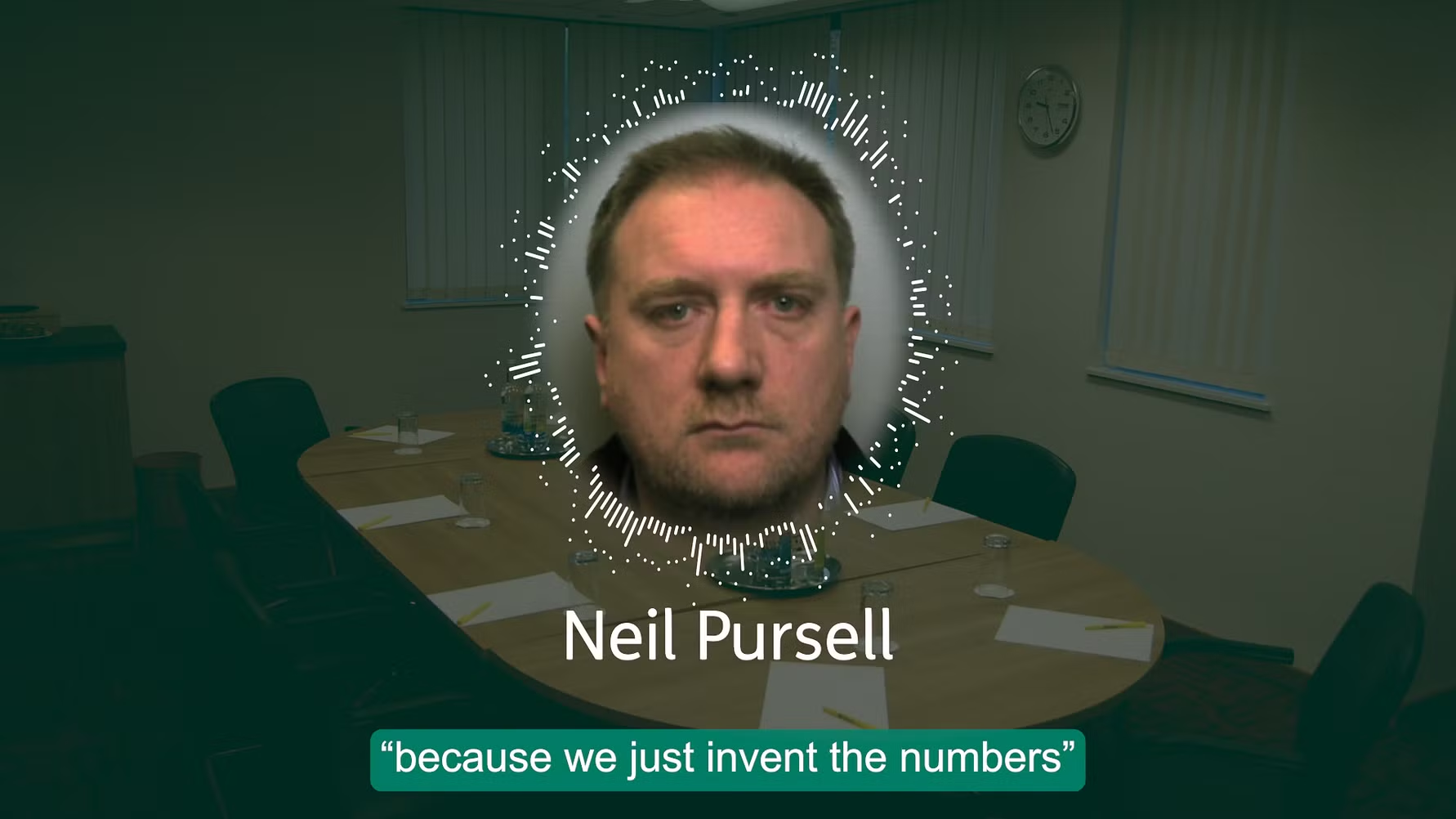
Key evidence was secured when WNL’s Financial Director, Neil Pursell, 60, and key players, were caught conspiring at two hotel meetings held in Manchester and Birmingham in late 2013.
At each meeting, the men openly discussed the fraud; the mechanics and how they could just “invent the numbers” to falsely offset their output VAT claims.
Three earlier trials have already resulted in prison sentences of more than 62 years and Director disqualifications of more than 100 years.
The fraud, which was described by trial Judge Dafna Spiro as “complex and highly sophisticated” saw WNL generating VAT by creating price drops on metals and electrical items they sold via a contrived chain of business transactions outside the UK.
After adding VAT back on to items and selling them at competitive rates to real customers in the UK, Winnington set about offsetting the VAT they had created.
They did this by falsely claiming they had sold VOIP (Voice Over Internet Protocol or telecommunications/internet airtime) to UK suppliers.
Richard Las, Director of HMRC’s Fraud Investigation Service, said: “This incredibly complex fraud was dismantled thanks to the tenacity, skill and dedication of our criminal investigators.
“I hope this sends a clear message to anyone involved in tax fraud that regardless of how complex it may be, we have the skills, resources and the determination to catch you and to bring you to justice.
“The scale of the sentences and the significant director disqualifications show how seriously the courts have treated this sustained and sophisticated attack on the UK tax system.
“Tax fraud is not a victimless crime. It steals money that funds the public services we all rely on and I’d urge anyone with information about any type of tax fraud or money laundering to report it to HMRC on GOV.UK.”
The vast majority of VOIP was fake, but WNL and the co-conspirators recruited people who owned VAT-registered businesses to issue fake documents. In return they were handed a share of the profits of the fraud.
They created multiple fictitious deal chains to make it look genuine and even created two fake offshore banking platforms, said to be based in the Seychelles and Canada, in a bid to produce a convincing set of financial records.
A nationwide HMRC operation in March 2014, led to the arrest of 15 people, searches of 36 premises (including a property in Cyprus) and the winding up of three companies.
The huge investigation ultimately led to four trials at Southwark Crown Court and the conviction of 20 people.
Alexander White, Specialist Prosecutor for the Crown Prosecution Service, said: “Kashaf Bashir, William Lindfield, Assim Rather, Vishal Chudasama, Adeel Karamat Malik, Beverley Thompson, and Sarah Jane Peploe were sentenced for playing important roles in stealing and laundering £20 million from the UK taxpayer.
“Together with the other thirteen convicted defendants, they helped operate a complex and sophisticated fake system of offsetting VAT payments to HMRC, money which was meant for public services but was instead stolen for their own selfish purposes.
“The CPS has commenced proceeds of crime proceedings against all of these defendants to claw back this illegally obtained money.”
All 20 people were convicted of or admitted either conspiracy to cheat the public revenue or money laundering offences.
Three family members from West Lothian have been sentenced for their role in the £20 million tax fraud case. It follows four separate trials, with the final sentencing hearing having taken place on Monday (20 October 2025).
Leslie Thompson, of Chapman’s Brae, Bathgate, (DOB: 25/07/1962), was convicted of conspiracy to cheat the public revenue following trial one, which ended in March 2024 and was then jailed for six years.
He was also disqualified from acting as a director of any company for a period of 12 years and handed a three-year Serious Crime Prevention Order (SCPO) which begins when released from prison.
Beverley Thompson (wife of Leslie), also of Chapman’s Brae, Bathgate, (DOB: 22/12/1964), was convicted of money laundering.
On Monday 20 October 2025, Thompson was jailed for 24 months, suspended for 18 months, handed a 10-day rehabilitation activity requirement and ordered to complete 100 hours of unpaid work.
Andrew Collins (formerly Thompson, son of Leslie) (DOB: 06/06/1984), of Falside Crescent, Bathgate, entered a guilty plea on 22 July 2024 to conspiracy to cheat the public revenue.
He was sentenced to 22 months in jail, suspended for two years, given a rehabilitation activity requirement of up to 20 days and disqualified from acting as a director of any company for eight years.
Strachan House care home in Blackhall have recently enjoyed a day out to the Modern One art gallery following the request of some art savvy residents.
Residents on the Ground Floor community were desperate to flex their creative muscles and attend an art gallery before returning to the home to create their own contemporary art.
Art is something that the residents feel crosses divides, it allows everyone to be creative and really gives everyone something to talk about. Favourite exhibitions from the day included the Rhythm display and Connection which the residents really loved especially with the links this display had to their own lives.
Zoe our activities coordinator said: “Art is very popular with everyone who lives here at Strachan House values it very much, we love an outing and this one was a real highlight, we can’t wait to visit Modern 2!”
Strachan House care home is run by Barchester Healthcare, one of the UK’s largest care providers, which is committed to delivering personalised care across its care homes and hospitals. Strachan House provides residential care, nursing care and dementia care for 83 residents from respite care to long term stays.